Chang’E-6 reveals solar wind–dependent H− ions on the Moon
Tianhua Zhong, Lianghai Xie, Aibing Zhang, Martin Wieser, Wenjing Wang, Mats Holmström, Romain Canu-Blot, Lei Li, Stas Barabash, Yongliao Zou, Yiteng Zhang, Qi Yan, Weibin Wen, Xiangjin Deng, Hongqian Cao, Chi Wang

TL;DR
The Chang’E-6 mission detected negative hydrogen ions on the Moon, revealing their connection to solar wind interactions and improving understanding of lunar plasma environments.
Contribution
First detection of solar wind-derived negative ions on the Moon using the NILS instrument, revealing their generation and distribution.
Findings
H− spectra correlate positively with solar wind parameters, indicating solar wind–surface interactions generate negative ions.
Monte Carlo simulations predict a thin dayside H− layer and a long nightside H− tail on the Moon.
These findings enhance understanding of negative ion generation on airless bodies like the Moon.
Abstract
Apart from positive ions and electrons, negative ions are expected in various astrophysical environments. However, they have never been detected on the Moon until the Chang’E-6 mission. The NILS instrument onboard Chang’E-6 lander is the first dedicated instrument for detecting negative ions beyond Earth and has successfully obtained H− spectra on the lunar surface, providing an unprecedented opportunity to investigate their origin and distribution. Here, we present a positive correlation between the H− spectra and solar wind parameters, which provides direct evidence for the generation of negative ions from solar wind–surface interaction. Combined with Monte Carlo simulations, we predict a thin dayside H− layer and a long nightside H− tail, which can contribute to the lunar plasma environment, especially during an extreme solar wind density event. These findings greatly improve our…
Genes, proteins, chemicals, diseases, species, mutations and cell lines named across the full text — each resolved to its canonical identifier and authoritative record.
Click any figure to enlarge with its caption.
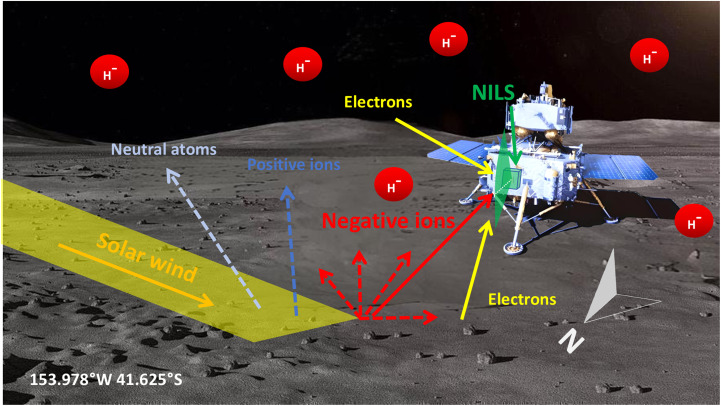 Figure 1
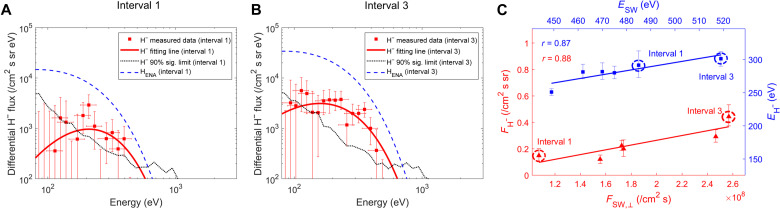 Figure 2
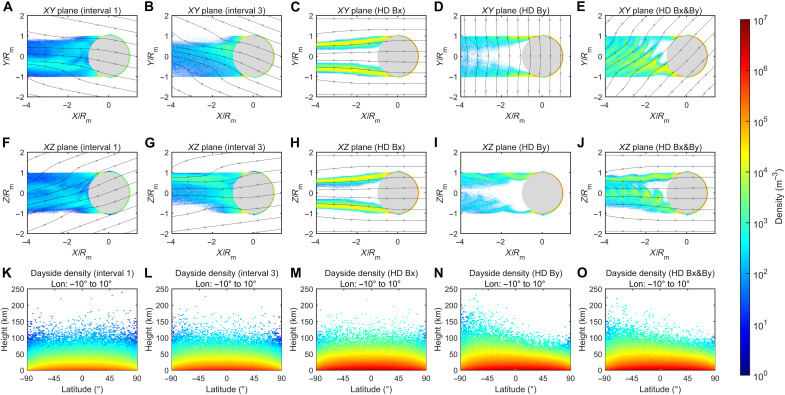 Figure 3
Peer Reviews
No public reviews on file for this paper yet. If you reviewed it on a platform where reviews are public (OpenReview, ICLR, NeurIPS, ICML), you can paste yours below so the community can read it here.
Videos
No videos yet. Explain this paper in a talk, walkthrough, or lecture? Add one.
Taxonomy
TopicsPlanetary Science and Exploration · Astro and Planetary Science · Atomic and Molecular Physics