Thickness-confined metastable phase transitions drive large piezoelectricity in ultrathin BiFeO3
Shuang-Jie Chen, Meixiong Zhu, Jing-Hui Wang, Tongtong Shi, Jiaqi Liu, Yujia Wang, Yinlian Zhu, Xiu-Liang Ma, Zuhuang Chen, Yunlong Tang

TL;DR
Ultrathin BiFeO3 layers exhibit a transitional phase that significantly boosts piezoelectric performance beyond traditional thickness limits.
Contribution
The discovery of a thickness-confined metastable transitional phase in BiFeO3 that enhances piezoelectricity in multilayer films.
Findings
A transitional phase between rhombohedral and tetragonal structures in strained ultrathin BiFeO3 layers was identified.
The transitional phase enables a giant piezoelectric coefficient (d33 ≈ 30 pm/V) in 16-unit cell BiFeO3 layers.
Phase-field simulations confirmed thickness-dependent electromechanical coupling with mixed transitional/tetragonal phases.
Abstract
Pursuing high-performance lead-free piezoelectrics beyond classical thickness limits remains challenging. This study identifies a transitional phase between rhombohedral and tetragonal structures in strained ultrathin BiFeO3 layers within (BiFeO3/Ca0.96Ce0.04MnO3)4 multilayer films grown on LaAlO3 substrates. Atom-scale studies and quantitative electromechanical atomic force microscopy revealed that the transitional phase facilitates continuous polarization rotation in ultrathin BiFeO3 layers. This effect enhances the piezoelectric responses of the multilayer films and yields a giant piezoelectric coefficient (d33 ≈ 30 picometers per volt) for films containing 16–unit cell BiFeO3 layers, which is over four times higher than conventional rhombohedral BiFeO3. Phase-field simulations confirmed a thickness-dependent electromechanical coupling regularity, behaving as the coexistence of…
Genes, proteins, chemicals, diseases, species, mutations and cell lines named across the full text — each resolved to its canonical identifier and authoritative record.
Click any figure to enlarge with its caption.
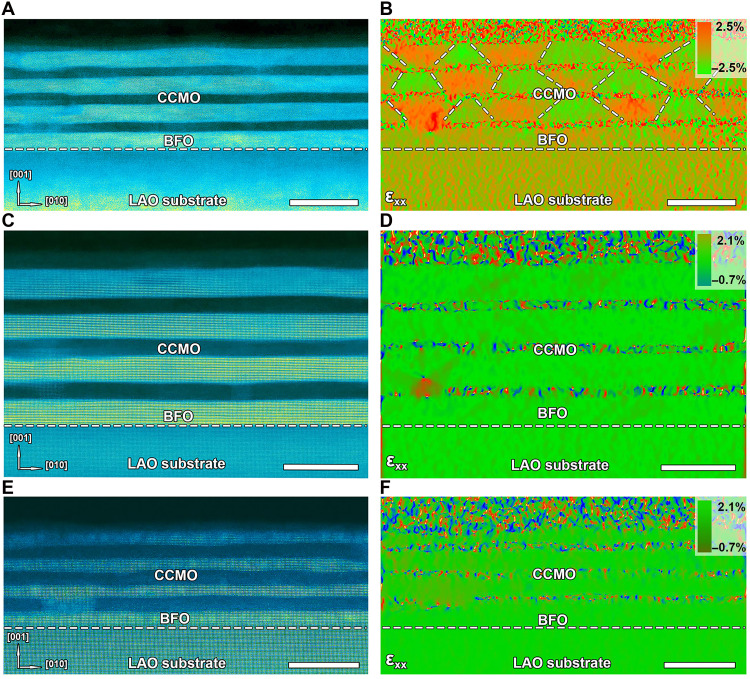 Figure 1
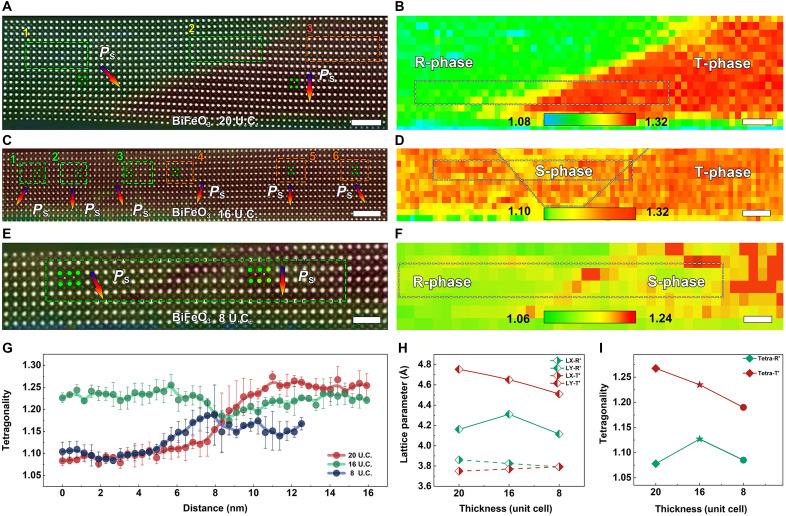 Figure 2
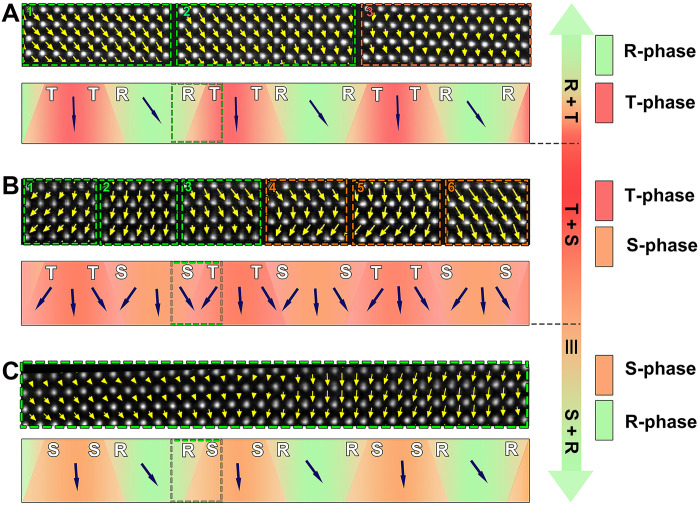 Figure 3
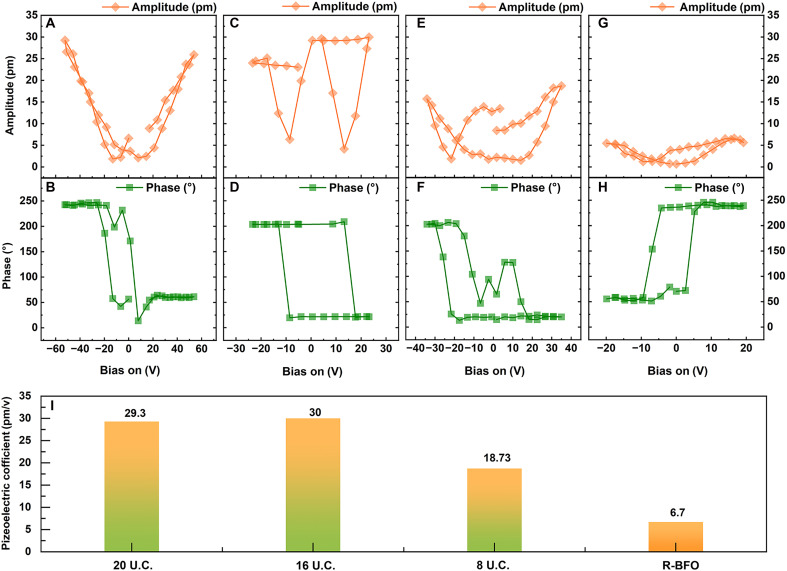 Figure 4
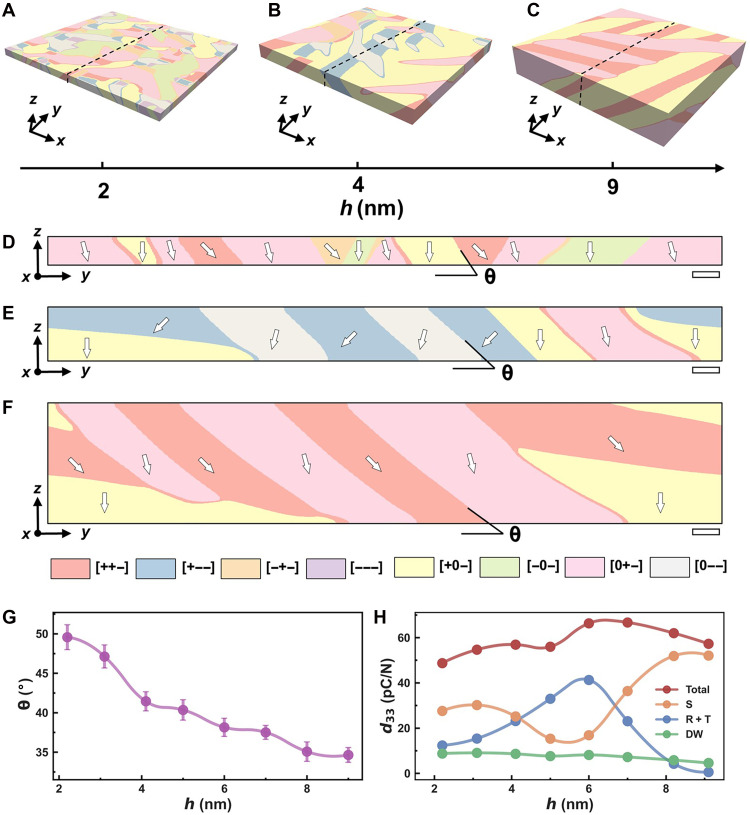 Figure 5
Peer Reviews
No public reviews on file for this paper yet. If you reviewed it on a platform where reviews are public (OpenReview, ICLR, NeurIPS, ICML), you can paste yours below so the community can read it here.
Videos
No videos yet. Explain this paper in a talk, walkthrough, or lecture? Add one.
Taxonomy
TopicsMultiferroics and related materials · Ferroelectric and Piezoelectric Materials · Advanced Sensor and Energy Harvesting Materials