Pregnanolone Glutamate: A Dual-Fate Delivery System for Neuroactive Steroids in Perinatal Focal Cerebral Ischemia
Grygoriy Tsenov, Iqra Bano, Marta Velíková, Viera Kútna, Hana Chodounská, Eva Kudová, Josef Bulant, Martin Hill

TL;DR
Pregnanolone glutamate (PG) is a neurosteroid that crosses the blood-brain barrier and generates protective metabolites in the brain without disrupting natural steroid balance.
Contribution
PG's dual-fate mechanism as a prodrug and intact BBB-crossing agent is newly characterized, revealing metabolic segregation and buffering in the CNS.
Findings
PG accumulates intact in the hippocampus and undergoes systemic hydrolysis as a prodrug.
The brain passively accumulates peripheral metabolites like 17-hydroxypregnanolone despite lacking local enzymes.
PG increases 5β-pathway metabolites in the CNS while preserving 5α-pathway homeostasis.
Abstract
Pregnanolone glutamate (PG) is a synthetic neurosteroid analog showing promise for treating ischemic brain injury, yet its blood–brain barrier (BBB) transport and metabolic fate remain unclear. We investigated the pharmacokinetics of PG in postnatal day 12 rats of both sexes subjected to endothelin-1 (ET-1)-induced focal hippocampal ischemia. Animals received PG (1 mg/kg intraperitoneal (i.p.)) or vehicle; serum and hippocampal steroidomes were profiled 60 min post-administration using gas chromatography-tandem mass spectrometry (GC-MS/MS) (hippocampus: n = 16 PG+, n = 27 PG−; multi-tissue subset: n = 6 PG+, n = 21 PG−). Our data revealed a “dual-fate” mechanism: PG undergoes systemic hydrolysis as a prodrug, as suggested by the tissue distribution pattern at 60 min post-administration, but also crosses the BBB intact, with significant parent conjugate accumulation in the hippocampus…
Genes, proteins, chemicals, diseases, species, mutations and cell lines named across the full text — each resolved to its canonical identifier and authoritative record.
Click any figure to enlarge with its caption.
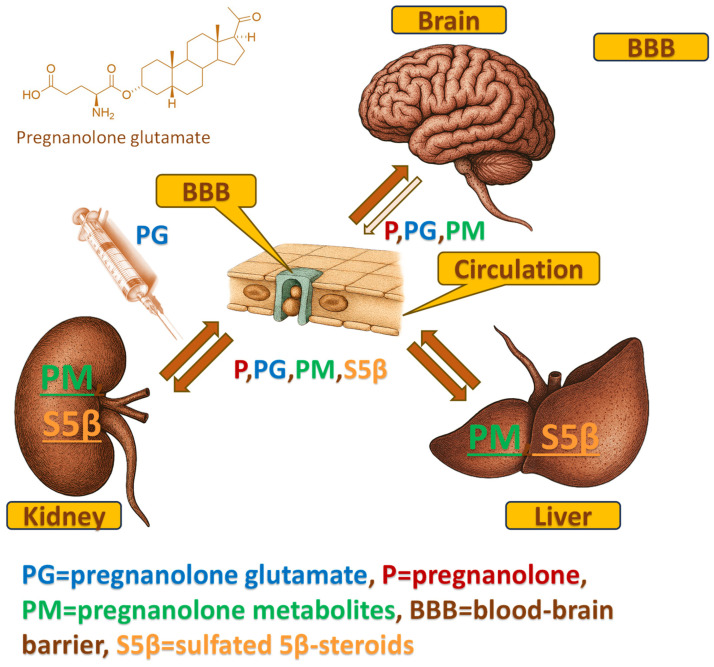 Figure 1
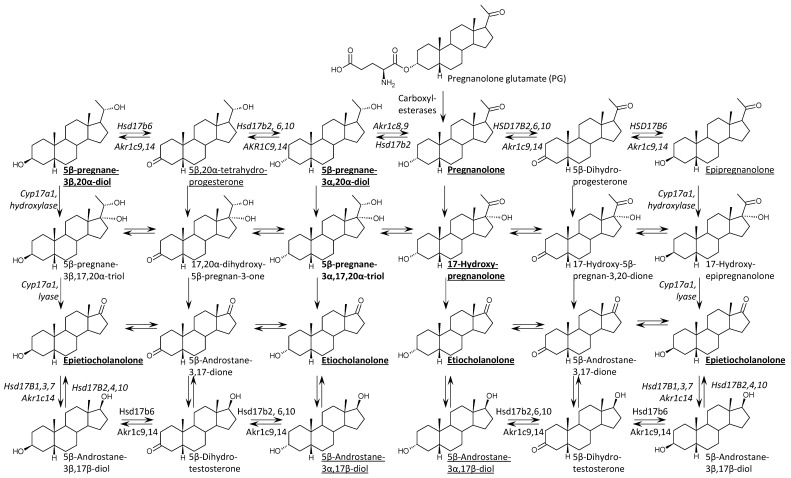 Figure 2
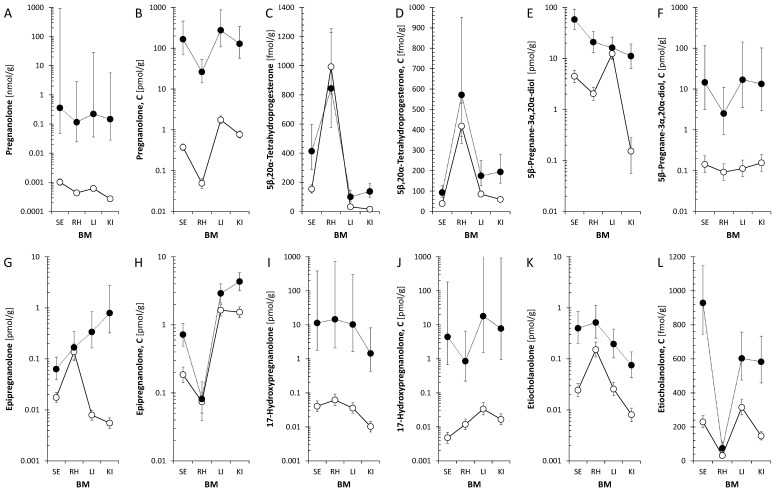 Figure 3
Peer Reviews
No public reviews on file for this paper yet. If you reviewed it on a platform where reviews are public (OpenReview, ICLR, NeurIPS, ICML), you can paste yours below so the community can read it here.
Videos
No videos yet. Explain this paper in a talk, walkthrough, or lecture? Add one.
Taxonomy
TopicsNeuroscience and Neuropharmacology Research · Neurogenesis and neuroplasticity mechanisms · Menopause: Health Impacts and Treatments