Interpretable Machine Learning with Prediction Uncertainty Quantification for d33 in (K0.5Na0.5) NbO3-Based Lead-Free Piezoelectric Ceramics
Xiaohui Yuan, Yalong Liang, Bang Lu, Gaochao Zhao, Pei Li

TL;DR
This paper introduces an interpretable machine learning framework with uncertainty quantification to predict and understand the piezoelectric properties of lead-free ceramics.
Contribution
A physics-informed ML framework with uncertainty quantification and interpretability for predicting d33 in KNN-based ceramics.
Findings
The framework achieves high accuracy (R2 ≈ 0.81) in predicting the piezoelectric coefficient d33.
Sintering temperature, B-site electronic anisotropy, and A-site ionic displacement are key factors governing d33.
Uncertainty quantification reflects the confidence of ML predictions, not experimental measurement errors.
Abstract
The accelerated discovery of high-performance lead-free piezoelectric ceramics is hindered by the vast compositional space and the limited interpretability of conventional machine learning (ML) models. Here, we propose a physics-informed and interpretable ML framework with integrated uncertainty quantification to predict and understand the piezoelectric coefficient d33 of (K0.5Na0.5) NbO3 (KNN)-based ceramics. A curated dataset of 1113 experimental samples is used to construct 65 descriptors by decoupling A-site and B-site ionic contributions. Pearson correlation analysis reduces these to an optimized 11-dimensional feature set for training deep neural networks, Wide & Deep networks, and residual networks. A Bayesian neural network further provides predictive uncertainty, which quantitatively reflects the confidence of machine-learning-based d33 predictions rather than experimental…
Genes, proteins, chemicals, diseases, species, mutations and cell lines named across the full text — each resolved to its canonical identifier and authoritative record.
Click any figure to enlarge with its caption.
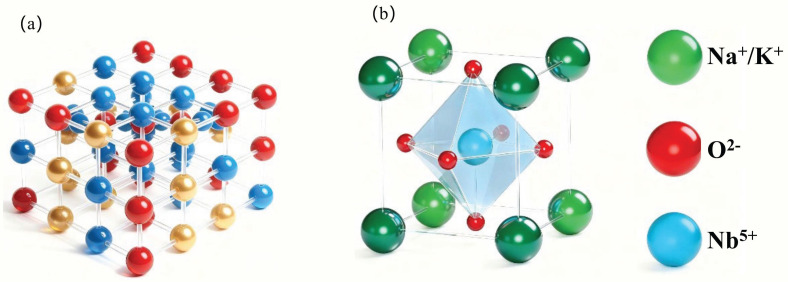 Figure 1
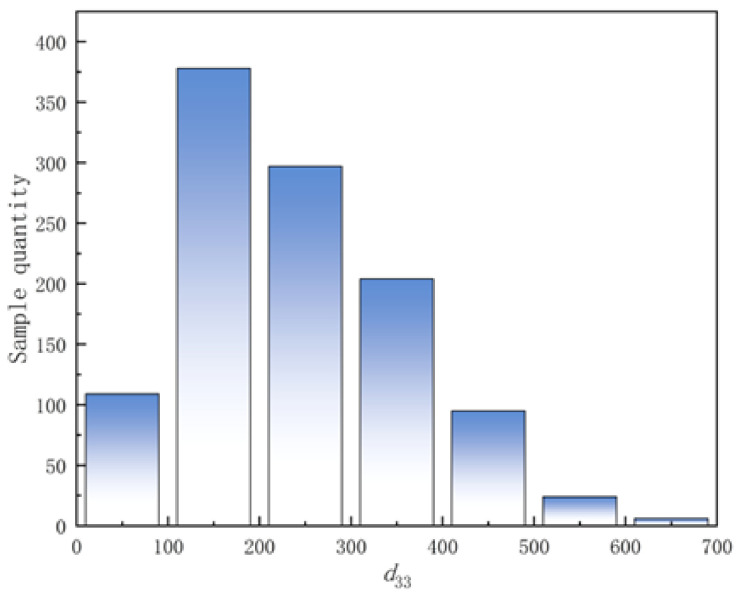 Figure 2
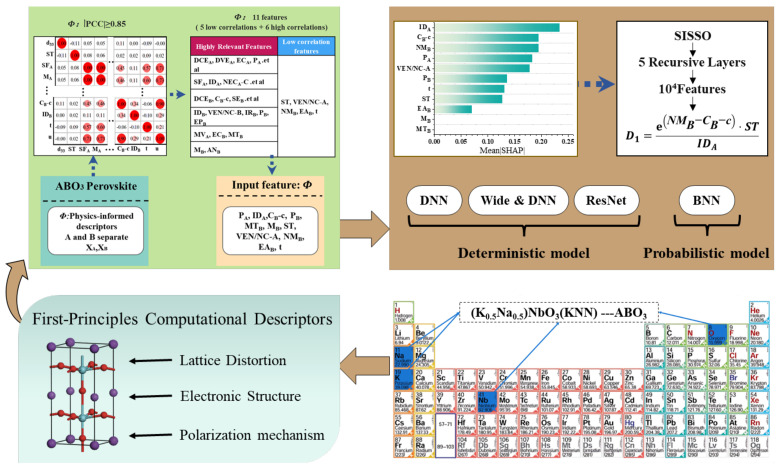 Figure 3
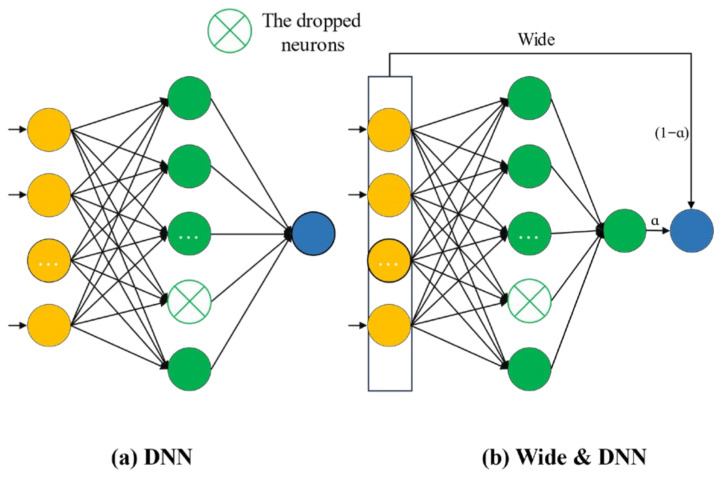 Figure 4
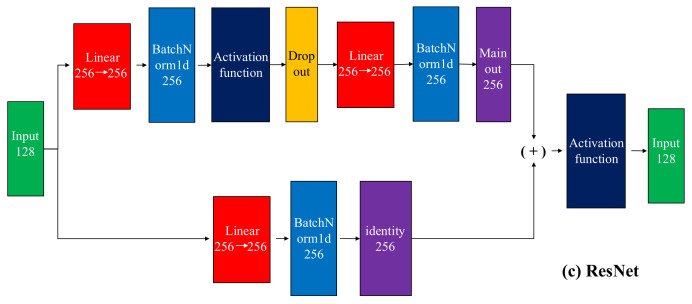 Figure 5
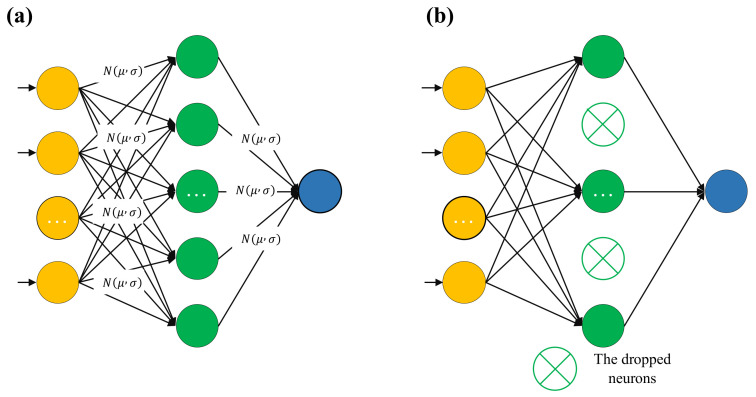 Figure 6
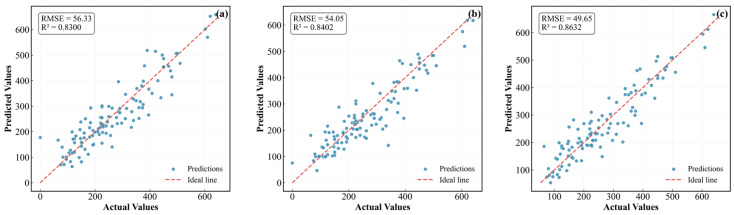 Figure 7
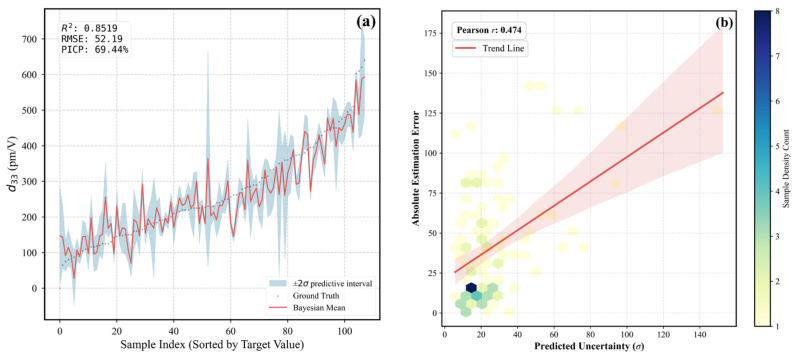 Figure 8
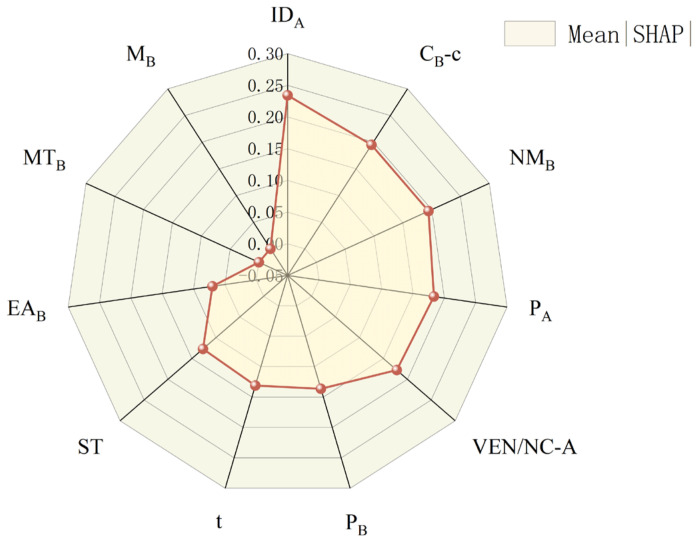 Figure 9
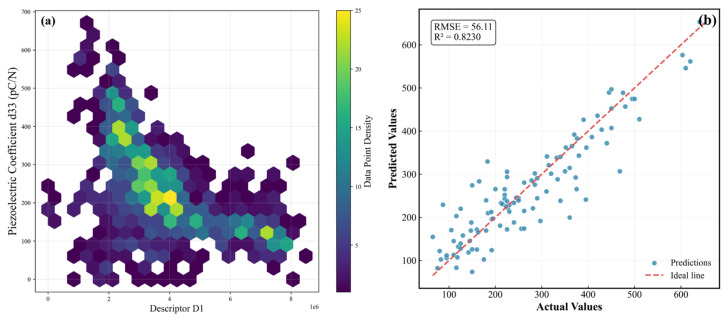 Figure 10
Peer Reviews
No public reviews on file for this paper yet. If you reviewed it on a platform where reviews are public (OpenReview, ICLR, NeurIPS, ICML), you can paste yours below so the community can read it here.
Videos
No videos yet. Explain this paper in a talk, walkthrough, or lecture? Add one.
Taxonomy
TopicsMachine Learning in Materials Science · Ferroelectric and Piezoelectric Materials · Advanced Sensor and Energy Harvesting Materials