Development of a Deep-Learning Model for Automated Detection and Quantification of Bleeding in Unilateral Biportal Endoscopic Spine Surgery
Takaki Yoshimizu, Daisuke Sakai, Daiki Morita, Meng-Huang Wu, Teruaki Miyake, Sanshiro Saito, Tetsutaro Mizuno, Ushio Nosaka, Keisuke Ishii, Mizuki Watanabe, Kanji Sasaki

TL;DR
This paper introduces a deep-learning model that detects and measures bleeding during spine surgery, helping assess visual field impairment and support surgical decisions.
Contribution
A novel deep-learning model is developed for automated detection and quantification of intraoperative bleeding in endoscopic spine surgery.
Findings
The fine-tuned model achieved 86% accuracy in detecting bleeding presence in images.
Pixel-level segmentation showed a median Dice score of 0.79 and IoU of 0.65 for ground-truth-positive images.
Model performance exceeded 0.80 Dice score in cases with strong inter-surgeon agreement and substantial bleeding.
Abstract
Objectives: To develop and validate a deep-learning model capable of detecting and quantifying intraoperative bleeding to objectively evaluate visual field impairment in unilateral biportal endoscopic spine surgery (UBE). Methods: Overall, 223,568 still images were extracted from 20 UBE videos and used to train a U-Net++ segmentation model based on the red masks generated using hue, saturation, and value (HSV) thresholding. The model was fine-tuned using 350 manually annotated images that differentiated clinically relevant bleeding (red masks) from non-bleeding red regions (zero masks). The model performance was evaluated against 180 ground-truth images annotated by three spine surgeons, which were extracted from videos that were separate from those used for training and fine-tuning. Dice and intersection-over-union (IoU) scores were calculated, and correlation analyses were performed…
Genes, proteins, chemicals, diseases, species, mutations and cell lines named across the full text — each resolved to its canonical identifier and authoritative record.
Click any figure to enlarge with its caption.
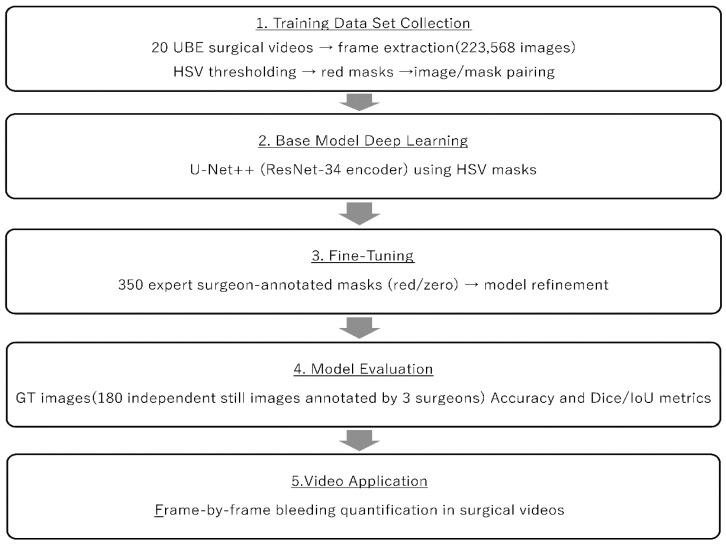 Figure 1
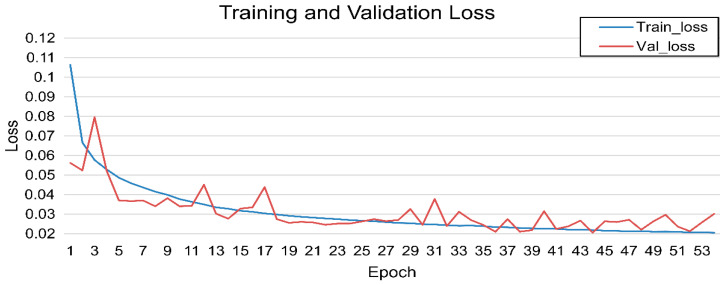 Figure 2
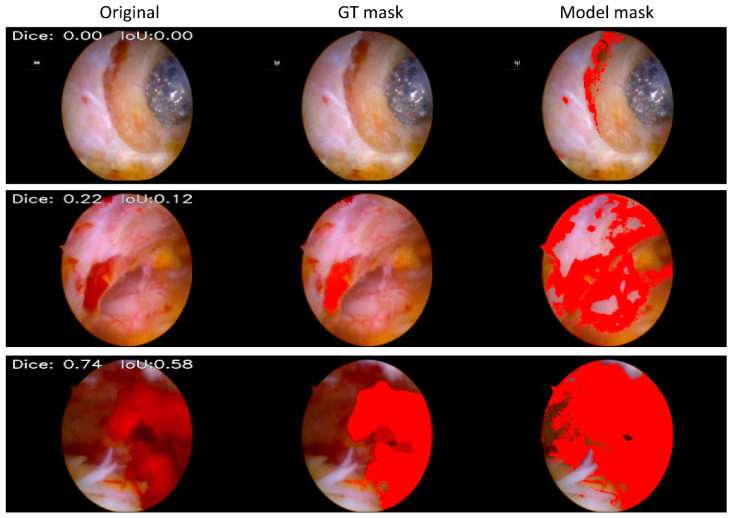 Figure 3
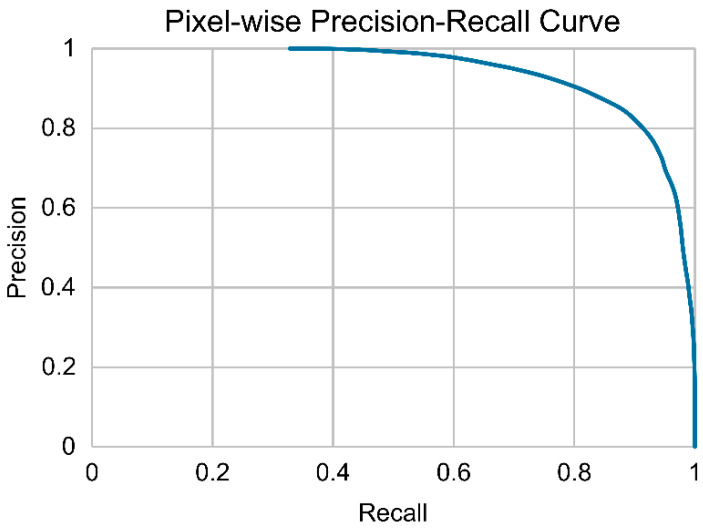 Figure 4
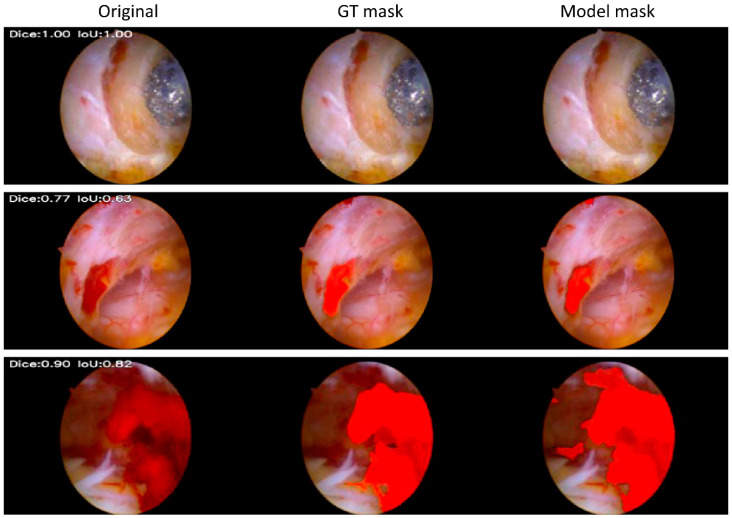 Figure 5
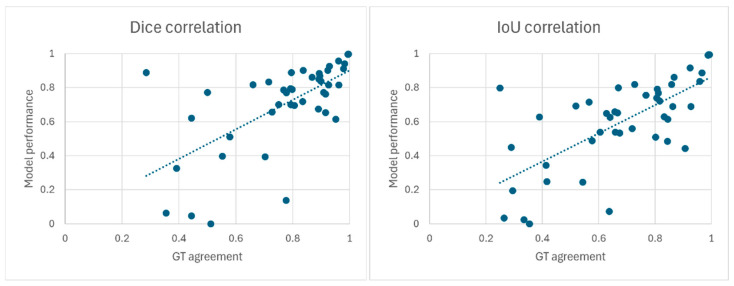 Figure 6
Peer Reviews
No public reviews on file for this paper yet. If you reviewed it on a platform where reviews are public (OpenReview, ICLR, NeurIPS, ICML), you can paste yours below so the community can read it here.
Videos
No videos yet. Explain this paper in a talk, walkthrough, or lecture? Add one.
Taxonomy
TopicsSurgical Simulation and Training · Cervical and Thoracic Myelopathy · Gastrointestinal Bleeding Diagnosis and Treatment