Picosecond time-resolved infra-red spectroscopic study of a water-soluble cationic copper-porphyrin with nucleic acids
Páraic M. Keane, Daniel Graczyk, Igor V. Sazanovich, Michael Towrie, Susan J. Quinn, John M. Kelly

TL;DR
This study uses advanced spectroscopy to explore how a copper-based compound interacts with DNA, revealing how it binds to specific parts of nucleic acids.
Contribution
The paper introduces new insights into the binding mechanisms of a copper-porphyrin with nucleic acids using picosecond time-resolved techniques.
Findings
TRIR spectra show distinct features when CuTMPyP4 forms a five-coordinate exciplex with thymine-containing nucleic acids.
The compound binds to the C2O carbonyl group of thymine in the oligonucleotide {d(CGCAAATTTGCG)}2.
The study differentiates between the formation of a five-coordinate transient species and a four-coordinate triplet excited state.
Abstract
The greater abundance and lower cost of copper make its porphyrin derivatives an attractive alternative to precious-metal based photosensitisers. The Cu(ii) complex of 5,10,15,20-meso-tetrakis(N-methylpyridinium-4-yl)porphyrin (CuTMPyP4) is a useful photophysical probe for biomolecules. It is non-luminescent in aqueous solution, as it forms a metastable five-coordinate water complex after photo-excitation. CuTMPyP4 is known to bind to DNA both through the grooves and by intercalation. In this paper picosecond transient absorption (TA) and time-resolved infra-red (TRIR) spectra of CuTMPyP4 in D2O and in the presence of polydeoxythymidylic acid (poly(dT) and the double-stranded oligonucleotides {d(GC)5}2 and {d(CGCAAATTTGCG)}2 are reported. These spectra show characteristic features depending on whether a five-coordinate transient species or the four-coordinate triplet excited state is…
Genes, proteins, chemicals, diseases, species, mutations and cell lines named across the full text — each resolved to its canonical identifier and authoritative record.
Click any figure to enlarge with its caption.
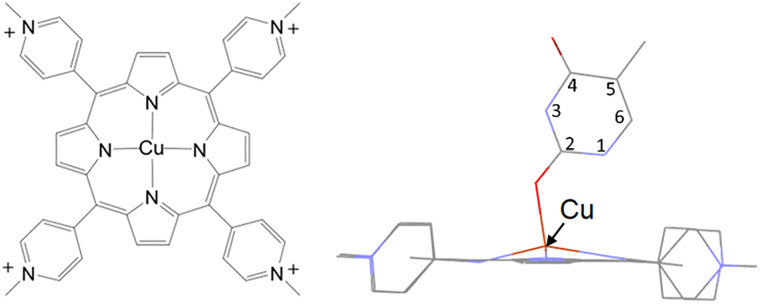 Figure 1
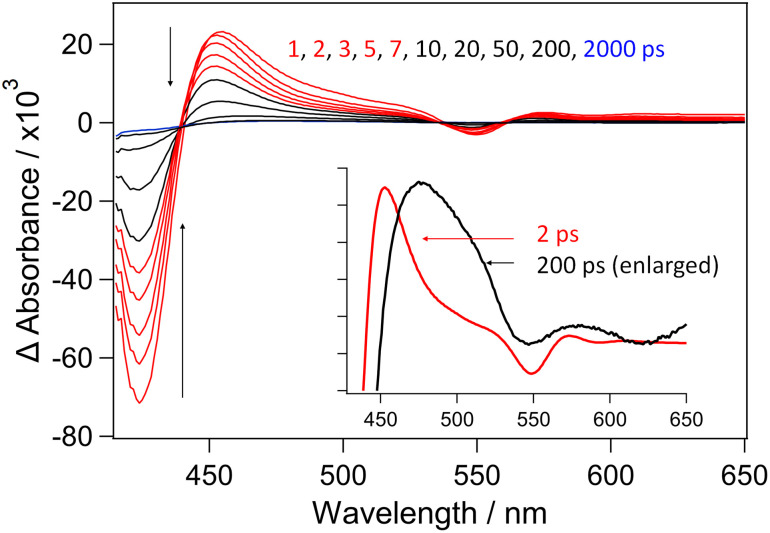 Figure 2
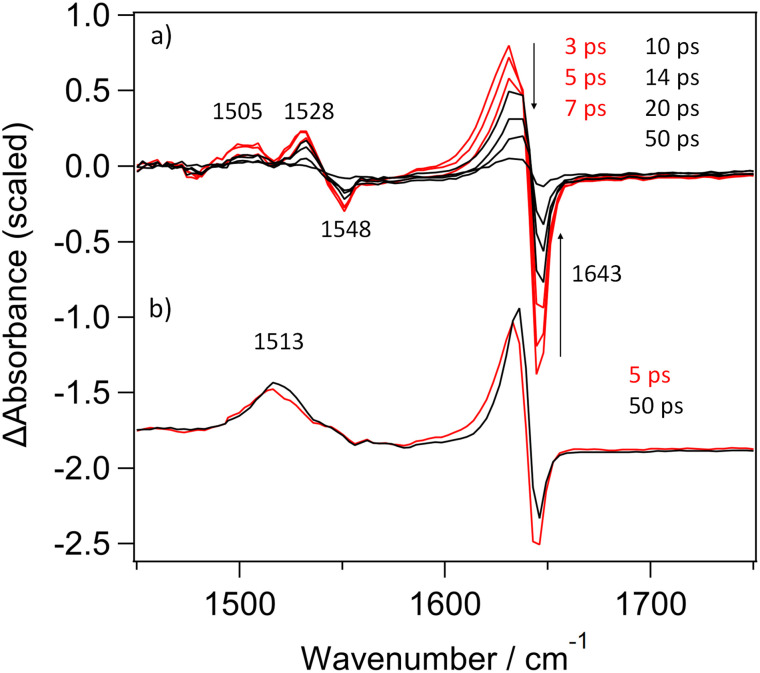 Figure 3
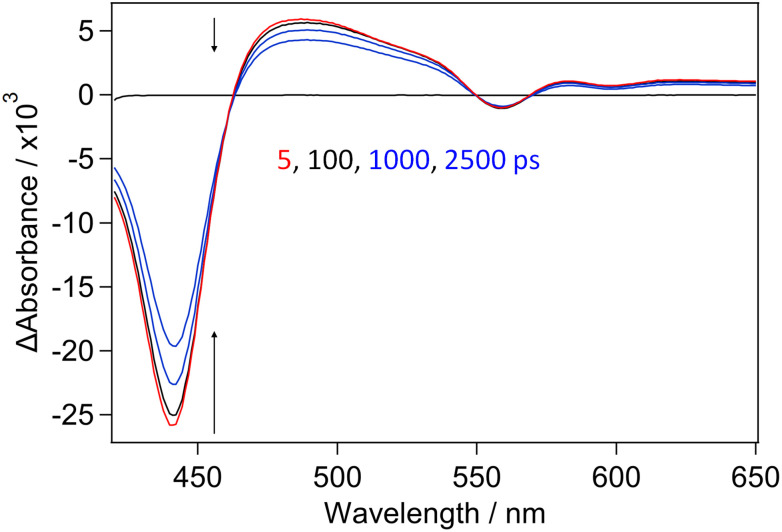 Figure 4
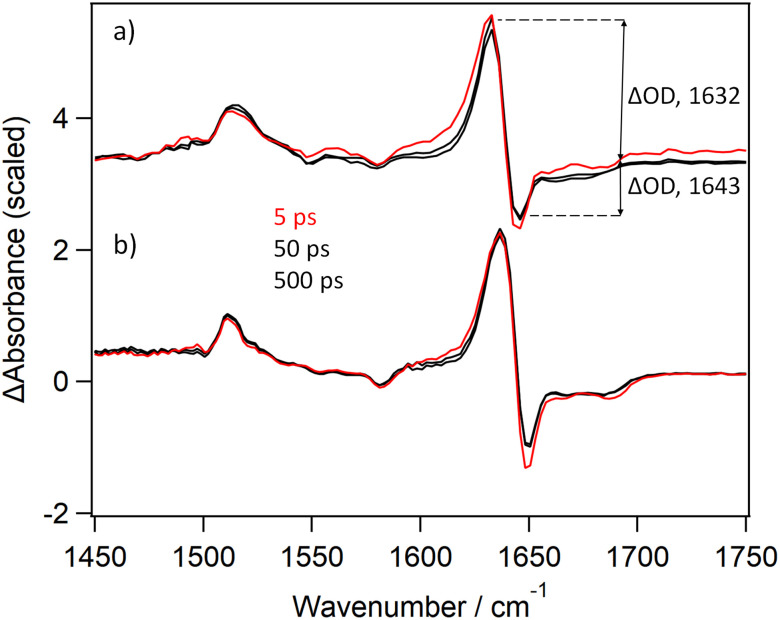 Figure 5
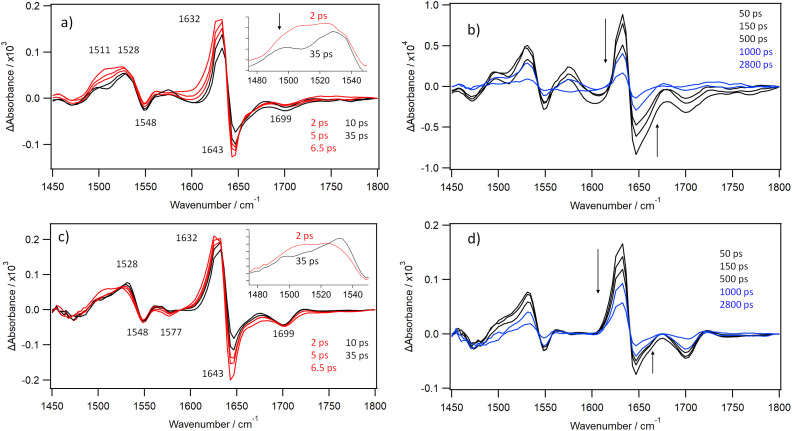 Figure 6
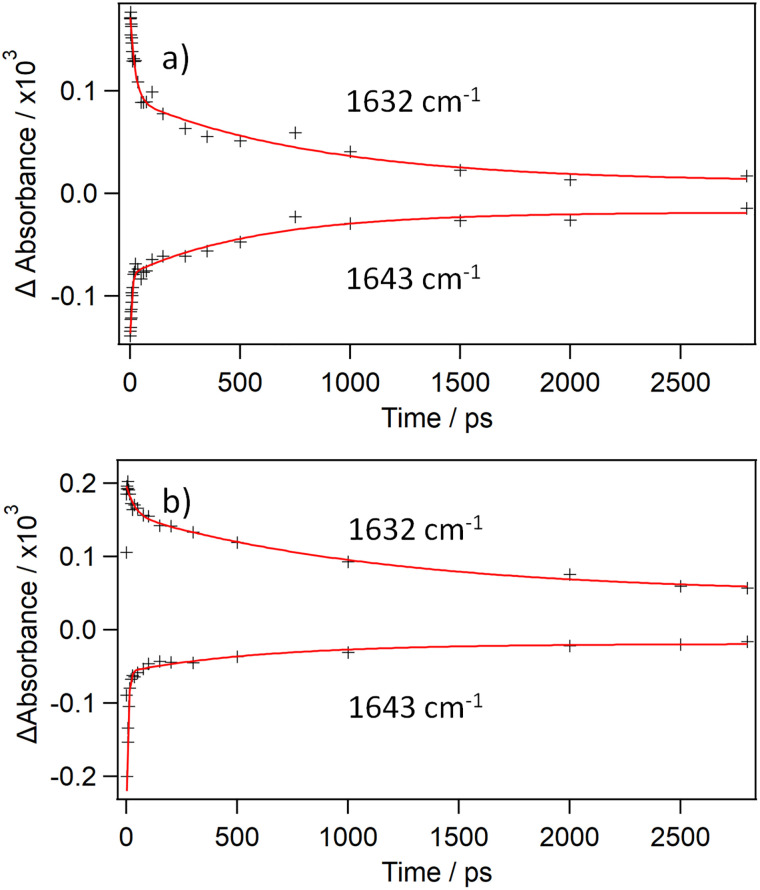 Figure 7
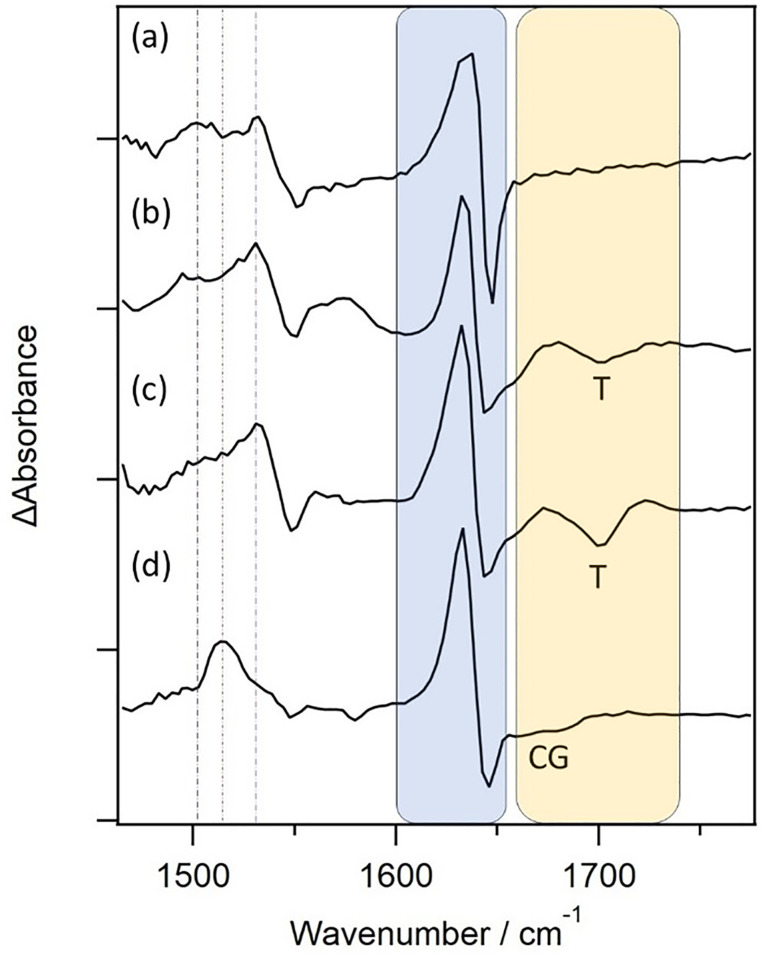 Figure 8
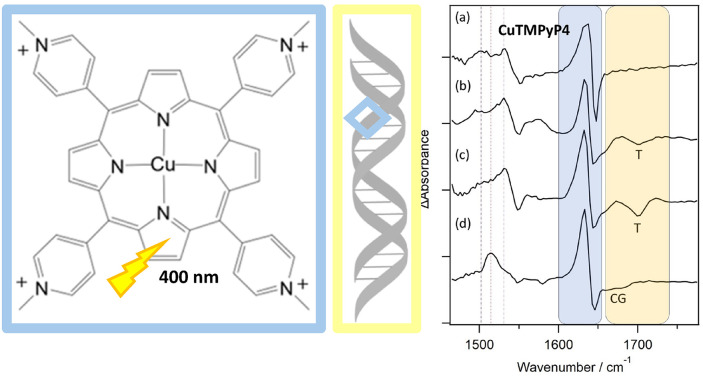 Figure 9
Peer Reviews
No public reviews on file for this paper yet. If you reviewed it on a platform where reviews are public (OpenReview, ICLR, NeurIPS, ICML), you can paste yours below so the community can read it here.
Videos
No videos yet. Explain this paper in a talk, walkthrough, or lecture? Add one.
Taxonomy
TopicsPorphyrin and Phthalocyanine Chemistry · Photodynamic Therapy Research Studies · Analytical Chemistry and Sensors