Association Between Lower Instrumented Vertebra Selection and Mechanical Complications After Surgical Correction for Kyphotic Deformity Following Osteoporotic Vertebral Fracture
Keishi Maruo, Fumihiro Arizumi, Kazuya Kishima, Tetsuto Yamaura, Masaru Hatano, Hayato Oishi, Toshiya Tachibana

TL;DR
This study finds that the choice of lower instrumented vertebra in surgery for kyphotic deformity after osteoporotic fractures affects the risk of mechanical complications.
Contribution
The study identifies specific patient factors associated with distal junctional failure in short-fixation surgeries for kyphotic deformity.
Findings
Short fixation reduced proximal junctional failure compared to long fixation.
Distal junctional failure occurred only in the short-fixation group and was linked to preoperative malalignment and muscle degeneration.
Short fixation preserved better postoperative lumbar function.
Abstract
Background: Kyphotic deformity following osteoporotic vertebral fracture (KDOVF) often requires corrective surgery to restore sagittal alignment; however, mechanical complications, such as proximal junctional failure (PJF) and distal junctional failure (DJF), remain major concerns. Selection of the lower instrumented vertebra (LIV) plays a critical role in balancing mechanical stability and functional preservation; however, the optimal criteria for LIV selection have not been fully established. Methods: This multicenter retrospective cohort study included 52 patients who underwent corrective surgery for KDOVF, with a minimum 1-year follow-up. The patients were classified into a long-fixation group with pelvic fixation (n = 27) and a short-fixation group with lumbar LIV fixation (n = 25). Mechanical complications, radiographic parameters, patient-reported outcomes, and paraspinal muscle…
Genes, proteins, chemicals, diseases, species, mutations and cell lines named across the full text — each resolved to its canonical identifier and authoritative record.
Click any figure to enlarge with its caption.
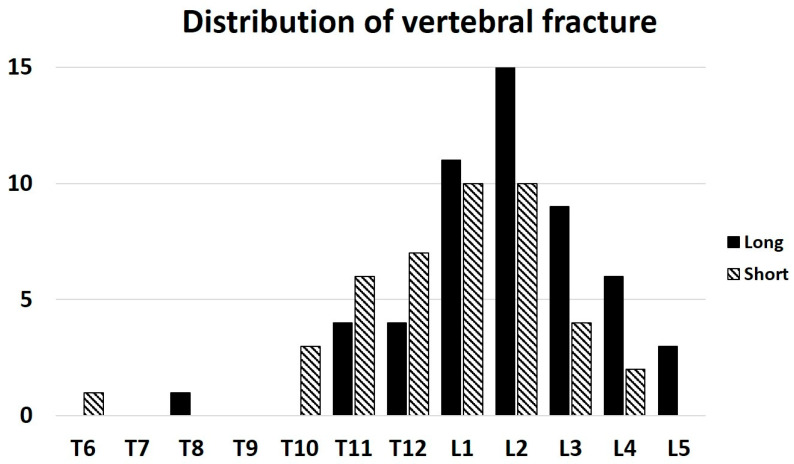 Figure 1
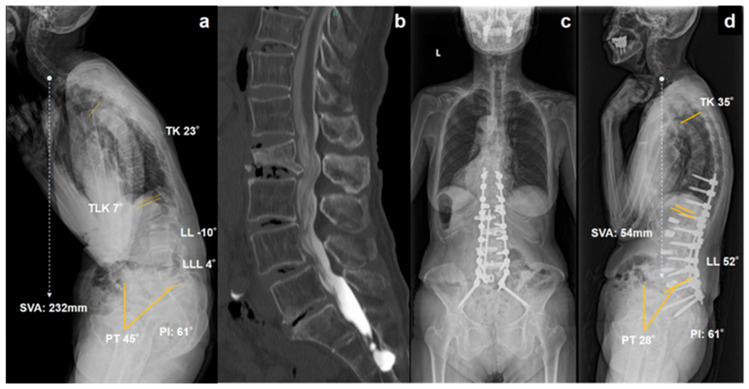 Figure 2
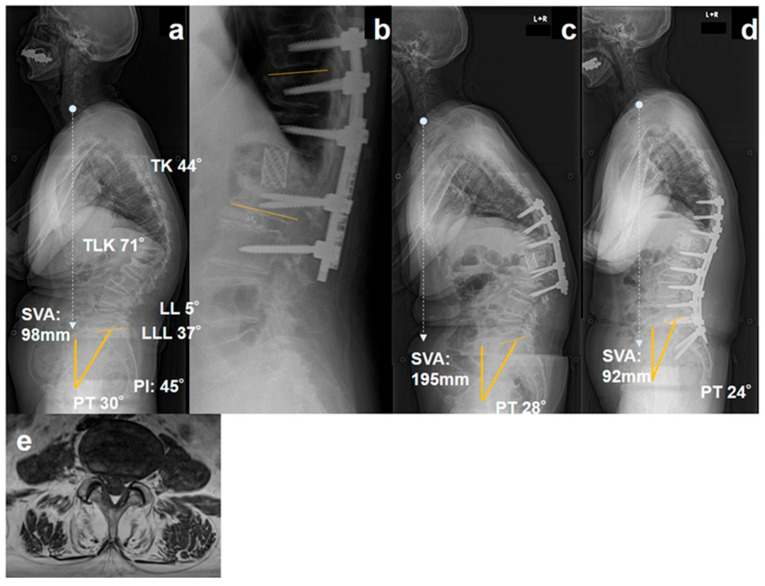 Figure 3
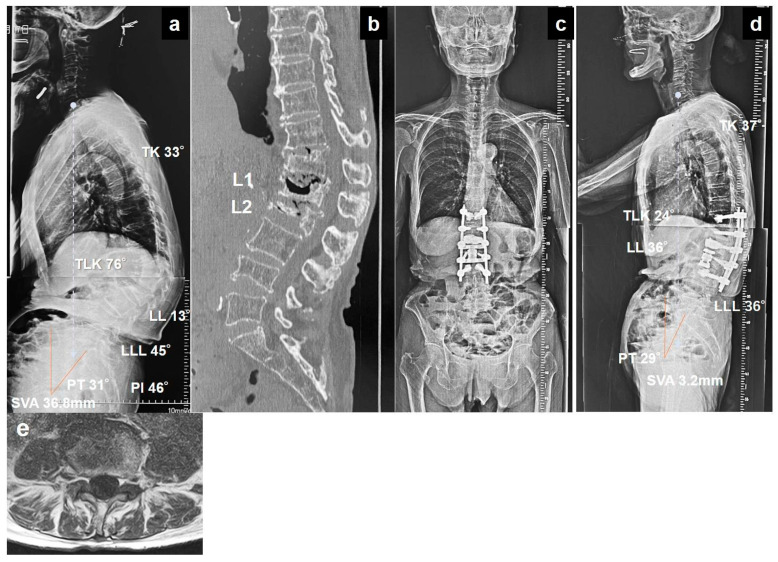 Figure 4
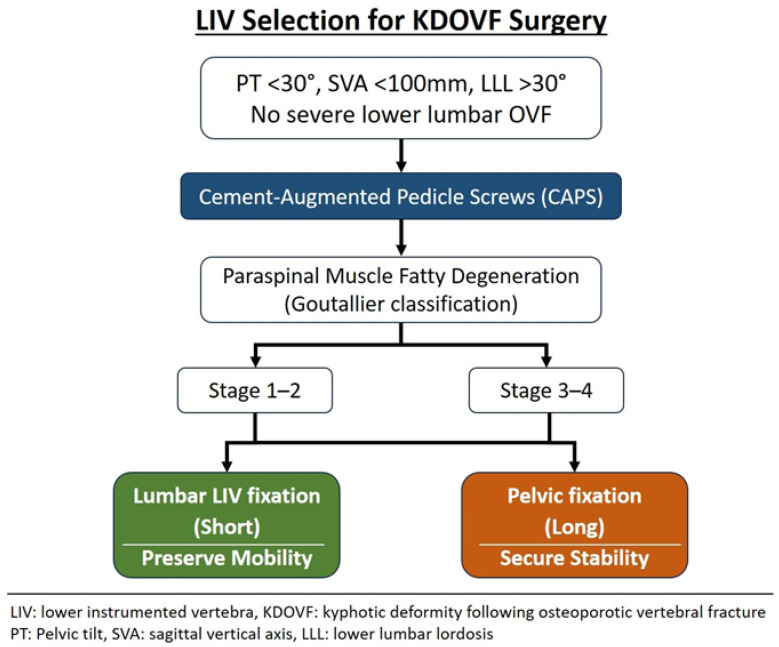 Figure 5
Peer Reviews
No public reviews on file for this paper yet. If you reviewed it on a platform where reviews are public (OpenReview, ICLR, NeurIPS, ICML), you can paste yours below so the community can read it here.
Videos
No videos yet. Explain this paper in a talk, walkthrough, or lecture? Add one.
Taxonomy
TopicsSpinal Fractures and Fixation Techniques · Scoliosis diagnosis and treatment · Cervical and Thoracic Myelopathy