Life histories of straight-tusked elephants from the Last Interglacial Neanderthal site of Neumark-Nord (~125 ka)
Elena Armaroli, Federico Lugli, Théo Tacail, Lutz Kindler, Sabine Gaudzinski-Windheuser, Fulco Scherjon, Wil Roebroeks, Glendon Parker, Hubert Vonhof, Anna Cipriani, Thomas Tütken, Wolfgang Müller

TL;DR
This study uses isotopes and proteins to reveal Neanderthals hunted straight-tusked elephants that traveled long distances before being killed.
Contribution
A novel multiproxy approach combining Sr isoscape, proteomics, and isotopic analyses to reconstruct elephant life histories.
Findings
Straight-tusked elephants at Neumark-Nord showed subseasonal mobility over up to eight years.
Two male elephants likely foraged up to 300 km away before being killed by Neanderthals.
Proteomic analysis identified the sex of four elephants, including three males and one likely female.
Abstract
Straight-tusked elephants (Palaeoloxodon antiquus) were the largest land mammals of the European Pleistocene. Abundant fossil remains have been recovered from Neumark-Nord [~125 thousand years ago (ka); Saxony-Anhalt, NE Germany], where over 70 individuals were accumulated by Neanderthal hunting and butchering activity. This study reconstructs the species’ paleoecology using a multiproxy approach that combines isotopic and paleoproteomic analyses of tooth enamel. LA-MC-ICPMS 87Sr/86Sr analyses on molar cross sections from four adults reveal subseasonal mobility over periods up to eight years. A specifically developed Sr isoscape facilitates tracking of elephant movements, using Bayesian analysis to map their Last Interglacial homerange. Amelogenin proteomic analysis identified three males and one likely female. Two male elephants exhibit elevated 87Sr/86Sr profiles, distinct from the…
Genes, proteins, chemicals, diseases, species, mutations and cell lines named across the full text — each resolved to its canonical identifier and authoritative record.
Click any figure to enlarge with its caption.
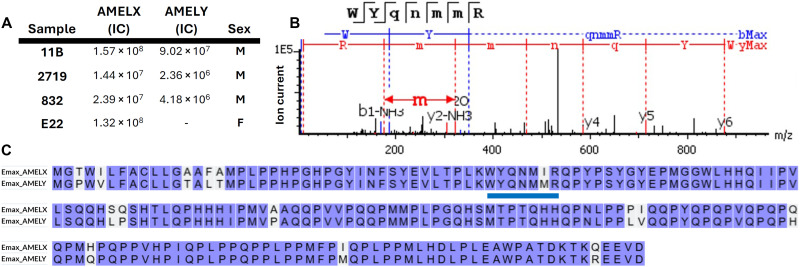 Figure 1
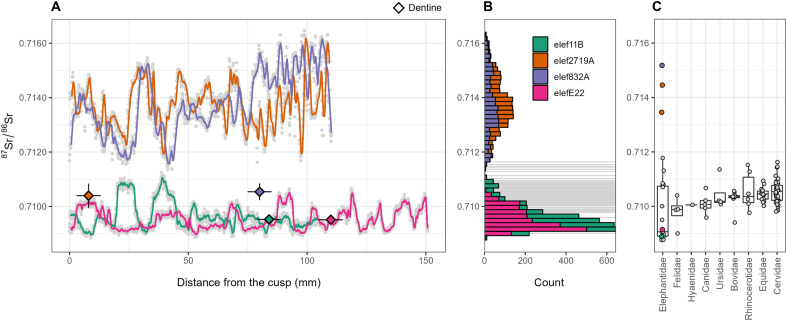 Figure 2
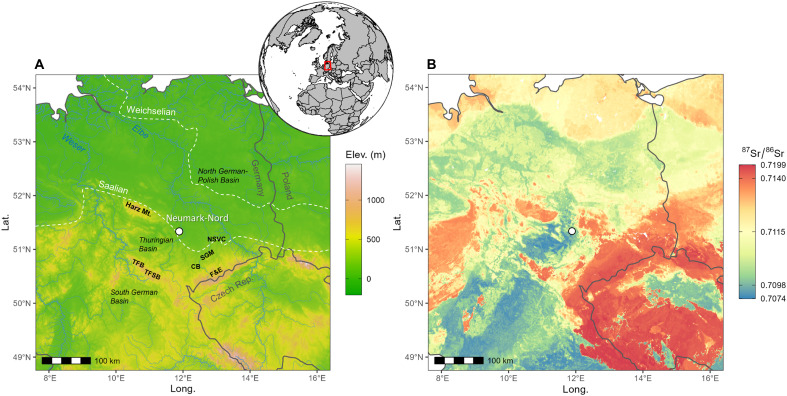 Figure 3
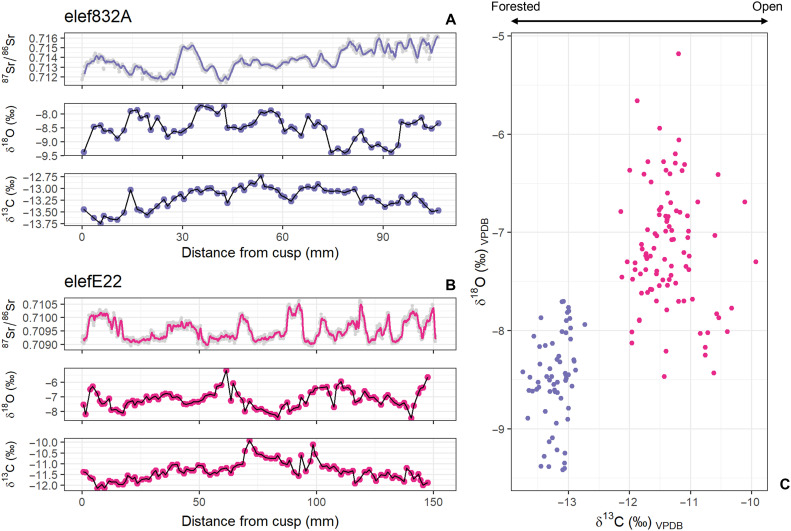 Figure 4
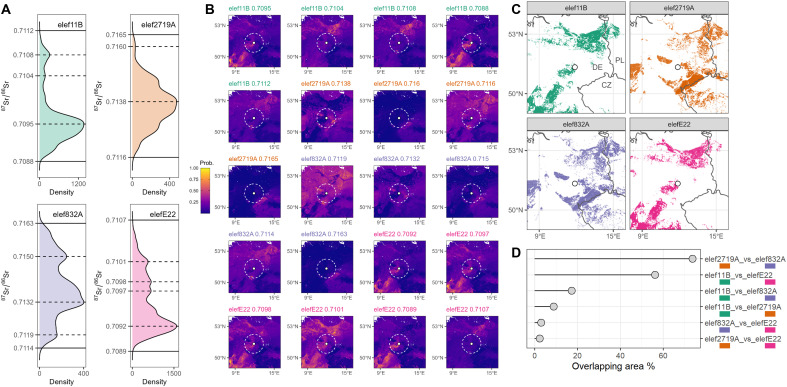 Figure 5
Peer Reviews
No public reviews on file for this paper yet. If you reviewed it on a platform where reviews are public (OpenReview, ICLR, NeurIPS, ICML), you can paste yours below so the community can read it here.
Videos
No videos yet. Explain this paper in a talk, walkthrough, or lecture? Add one.
Taxonomy
TopicsPleistocene-Era Hominins and Archaeology · Evolution and Paleontology Studies · Primate Behavior and Ecology