0.33g mitigates muscle atrophy while 0.67g preserves muscle function and myofiber type composition in mice during spaceflight
Ryosuke Tsuji, Ryo Fujita, Takuto Hayashi, Shunya Sadaki, Tatsuya Matsumoto, Yuri Inoue, Yuka Murakami, Michito Hamada, Masafumi Muratani, Hiroe Kobayashi, Akane Yumoto, Maki Okada, Daisuke Kamimura, Risa Okada, Takafumi Suzuki, Ryo Kurosawa, Akihito Otsuki, Seizo Koshiba

TL;DR
This study shows that 0.33g prevents muscle loss in mice during spaceflight, but 0.67g is needed to maintain muscle function and fiber type.
Contribution
The study identifies 0.67g as the critical gravity threshold for preserving muscle function and myofiber composition in space.
Findings
0.33g prevents muscle atrophy but does not stop myofiber type transitions.
0.67g fully prevents myofiber type transitions and maintains muscle function.
11 gravity-dependent metabolites were identified as potential biomarkers for physiological adaptation.
Abstract
As human space exploration advances, understanding how different gravity levels affect skeletal muscle is critical for long-term health. Among the major organ systems, skeletal muscle is particularly sensitive to gravitational unloading, yet the gravity threshold required to maintain homeostasis remains unclear. Using the Multiple Artificial-gravity Research System aboard the International Space Station, mice were exposed to graded gravity levels, microgravity, 0.33g, 0.67g, and 1g, and their muscles were analyzed postflight. In the gravity-sensitive soleus, the cross-sectional area was preserved at 0.33g, while the slow-to-fast myofiber transition was partially suppressed at 0.33g and fully prevented at 0.67g. Functional measures, including forelimb grip strength and electrical impedance myography, indicated that 0.67g was sufficient to maintain muscle performance. Plasma metabolomics…
Genes, proteins, chemicals, diseases, species, mutations and cell lines named across the full text — each resolved to its canonical identifier and authoritative record.
Click any figure to enlarge with its caption.
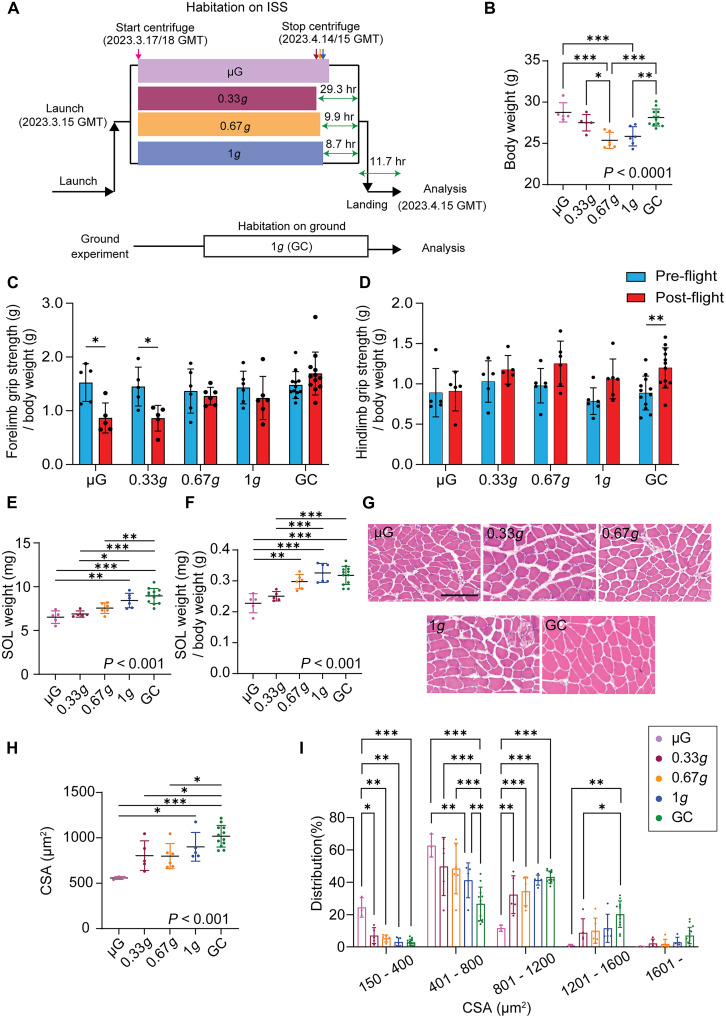 Figure 1
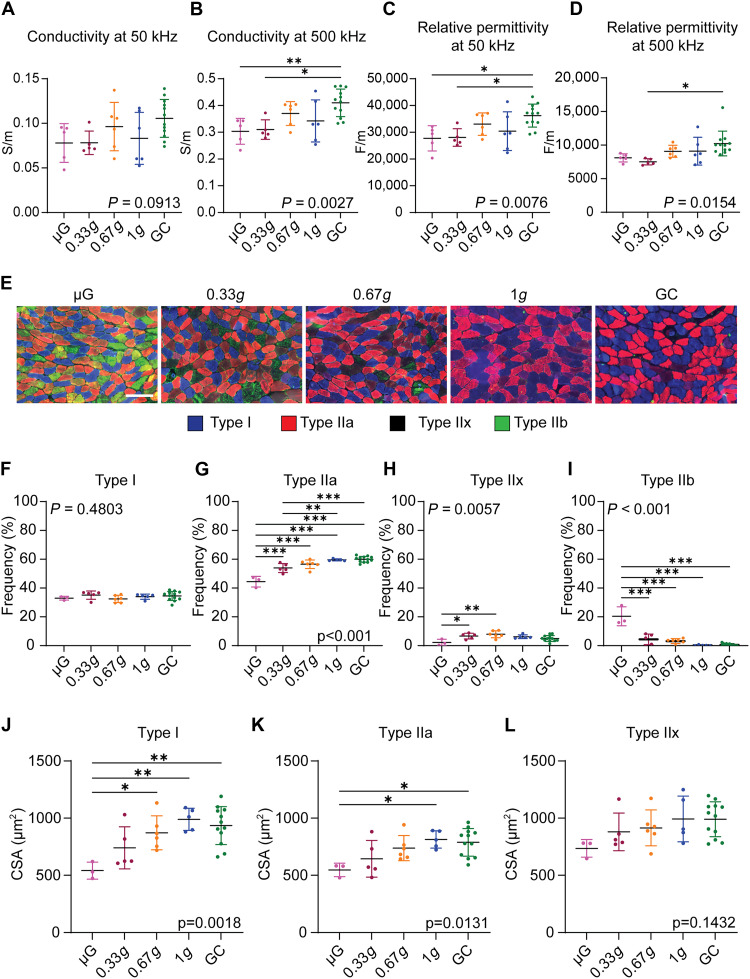 Figure 2
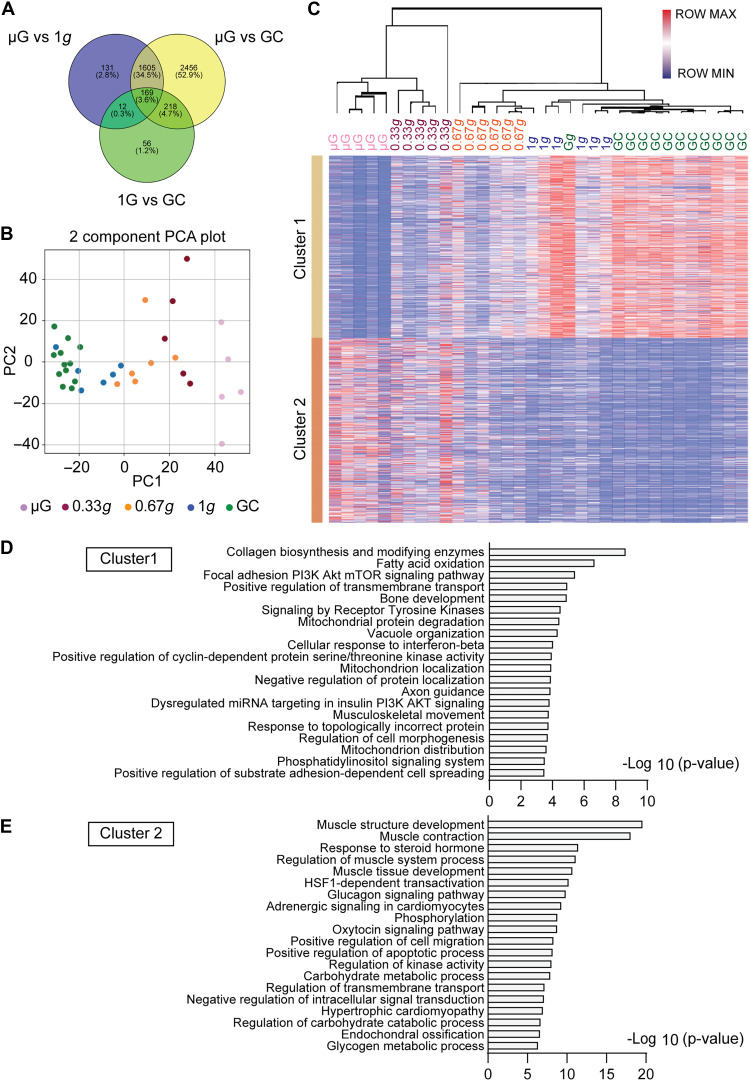 Figure 3
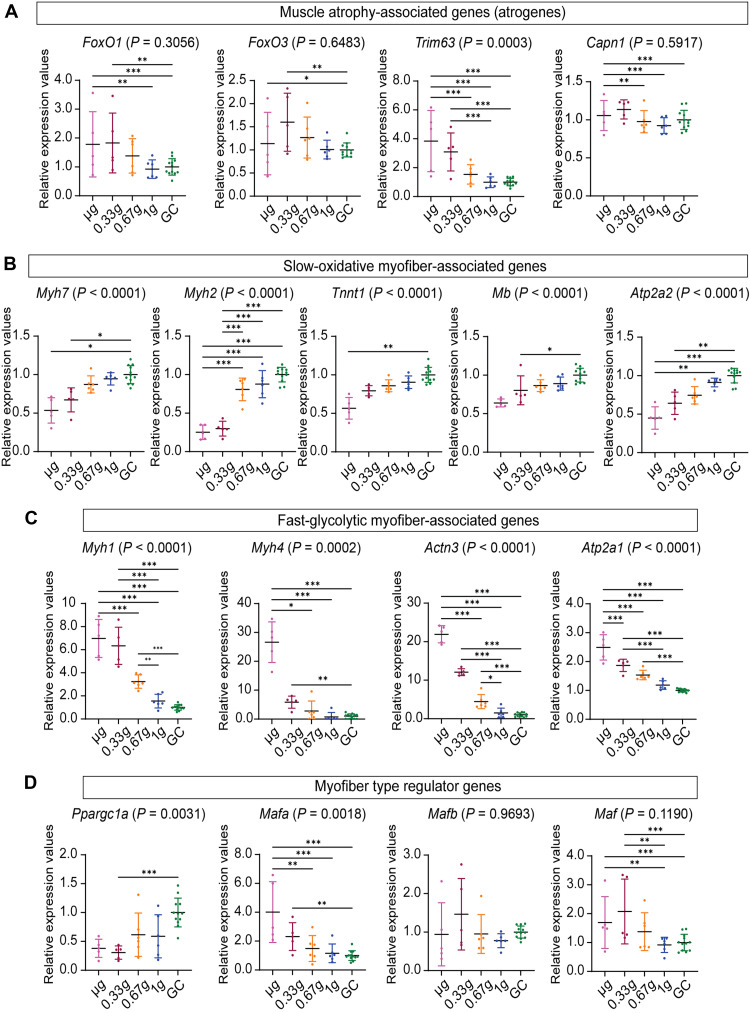 Figure 4
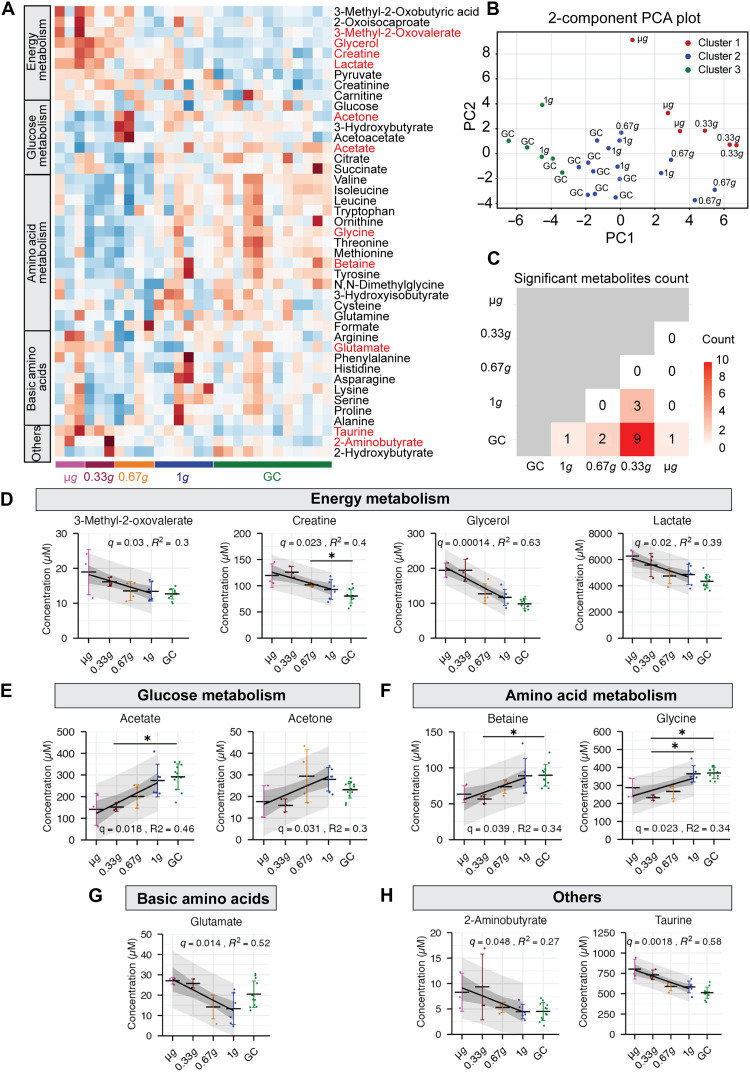 Figure 5
Peer Reviews
No public reviews on file for this paper yet. If you reviewed it on a platform where reviews are public (OpenReview, ICLR, NeurIPS, ICML), you can paste yours below so the community can read it here.
Videos
No videos yet. Explain this paper in a talk, walkthrough, or lecture? Add one.
Taxonomy
TopicsMuscle Physiology and Disorders · Spaceflight effects on biology · Cardiovascular and exercise physiology