Heteroatom Engineering in Robust Al-Based MOFs for Efficient Separation of Xenon over Krypton
He Wang, Zhiyan Zhang, Yingying Xu, Yang Lu, Ying Tian, Guangjie Zhang, Sifan Liu, Shuchen Liu

TL;DR
This study shows how modifying aluminum-based metal-organic frameworks with heteroatoms can improve the separation of xenon from krypton, which is important for industry and the environment.
Contribution
The study introduces a heteroatom engineering strategy to enhance Xe/Kr separation performance in Al-based MOFs.
Findings
MIL-160, with a furan-based polar linker, achieved the best Xe uptake and selectivity.
Dynamic experiments showed a long Xe breakthrough time of 42.9 min g−1 for MIL-160.
Simulations and calculations confirmed that furanyl oxygen atoms optimize Xe binding.
Abstract
The separation of xenon (Xe) and krypton (Kr) is very important for industrial applications and environmental protection. However, the lack of permanent dipoles, low polarizabilities arising from their spherical nature, and similar kinetic diameters make their efficient separation by porous adsorbents exceptionally challenging. This study explored the effects of pore geometry and surface polarity of a series of aluminum-based metal–organic frameworks (CAU-10-H, MIL-160, KMF-1, CAU-23) on Xe/Kr separation performance using a heteroatom engineering strategy. These MOFs are composed of AlO6 clusters and bent dicarboxylic acid linkers, enabling us to systematically investigate the effects of pore size and heteroatom types on Xe/Kr separation performance. Among them, MIL-160 has a polar linker based on furan, showing the best balance performance. At 298 K and 1.0 bar, the uptake of Xe is…
Genes, proteins, chemicals, diseases, species, mutations and cell lines named across the full text — each resolved to its canonical identifier and authoritative record.
Click any figure to enlarge with its caption.
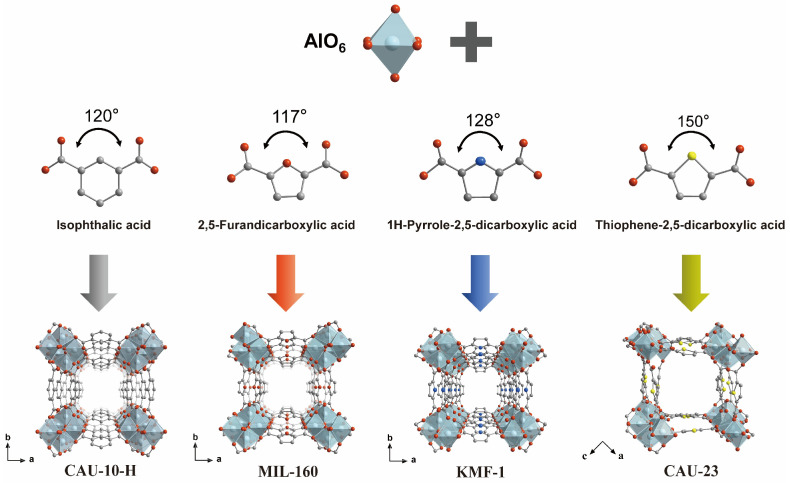 Figure 1
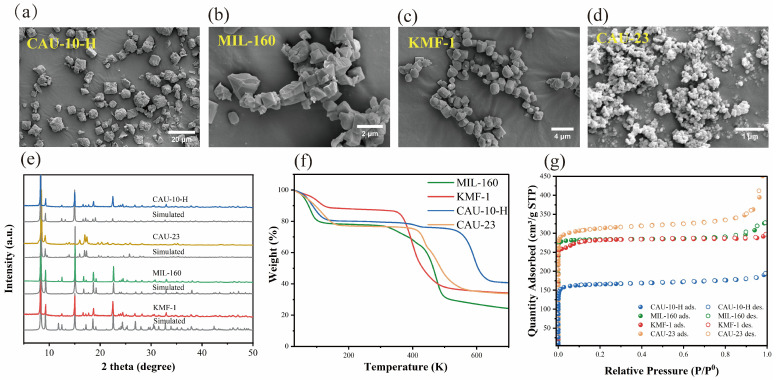 Figure 2
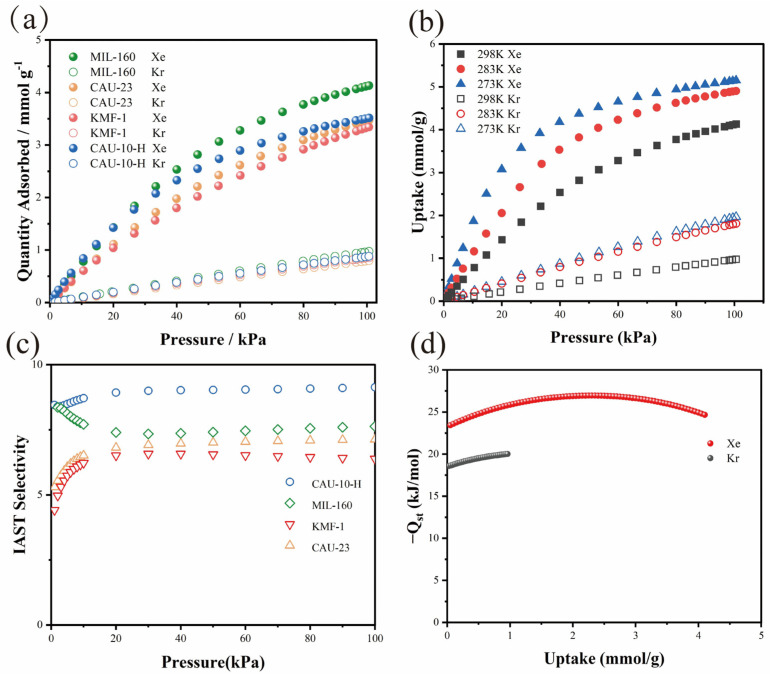 Figure 3
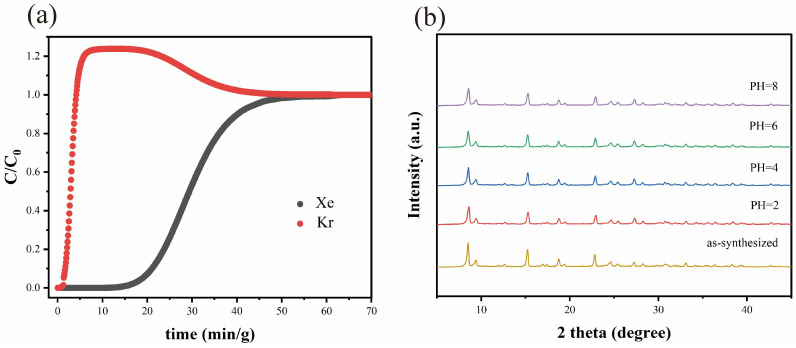 Figure 4
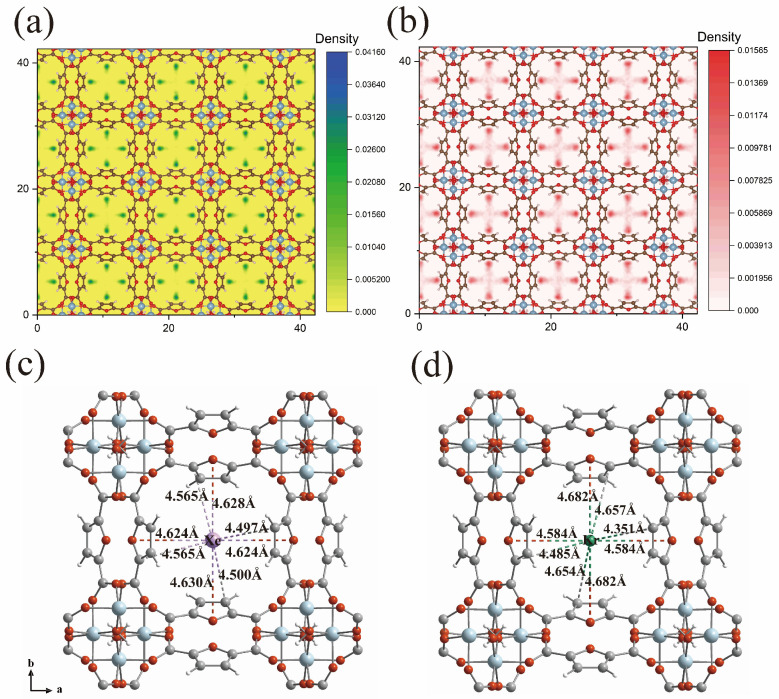 Figure 5
Peer Reviews
No public reviews on file for this paper yet. If you reviewed it on a platform where reviews are public (OpenReview, ICLR, NeurIPS, ICML), you can paste yours below so the community can read it here.
Videos
No videos yet. Explain this paper in a talk, walkthrough, or lecture? Add one.
Taxonomy
TopicsMetal-Organic Frameworks: Synthesis and Applications · Covalent Organic Framework Applications · Carbon Dioxide Capture Technologies