Response of Human Red Blood Cells to Acute and Chronic Oxidant Challenge as Observed Through the Glutathione and Glutathionyl-Hemoglobin Redox Pairs In Vitro and In Vivo
Federico Maria Rubino

TL;DR
This study examines how human red blood cells respond to oxidative stress by analyzing glutathione and glutathionyl-hemoglobin redox pairs in both lab and real-world conditions.
Contribution
The paper introduces a new electrochemical framework to better understand redox processes in erythrocytes under oxidative stress.
Findings
HbSSG accumulation in chronic oxidative stress is linked to impaired enzyme activity, not GSH availability.
Smokers show consistent HbSSG levels, but GSSG/GSH redox potentials vary widely.
Dehydro-alanine analogs of GSH from butadiene and busulfan may impair redox enzyme function.
Abstract
Glutathionyl-hemoglobin (HbSSG) reversibly forms under oxidative stress in erythrocytes, where it constitutes the main redox buffer, in a dynamic equilibrium with the thiol (GSH) and disulfide (GSSG) forms of glutathione, that quickly revert to the reduced thiols when oxidative pressure is relieved. Under acute challenge, the “oxidized” GSH pool distributes between GSSG and HbSSG. Recalculation with electrochemical metrics based on redox potentials of the GSSG/GSH and HbSSG/HbSH pairs, plotted in their phase space, improves the understanding of the competing reduction processes. The first process is reduction of the GSSG pool, while, later, HbSSG reduction occurs as a two-step process. HbSSG accumulation in chronic oxidative stress follows an impairment of these steps. In 30 strong smokers, homogeneous levels of HbSSG are in the range of 2.4–11.7% (Eh −120–−95 mV), but the Eh of the…
Genes, proteins, chemicals, diseases, species, mutations and cell lines named across the full text — each resolved to its canonical identifier and authoritative record.
Click any figure to enlarge with its caption.
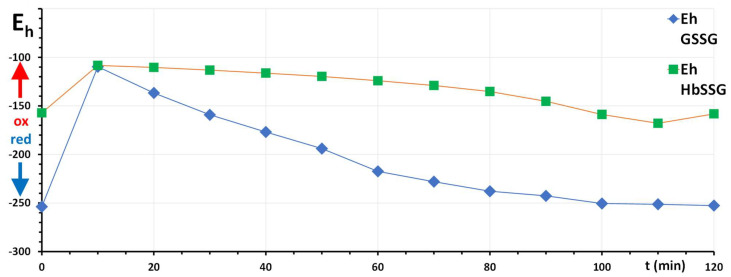 Figure 1
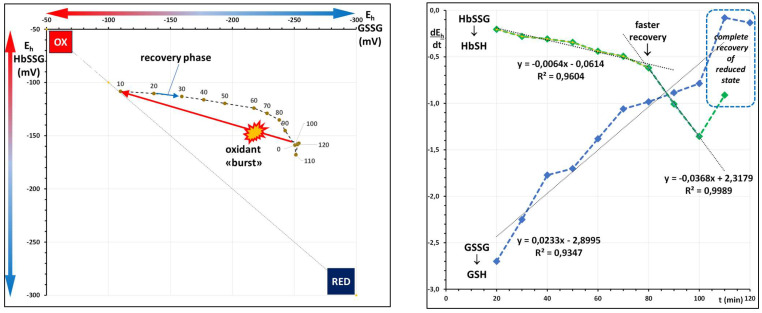 Figure 2
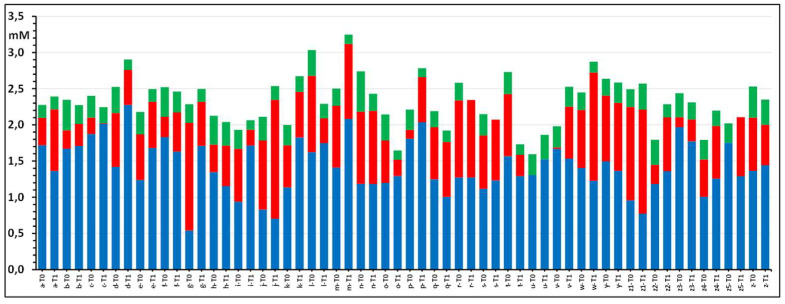 Figure 3
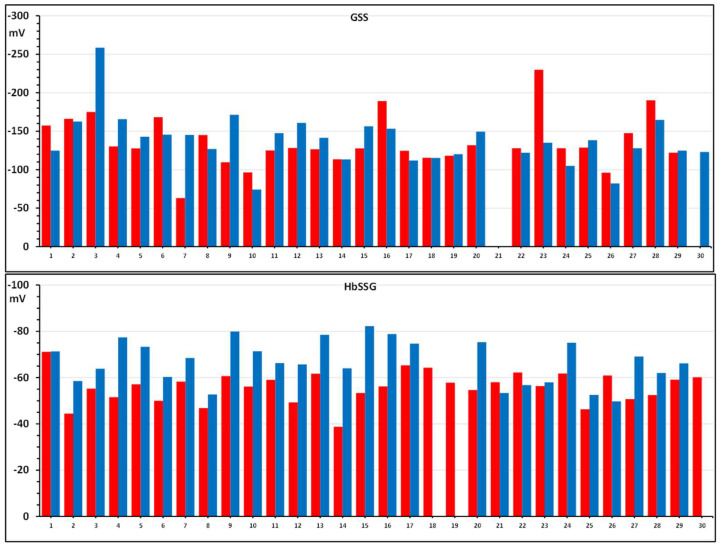 Figure 4
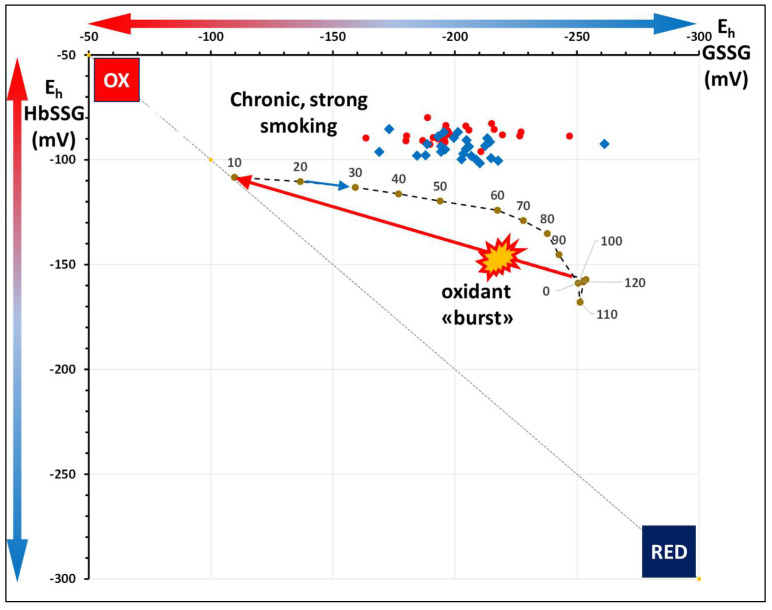 Figure 5
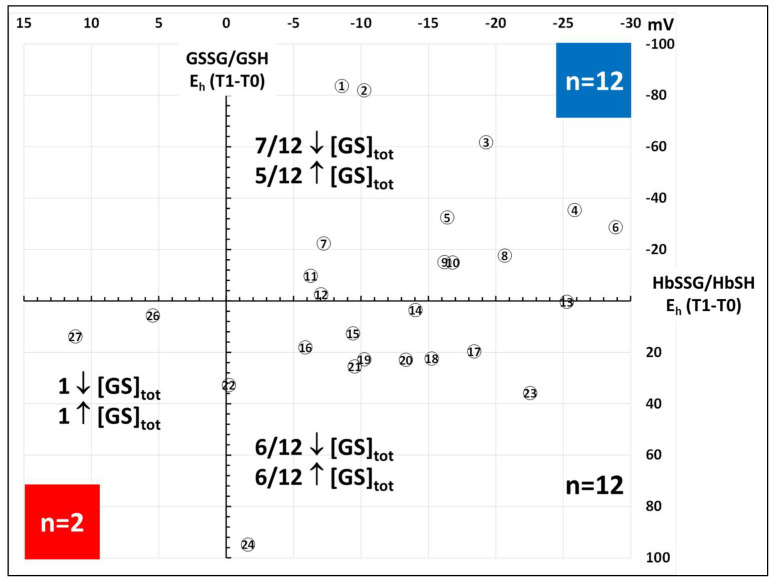 Figure 6
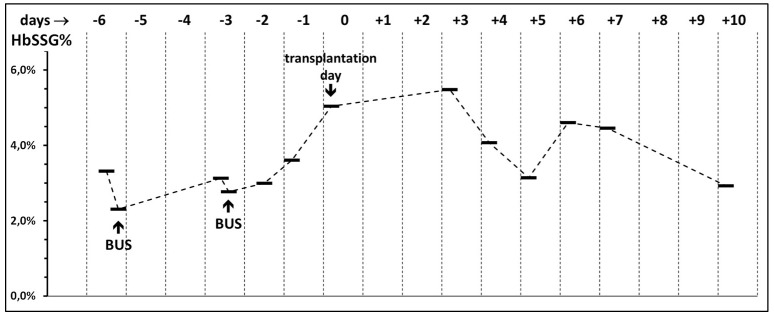 Figure 7
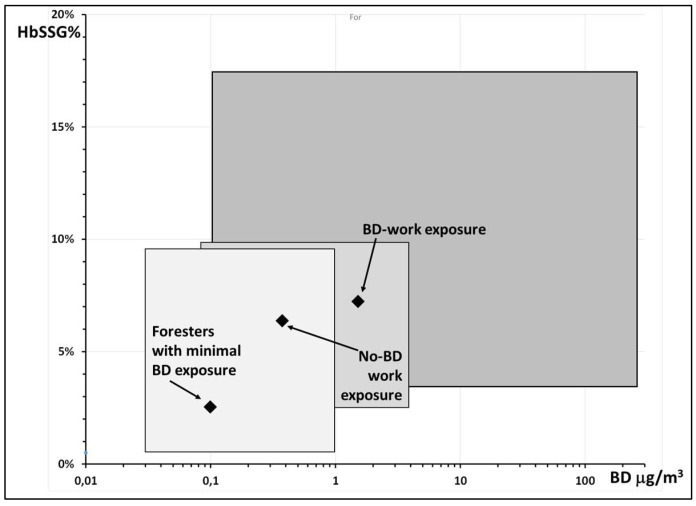 Figure 8
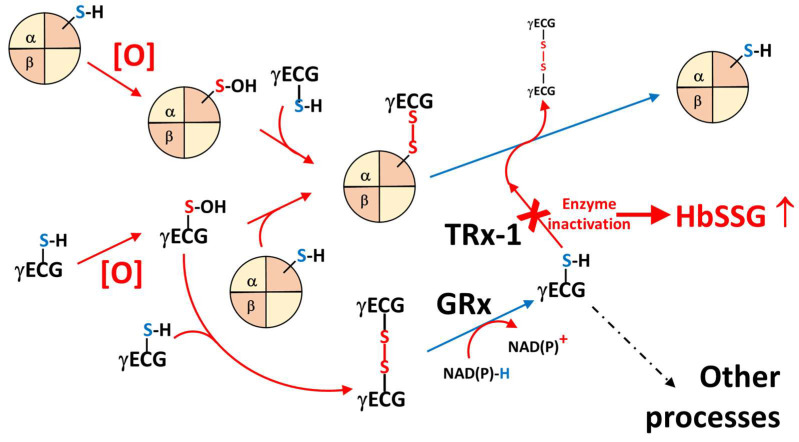 Figure 9
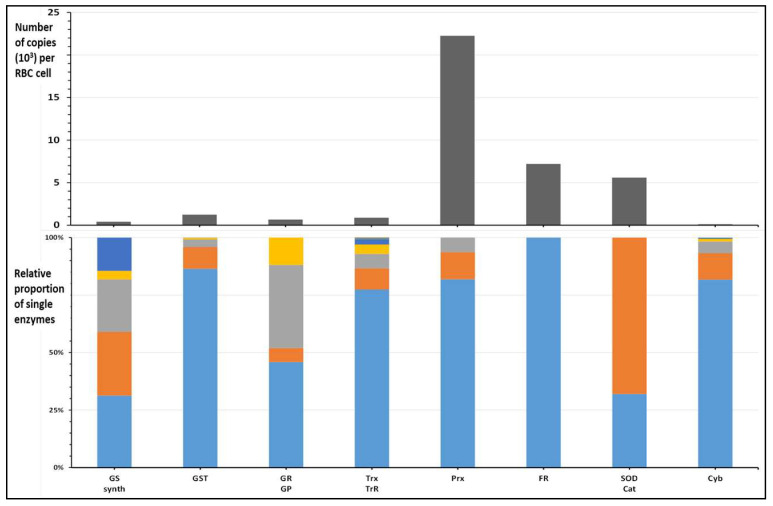 Figure 10
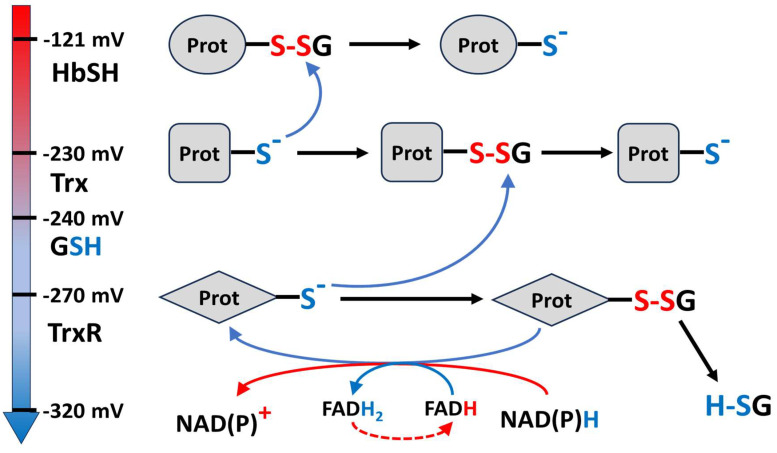 Figure 11
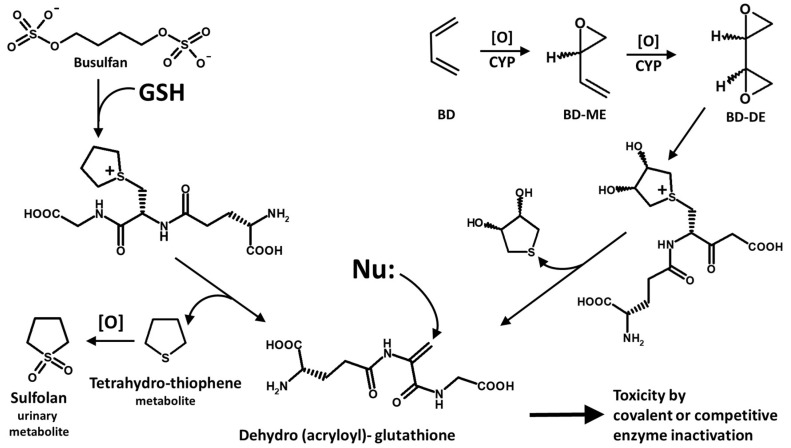 Figure 12
Peer Reviews
No public reviews on file for this paper yet. If you reviewed it on a platform where reviews are public (OpenReview, ICLR, NeurIPS, ICML), you can paste yours below so the community can read it here.
Videos
No videos yet. Explain this paper in a talk, walkthrough, or lecture? Add one.
Taxonomy
TopicsSulfur Compounds in Biology · Redox biology and oxidative stress · Hemoglobin structure and function