Atrial Fibrillation and Cognitive Decline: Mechanisms, Evidence, and Preventive Strategies—A Narrative Review
Dania Hasanein, Daniel Florin Lighezan, Oana Elena Țunea, Valentina Gabriela Ciobotaru, Norina Simona Bașa

TL;DR
Atrial fibrillation is linked to cognitive decline and dementia through mechanisms like reduced brain blood flow and inflammation, but more research is needed to confirm how to prevent it.
Contribution
This review highlights multiple mechanisms linking AF to cognitive decline and suggests that DOACs may reduce dementia risk compared to other treatments.
Findings
Atrial fibrillation is associated with increased dementia risk through cerebral hypoperfusion and microembolism.
Direct oral anticoagulants may be more effective than vitamin K antagonists in reducing dementia risk.
Current evidence supports managing AF with anticoagulation and modifying vascular risk factors to potentially prevent cognitive decline.
Abstract
Atrial fibrillation (AF) is the most common sustained cardiac arrhythmia and is increasingly recognized as a risk factor for cognitive decline and dementia, independent of clinically apparent stroke. This narrative review synthesizes current evidence on pathophysiological mechanisms linking AF to cognitive decline, including cerebral hypoperfusion, silent cerebral infarction, microembolism, systemic inflammation, and shared vascular risk factors. A structured literature search was conducted in PubMed and ScienceDirect from January 2000 to October 2025, with evidence quality assessed using adapted Newcastle–Ottawa Scale criteria. Observational evidence suggests that oral anticoagulation, particularly with direct oral anticoagulants (DOACs), may be associated with reduced dementia risk compared to no treatment or vitamin K antagonists. However, most intervention studies were not designed…
Genes, proteins, chemicals, diseases, species, mutations and cell lines named across the full text — each resolved to its canonical identifier and authoritative record.
Click any figure to enlarge with its caption.
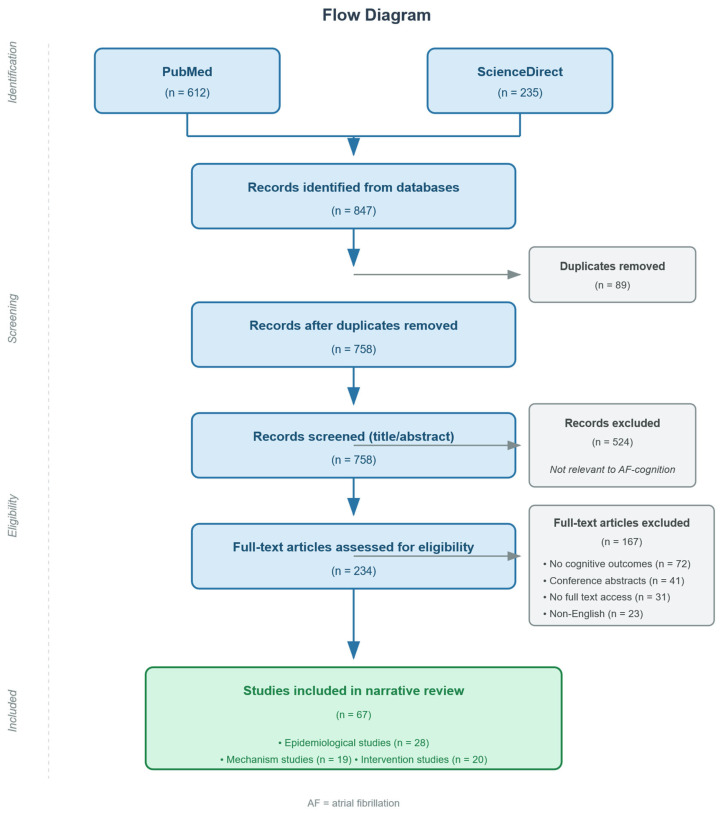 Figure 1
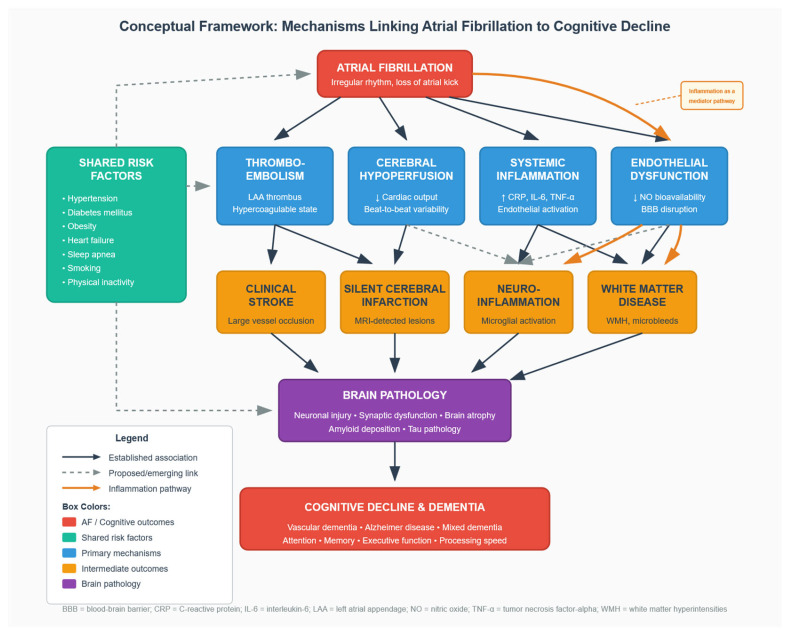 Figure 2
Peer Reviews
No public reviews on file for this paper yet. If you reviewed it on a platform where reviews are public (OpenReview, ICLR, NeurIPS, ICML), you can paste yours below so the community can read it here.
Videos
No videos yet. Explain this paper in a talk, walkthrough, or lecture? Add one.
Taxonomy
TopicsAtrial Fibrillation Management and Outcomes · Cardiovascular Disease and Adiposity · Cerebrovascular and Carotid Artery Diseases