Clonal Dynamics of FLT3-ITD from Diagnosis to Relapse: Ultra-Sensitive Patient-Specific Monitoring by ddPCR
Alessandro Ferrando, Johanna Umurungi, Alice Costanza Danzero, Antonio Frolli, Rita Vacca, Arianna Savi, Giovanni Fornari, Valentina Gaidano, Alessandro Cignetti, Beatrice Sani, Simone Rocco, Barbara Pergolizzi, Carmen Fava, Cristina Panuzzo, Jessica Petiti, Daniela Cilloni

TL;DR
A new ultra-sensitive ddPCR method detects FLT3-ITD mutations in AML patients, revealing hidden clones and improving monitoring for relapse.
Contribution
A patient-specific ddPCR method with 10−5 sensitivity for FLT3-ITD monitoring, enabling earlier detection of relapse and subclones.
Findings
ddPCR detected FLT3-ITD re-emergence months before hematologic relapse.
25% of FLT3-negative diagnosed patients had undetected FLT3-ITD microclones at diagnosis.
FLT3-ITD relapse often originates from pre-existing subclones below conventional detection limits.
Abstract
The FLT3-ITD mutation is a critical prognostic marker in acute myeloid leukemia (AML) and recent clinical trials demonstrate that FLT3-based measurable residual disease (MRD) is both prognostic and predictive, guiding therapeutic interventions in intensive and post-transplant settings. Conventional detection methods lack the sensitivity required for effective MRD monitoring. We developed a patient-specific droplet digital PCR (ddPCR) approach achieving analytical sensitivity of 10−5 (0.001%) for FLT3-ITD quantification. In our cohort, ddPCR enabled longitudinal monitoring of clonal dynamics, allowing the detection of re-emerging FLT3-ITD clones months before hematologic relapse and earlier than standard capillary electrophoresis. Notably, 25% of patients who relapsed as FLT3-ITD positive despite being classified as FLT3-negative at diagnosis harbored detectable microclones when…
Genes, proteins, chemicals, diseases, species, mutations and cell lines named across the full text — each resolved to its canonical identifier and authoritative record.
Click any figure to enlarge with its caption.
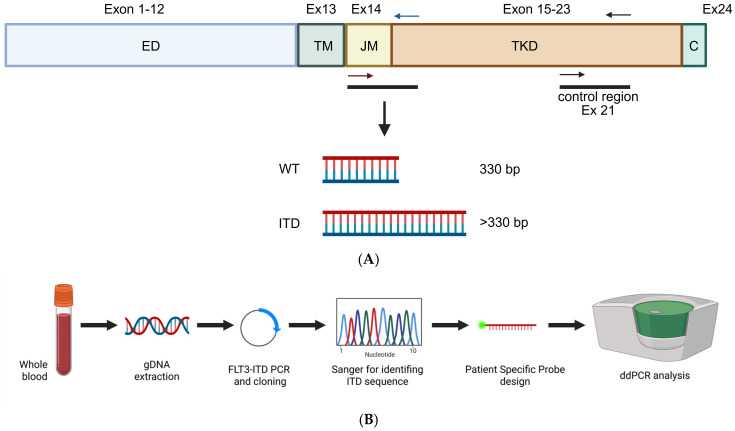 Figure 1
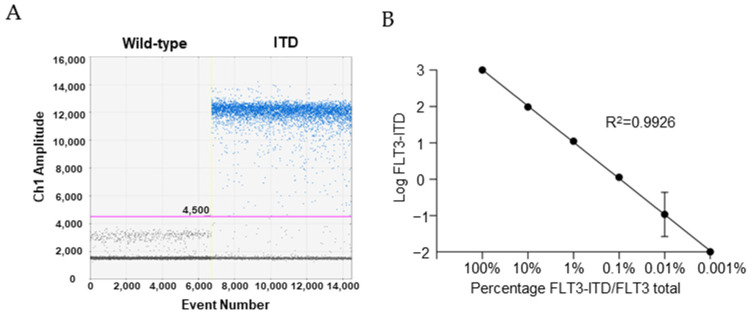 Figure 2
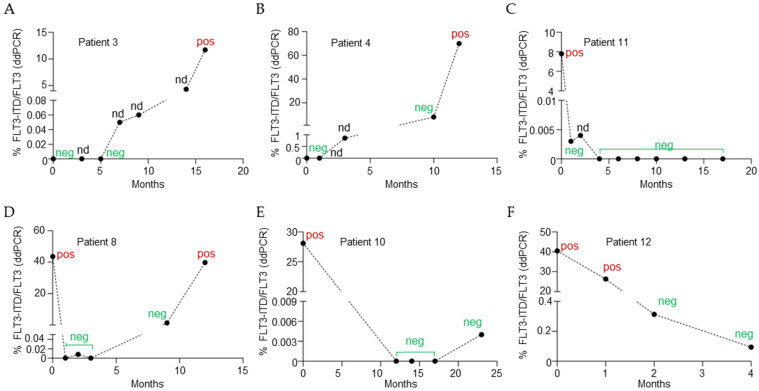 Figure 3
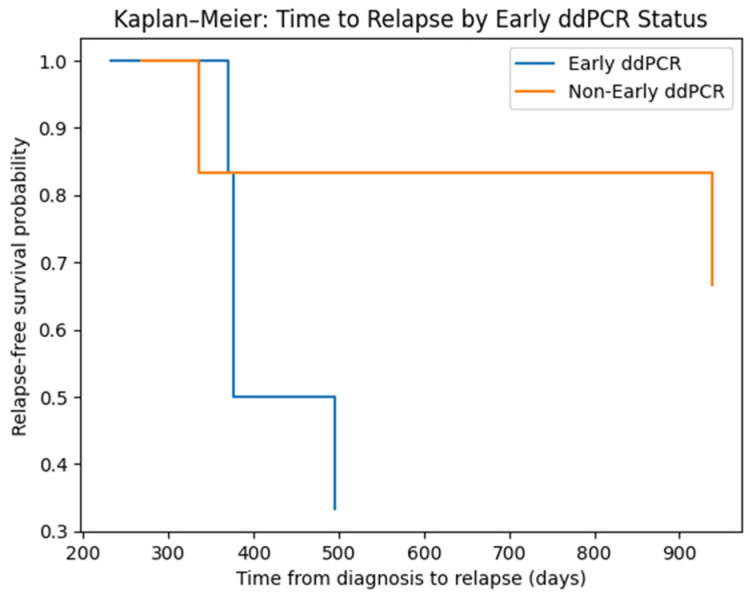 Figure 4
Peer Reviews
No public reviews on file for this paper yet. If you reviewed it on a platform where reviews are public (OpenReview, ICLR, NeurIPS, ICML), you can paste yours below so the community can read it here.
Videos
No videos yet. Explain this paper in a talk, walkthrough, or lecture? Add one.
Taxonomy
TopicsAcute Myeloid Leukemia Research · Cancer Genomics and Diagnostics · Protein Degradation and Inhibitors