Quantification Revisited: What qPCR Efficiency Models Reveal About Data Analysis Integrity
Stephen A. Bustin, Maurice J. B. van den Hoff, Michael W. Pfaffl, Mikael Kubista, Jan M. Ruijter

TL;DR
This paper reviews how amplification efficiency impacts qPCR data accuracy and highlights the consequences of ignoring it in gene expression studies.
Contribution
The paper provides a comprehensive review of efficiency estimation models and their implications for improving qPCR data analysis.
Findings
Assuming uniform amplification efficiency introduces errors in relative expression analyses.
Efficiency estimation models can improve the accuracy of qPCR quantification.
Modern data-driven methods for amplification curve analysis are being developed.
Abstract
Amplification efficiency is one of the key parameters in quantitative real-time PCR, as it directly influences the accuracy of both absolute and relative quantification. Amplification efficiency, the fold increase per cycle, is affected by oligonucleotide design, reaction chemistry, sample and template properties, and instrument performance. Consequently, it differs between samples, assays and experimental runs. Although methods for estimating the amplification efficiency have been available for more than two decades, most published qPCR studies continue to assume equal and ideal efficiency across assays. This simplifying assumption introduces efficiency- and expression-dependent error into relative expression and fold-change analyses, contributing to the poor reproducibility observed in many PCR-based studies. This review examines the role of the amplification efficiency in qPCR…
Click any figure to enlarge with its caption.
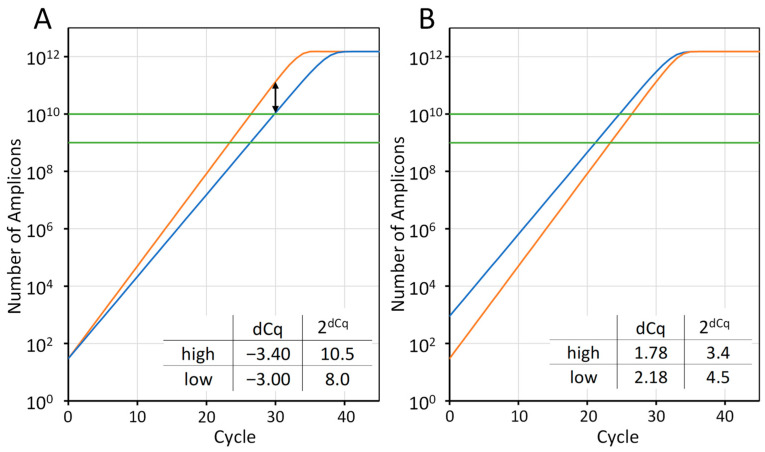 Figure 1
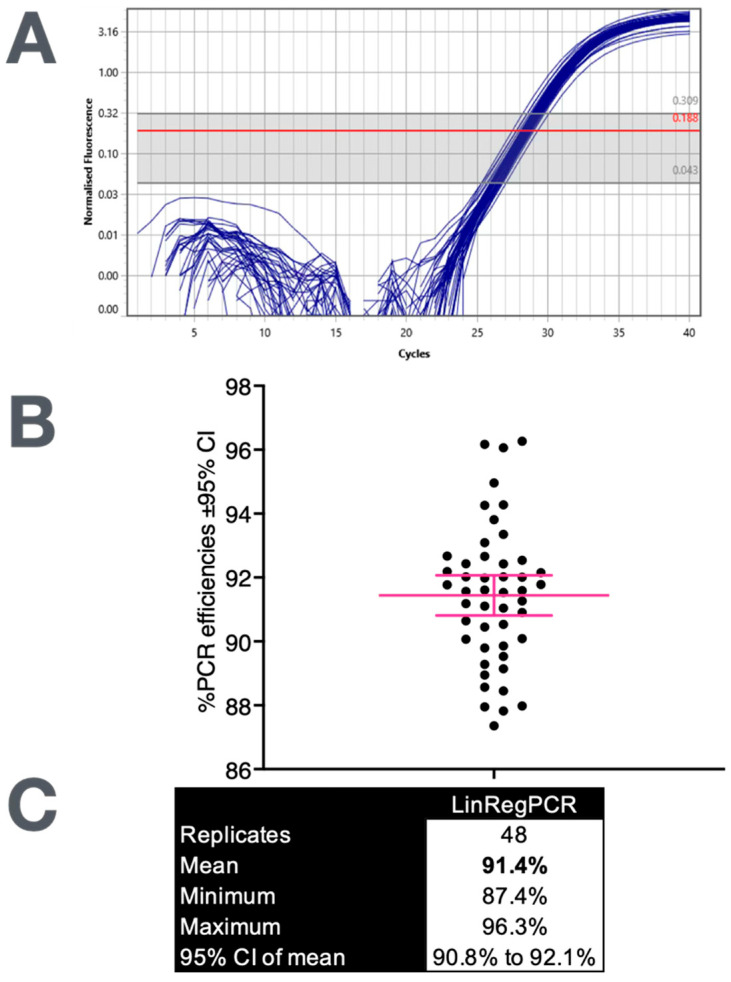 Figure 2
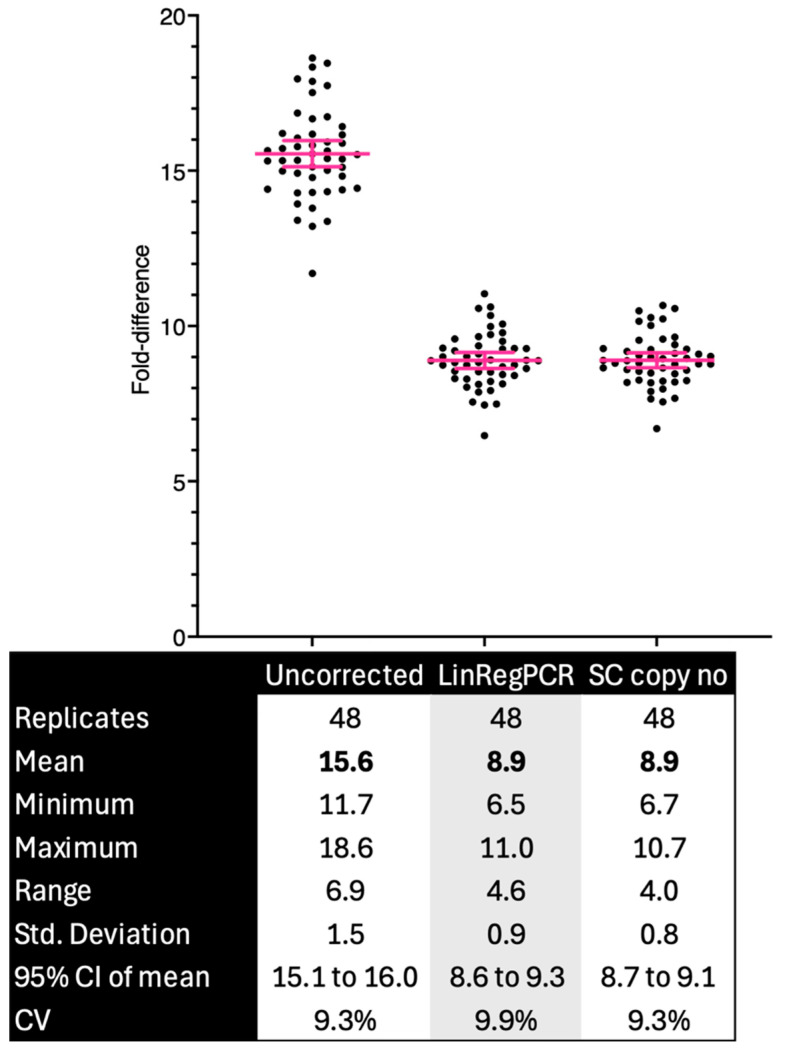 Figure 3
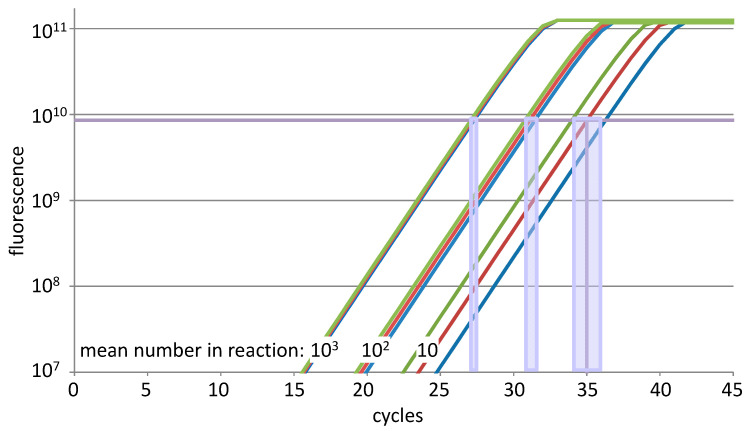 Figure 4
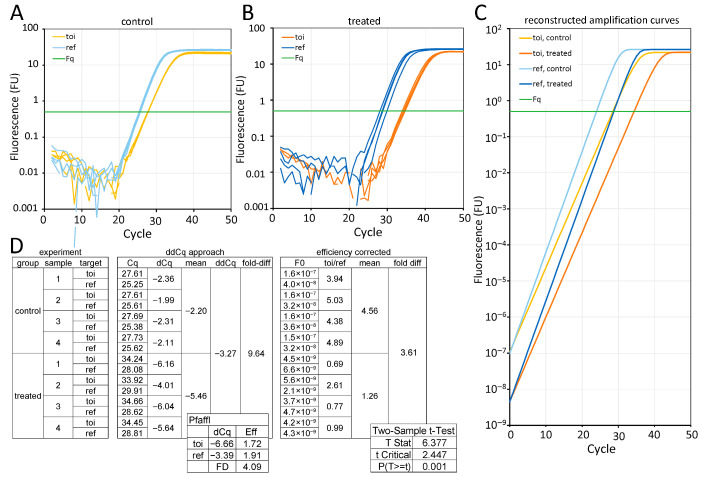 Figure 5
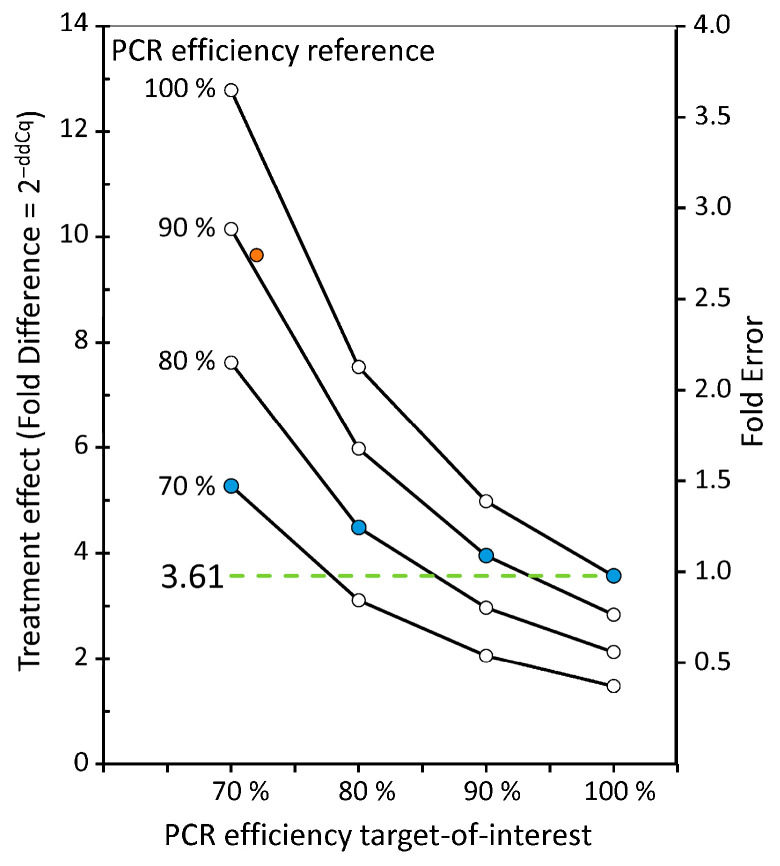 Figure 6
Peer Reviews
No public reviews on file for this paper yet. If you reviewed it on a platform where reviews are public (OpenReview, ICLR, NeurIPS, ICML), you can paste yours below so the community can read it here.
Videos
No videos yet. Explain this paper in a talk, walkthrough, or lecture? Add one.
Taxonomy
TopicsMolecular Biology Techniques and Applications · Gene expression and cancer classification · Forensic and Genetic Research