Field-Free Superconducting Diode Effect in 45°-Twisted FeSe van der Waals Josephson Junctions
Juyuan Wang, Wei Wei, Chuandi Pan, Hengning Wang, Chunsheng Wang, Yue Sun, Zhixiang Shi, Qun Niu, Guolin Zheng, Mingliang Tian

TL;DR
Researchers discovered a field-free superconducting diode effect in twisted FeSe junctions, revealing new insights into symmetry-breaking physics in superconductors.
Contribution
The study reports a field-free superconducting diode effect in 45°-twisted FeSe Josephson junctions, without relying on an external magnetic field.
Findings
A field-free superconducting diode effect is observed in 45°-twisted FeSe Josephson junctions below 3 K.
The diode effect shows even symmetric dependence of asymmetric critical current on magnetic field.
The effect reverses polarity at 2.2 K under temperature modulation.
Abstract
The iron-based superconductor FeSe has garnered considerable attention, in no small part due to its rich physics as well as the unique coexistence of superconductivity and nematicity. The recent discovery of the superconducting diode effect (SDE)—a non-reciprocal critical current with respect to the bias direction—requires simultaneous breaking of time-reversal symmetry (TRS) and inversion symmetry (IS), making it a powerful transport signature of broken symmetries in superconductors. Notably, most reported SDEs rely on the application of an external magnetic field to break TRS, which significantly limits their practical applications in integrated superconducting electronics. Here, we report a field-free SDE in 45°-twisted FeSe Josephson junctions below 3 K, evidenced directly by the even symmetric dependence of the asymmetric critical current on the magnetic field. Under temperature…
Genes, proteins, chemicals, diseases, species, mutations and cell lines named across the full text — each resolved to its canonical identifier and authoritative record.
Click any figure to enlarge with its caption.
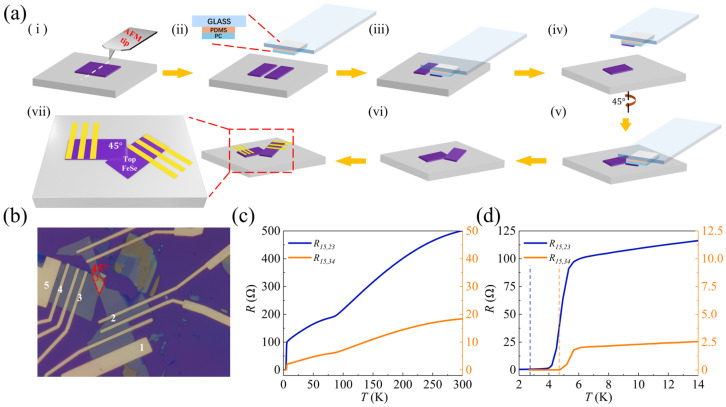 Figure 1
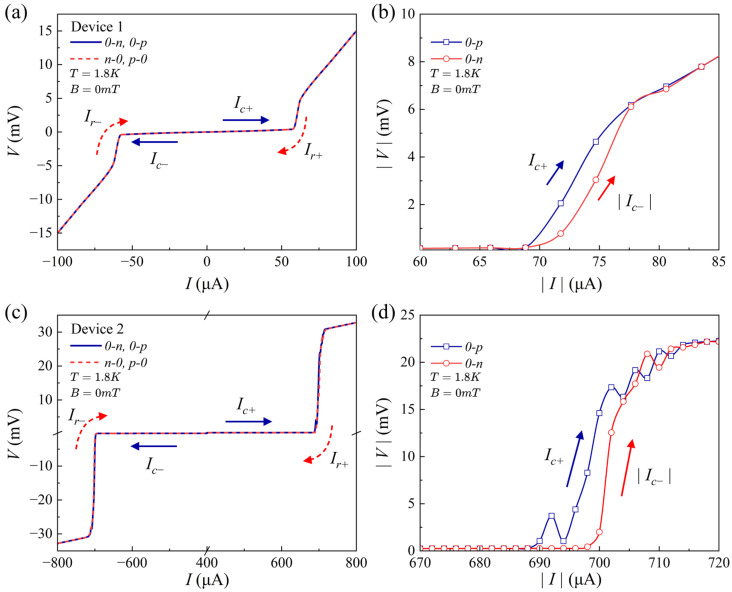 Figure 2
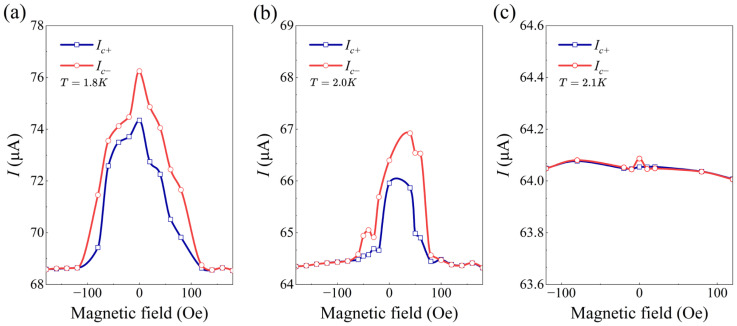 Figure 3
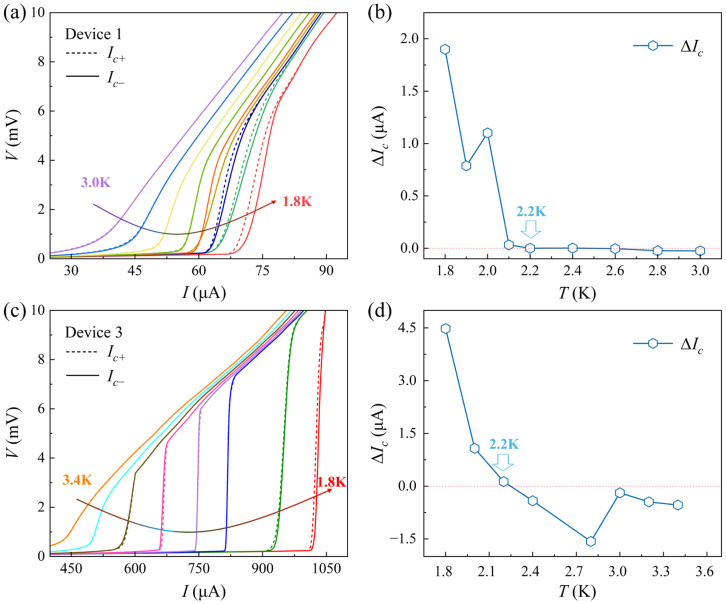 Figure 4
- —National Natural Science Foundation of China
- —National Key R&D Program of the MOST of China
- —Basic Research Program of the Chinese Academy of Sciences Based on Major Scientific Infrastructures
- —Anhui Provincial Major S&T Project
- —High Magnetic Field Laboratory of Anhui Province under Contract
- —Collaborative Innovation Program of Hefei Science Center, CAS
Peer Reviews
No public reviews on file for this paper yet. If you reviewed it on a platform where reviews are public (OpenReview, ICLR, NeurIPS, ICML), you can paste yours below so the community can read it here.
Videos
No videos yet. Explain this paper in a talk, walkthrough, or lecture? Add one.
Taxonomy
TopicsIron-based superconductors research · Topological Materials and Phenomena · Electronic and Structural Properties of Oxides
1. Introduction
The non-reciprocal electrical transport phenomenon, characterized by asymmetric current responses under forward and reverse bias, serves as an indicator for probing symmetry breaking in condensed matter systems, thereby attracting widespread attention and intensive investigation [1,2,3,4]. The extension of this phenomenon into superconducting systems has led to the discovery of the SDE, which is typically manifested as a pronounced disparity in critical currents between opposite bias directions [5]. Recent theoretical efforts have explored the microscopic origins of SDE through non-reciprocal transport mechanisms in Josephson junctions and two-dimensional (2D) superconducting systems [6,7,8,9,10,11,12,13], while experimental observations have been realized in diverse platforms, including twisted systems [14,15,16], superconducting/magnetic heterostructures [17,18,19], thin films [20,21,22], Josephson junction devices [23,24,25,26,27], and chiral superconductors [28,29]. Notably, most reported SDEs rely on the application of external magnetic fields to achieve the necessary breaking of time-reversal symmetry, TRS, a critical constraint that significantly limits their practical applicability in integrated superconducting electronics.
Among iron-based superconductors, FeSe stands out due to its minimal crystal structure and unique coexistence of nematicity and superconducting, making it an ideal platform for studying the interplay between nematicity and superconductivity [30]. FeSe is conventionally considered to preserve both spatial-inversion and TRS symmetries [30]. However, both recent experiments such as angle-resolved photoemission spectroscopy (ARPES) [31] and scanning tunneling microscopy (STM) [32] as well as theoretical study [33] suggest the existence of hidden electronic states with TRS-breaking. Nevertheless, the corresponding transport evidence for the TRS-breaking in FeSe is still lacking.
In this work, we report the observation of a field-free superconducting diode effect in 45°-twisted FeSe van der Waals Josephson junctions. We observe a pronounced non-reciprocal current–voltage characteristic ( curve) in the absence of external magnetic fields. The asymmetric critical current exhibits an even-symmetric dependence on magnetic fields, indicating the presence of a robust field-free SDE. Temperature modulation further enables reversible switching of the diode polarity. Our results establish FeSe-based Josephson junctions as a promising platform for realizing field-free superconducting diodes.
2. Methods
The FeSe Josephson junction is fabricated via a top-down stacking approach [34], which prevents the interface from contacting any organic contaminants, thus preserving interfacial cleanliness, as illustrated in Figure 1a. FeSe was first exfoliated from the bulk crystal onto silicon substrates using scotch tapes. Nanosheets with a thickness ranging from 30 to 40 were selected, followed by patterning of FeSe nanosheets via the atomic force microscope (AFM) tip. Subsequently, two nanosheets were stacked away from the cut region using polydimethylsiloxane (PDMS) and polycarbonate (PC) films through a standard dry transfer technique. Finally, electron beam lithography (EBL) was carried out, and Au/Pt electrodes were deposited by sputtering. All transfer and stacking processes were performed in a glovebox with water and oxygen levels maintained below 1 ppm, utilizing a custom-built transfer stage.
During the experiments, the temperature fluctuation range of the cryostat was maintained at . All low-temperature transport measurements were performed in a Quantum Design Physical Property Measurement System (PPMS) Dynacool A focused ion beam (FIB) system with a Ga^+^ source was employed to pattern and etch the sample surface. After FIB patterning and etching, the stacked areas of devices 1, 2, and 3 were approximately μm^2^, μm^2^, and μm^2^, respectively. In our experiments, a current increment of was employed to conduct the measurement.
3. Results and Discussion
Figure 1b illustrates the optical image of the device 1, current is applied between electrodes 1 and 5 of the device, and the voltage across electrodes 2 and 3 is recorded to obtain the resistance of the FeSe junction, denoted as . Likewise, the voltage between electrodes 3 and 4 is recorded to obtain the resistance of the bottom FeSe nanosheet, denoted as .
Temperature-dependent resistance curves ( curves) of the FeSe junction (blue, ) and the bottom FeSe nanosheet (yellow, ) are shown in Figure 1c,d, which exhibit metallic behaviors. At low-temperature regions, the superconducting transition temperature , defined as the temperature at which the resistance drops to zero (as indicated by the dashed lines in Figure 1d), is for FeSe Josephson junction, which is much smaller than that of FeSe nanosheet ( ), as can be seen in Figure 1d. The observation of a superconducting current traversing the junction provides direct evidence for the Josephson effect in FeSe-based junctions and confirms the high quality of our devices.
To further confirm the Josephson effect in the junctions, we measured the critical current of Josephson junctions in device 1 and device 2. We first swept the current forward from zero to positive ( ) to obtain , and then from positive back to zero ( ) to obtain . Similarly, in the reverse sweep, the current was swept backward from zero to negative ( ) to obtain , and subsequently from the negative back to zero ( ) to obtain . The were determined to be and in device 1 and 2, respectively (see Supplementary Material Figure S1a,c). To reduce the of the devices, we used focused ion beam (FIB) to etch the samples and reduce the junction areas. In addition, only the predefined sacrificial regions were exposed to ion beam irradiation, ensuring maximal protection of the devices. The characteristics of the FIB-etched devices 1 and 2 are presented in Figure 2a–d.
As shown in Figure 2a,c, the values of for device 1 and device 2 have significantly decreased to and , respectively. Analyzing the characteristics of devices 1 and 2 reveals that and are nearly identical, indicating that the FeSe junctions exhibit characteristics of overdamped Josephson junctions. We plot the curve on an absolute scale in Figure 2b,d to clearly show the asymmetric critical current ( ), which reveals a non-reciprocal transport behavior. To quantify the SDE strength, we define the rectification coefficient . For device 1, the measured is , from which the is calculated to be , significantly higher than obtained from the unetched FeSe junction (see Supplementary Material Figure S1b). A similar analysis for Device 2 yields a value of and a rectification coefficient of . The non-reciprocal transport behaviors observed in both device 1 and device 2 reveal the existence of the SDE in the FeSe junctions. Recently, field-free SDE was reported in thermal gradient-induced FeSe nanoflakes with TRS-breaking in non-equilibrium [35]. In our experiment, however, the decrease in gives rise to the increase in in FIB-etched samples which effectively excludes the thermal effects as the origin of the SDE (see Supplementary Material Figure S1b). Note that the curve in the superconducting state for Device 1 exhibits a finite slope both before and after FIB cutting, which could be attributed to the effect of vortex dynamics. To further validate that the observed non-reciprocal behavior originates from the junction architecture rather than intrinsic properties of the material, we performed control experiments on individual FeSe nanosheets. As can be seen in Supplementary Material Figure S1d, no hysteretic behavior was detected in single FeSe nanoflake, confirming that the hysteresis and associated diode effect are not inherent in FeSe nanoflakes. The emergence of non-reciprocal transport behaviors highlights the crucial role of IS-breaking in unlocking new quantum functionalities.
For a deep insight of the observed SDE, we systematically investigated the variation in the under out-of-plane magnetic fields. As shown in Figure 3a, the SDE is completely suppressed at approximately at , indicating that the diode effect is highly sensitive to the out-of-plane magnetic field. Importantly, exhibits a clear even symmetry with respect to the magnetic field, indicating the existence of a field-free SDE with spontaneous TRS-breaking in -twisted FeSe Josephson junctions. We analyze the microscopic origin of this field-free SDE and rule out vortex dynamics as the dominant mechanism, since vortex-related effects typically lead to a magnetic-field-tunable reversal of the diode polarity [15]. In contrast, the observed field-free SDE is most likely caused by spontaneous TRS-breaking intrinsic to the FeSe Josephson junctions. Figure 3b,c further demonstrate the magnetic field dependence of under different temperatures. As can be seen, the symmetry of was unchanged at different temperatures. However, in sharp contrast to the situation at , the critical magnetic field at which the diode effect is suppressed progressively decreases with increasing temperatures. At , becomes nearly undetectable.
We also investigated the temperature dependence of the field-free SDE, characteristics of devices 1 and 3 were measured at temperatures below , as shown in Figure 4a,c. As the temperature increases, decreases and is progressively suppressed. Notably, in both devices exhibit a distinct sign reversal at near , above which the polarity remains unchanged with further increasing temperatures. The temperature-dependent is further summarized in Figure 4b,d, which clearly illustrate sign reversals at , possibly due to the complex evolution of intertwined order in FeSe at low temperatures. Note that local magnetic moments of excess Fe atoms might be the underlying mechanism of TRS-breaking [36,37,38]. However, the distribution of Fe impurities varies in different nanoflakes, which cannot explain the sign reversal of SDE near . The observation of the field-free SDE in -twisted FeSe Josephson junctions provides strong transport evidence for spontaneous TRS-breaking in iron-based superconductor FeSe.
4. Conclusions
In summary, the field-free SDE with an even-symmetry dependence of on the magnetic field has been observed in -twisted FeSe Josephson junctions at low temperatures below . The diode polarity can be further switched by elevating the temperatures up to above . Our results demonstrate stable and controllable superconducting diode behavior in FeSe Josephson junctions without external magnetic fields, offering a promising platform for the design and development of symmetry-broken superconducting electronic devices.
The reference list from the paper itself. Each links out to its DOI / PubMed record.
- 1Rikken G.L.J.A. Raupach E. Observation of magneto-chiral dichroism Nature 199739049349410.1038/37323 · doi ↗
- 2Wakatsuki R. Saito Y. Hoshino S. Itahashi Y.M. Ideue T. Ezawa M. Iwasa Y. Nagaosa N. Nonreciprocal charge transport in noncentrosymmetric superconductors Sci. Adv.20173 e 160239010.1126/sciadv.160239028439548 PMC 5400453 · doi ↗ · pubmed ↗
- 3Tokura Y. Nagaosa N. Nonreciprocal responses from non-centrosymmetric quantum materials Nat. Commun.20189374010.1038/s 41467-018-05759-430218054 PMC 6138722 · doi ↗ · pubmed ↗
- 4Yasuda K. Yasuda H. Liang T. Yoshimi R. Tsukazaki A. Takahashi K.S. Nagaosa N. Kawasaki M. Tokura Y. Nonreciprocal charge transport at topological insulator/superconductor interface Nat. Commun.201910273410.1038/s 41467-019-10658-331227710 PMC 6588591 · doi ↗ · pubmed ↗
- 5Ando F. Miyasaka Y. Li T. Ishizuka J. Arakawa T. Shiota Y. Moriyama T. Yanase Y. Ono T. Observation of superconducting diode effect Nature 202058437337610.1038/s 41586-020-2590-432814888 · doi ↗ · pubmed ↗
- 6He J.J. Tanaka Y. Nagaosa N. A phenomenological theory of superconductor diodes New J. Phys.20222405301410.1088/1367-2630/ac 6766 · doi ↗
- 7Daido A. Ikeda Y. Yanase Y. Intrinsic Superconducting Diode Effect Phys. Rev. Lett.202212803700110.1103/Phys Rev Lett.128.03700135119893 · doi ↗ · pubmed ↗
- 8Ng T.K. Nagaosa N. Broken time-reversal symmetry in Josephson junction involving two-band superconductors Europhys. Lett.2009871700310.1209/0295-5075/87/17003 · doi ↗