Stroke risk assessment in children with sickle cell disease using transcranial Doppler ultrasound in Cameroon
Sylviane Dongmo Fomekong, Yanelle Wandji, Marlyse Epotto, Joshua Tambe, Yolande Djike Puepi Fokam, Jean Roger Moulion Tapouh, Micheal Nko’o Amvene, Charlotte Eposse Ekoube, Boniface Moifo

TL;DR
This study uses transcranial Doppler ultrasound to assess stroke risk in children with sickle cell disease in Cameroon, finding that some children have high cerebral artery velocities indicating elevated stroke risk.
Contribution
The study provides stroke risk data specific to children with sickle cell disease in Cameroon using transcranial Doppler ultrasound in a resource-limited setting.
Findings
8.2% of children with sickle cell disease had high cerebral artery velocities indicating elevated stroke risk.
Acute chest infections were significantly associated with high velocities.
Prophylactic vaccinations appeared protective against high velocities.
Abstract
Stroke is a severe complication of sickle cell disease, often resulting from cerebral vasculopathy. Transcranial Doppler Ultrasound is a validated tool for stroke risk prediction in sickle cell disease, enabling timely preventive interventions. This study assessed cerebral vasculopathy in children with sickle cell disease using transcranial Doppler in three hospitals in Cameroon. a cross-sectional study was conducted from January to April 2024 in Buea, Limbe, and Laquintinie Hospitals. Children aged 2-16 years with confirmed sickle cell disease were evaluated. Data on demographics, clinical history, immunization status, hematological parameters, and cerebral blood flow velocities (time-averaged mean maximum velocity and peak systolic velocity in the middle cerebral and distal internal carotid arteries) were collected. Stroke risk was classified per the stroke prevention trial for…
Genes, proteins, chemicals, diseases, species, mutations and cell lines named across the full text — each resolved to its canonical identifier and authoritative record.
Click any figure to enlarge with its caption.
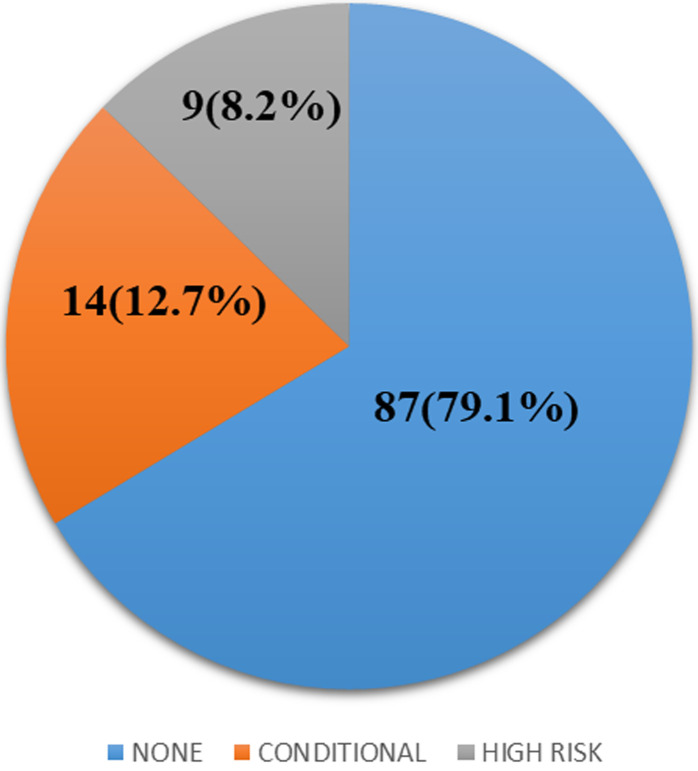 Figure 1
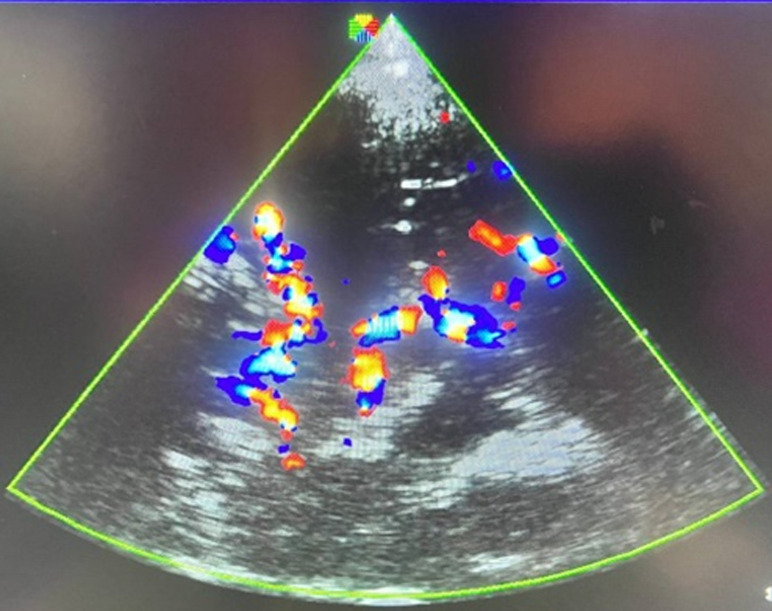 Figure 2
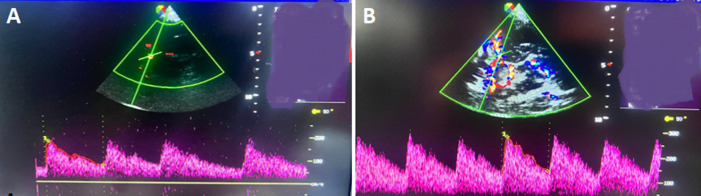 Figure 3
| Variable | Frequency (n=110) | Mean ± SD |
|---|---|---|
| WBC (cells/mm3) | 102 | 14.4 ± 5.9 |
| RBC (cells/mm3) | 102 | 3.1 ± 3.5 |
| Hb level (g/dL) | 77 | 7.7 ± 1.5 |
| Hematocrit (%) | 102 | 24.4 ± 4.7 |
| MCV (Fl) | 102 | 86.3 ± 9.8 |
| MCH (pg) | 102 | 29.3 ± 3.6 |
| MCHC (g/dL) | 102 | 33.0 ± 2.3 |
| Independent variable | High risk of stroke | Chi-square value | p-Value | ||
|---|---|---|---|---|---|
| Yes | No | ||||
| High WBC | Yes | 1(11.1%) | 19(18.8%) | 0.329 | 0.566 |
| No | 8(88.9%) | 82(81.2%) | |||
| Low RBC | Yes | 5(55.6%) | 49(48.5%) | 0.164 | 0.686 |
| No | 4(44.4%) | 52(51.5%) | |||
| Low Hb | Yes | 5(55.6%) | 32(33,3%) | 1.914 | 0.167 |
| No | 4(44.4%) | 68(67.3%) | |||
| Low Hct | Yes | 1(11.1%) | 5(5.0%) | 0.608 | 0.435 |
| No | 8(88.9%) | 96(95.0%) | |||
| Low MCV | Yes | 2(22.2%) | 28(27.7%) | 0.126 | 0.723 |
| No | 7(77.8%) | 73(72.3%) | |||
| Low MCH | Yes | 1(11.1%) | 24(23.8%) | 0.753 | 0.385 |
| No | 8(88.9%) | 77(76.2%) | |||
| Low MCHC | Yes | 0(0%) | 9(8.9%) | 0.873 | 0.350 |
| No | 9(100%) | 92(91.1%) | |||
| Independent variable | Odds ratio at 95% confidence interval | Adjusted odds ratio at 95% confidence interval | p-value |
|---|---|---|---|
|
| |||
| Yes | 4.091(0.894-18.718) | 7.36(1.26-42.99) | 0.027 |
| No | 1 | 1 | |
|
| |||
| Yes | 0.105(0.013-0.867) | 0.07(0.01-0.67) | 0.021 |
| No | 1 | 1 |
Peer Reviews
No public reviews on file for this paper yet. If you reviewed it on a platform where reviews are public (OpenReview, ICLR, NeurIPS, ICML), you can paste yours below so the community can read it here.
Videos
No videos yet. Explain this paper in a talk, walkthrough, or lecture? Add one.
Taxonomy
TopicsHemoglobinopathies and Related Disorders · Blood groups and transfusion · Cerebral Venous Sinus Thrombosis
Introduction
Sickle cell disease (SCD) is one of the most common inherited blood disorders in the world, affecting millions of people [1]. Current estimates suggest that approximately 4.4 million people live with SCD worldwide, while an additional 43 million carry the sickle cell trait [2]. The disease is most prevalent among people whose ancestors came from sub-Saharan Africa, the Mediterranean region, the Arabian Peninsula and India [1,3]. In the United States alone, around 100,000 individuals are affected [4]. The World Health Organization (WHO) has recognized its global significance, considering SCD as a major public health concern, particularly in Africa [2].
Sub-Saharan Africa bears the highest burden of SCD [2], with childhood mortality rates ranging from 50% to 90% among children homozygous for hemoglobin S [5]. It is estimated that 240,000 children are born with SCD annually in sub-Saharan Africa, and 50% to 80% of these children die before reaching 5 years of age [5]. The prevalence of sickle cell trait varies markedly between different countries but reaches levels as high as 40% in some areas of sub-Saharan Africa, Eastern Saudi Arabia, and central India [6]. In Cameroon, the trait is present in approximately 18.2% of the population in its heterozygous form, and 2-3% in its homozygous form [7].
The main clinical manifestations of SCD are related to anemia and vaso-occlusive events [8,9]. It is also one of the leading hematologic conditions associated with neurological complications in children. Notably, up to 25% of affected children may experience their first cerebral infarct before the age of six [10]. Stroke is one of the deadliest and most disabling complications for children with SCD [1]. Adams et al. reported SCD as the most common cause of childhood stroke occurring in up to 11% of children with SCD and peaking between the ages of 2 and 9 years [11]. The incidence of subsequent stroke is between 50% and 90% within 3 years of the first event. Medium-sized arteries of the circle of Willis, including the carotid arteries, are particularly vulnerable to the effects of sickled red blood cells and chronic hemolysis, resulting in stenosis and formation of fragile collaterals [1]. Sickle cell patients are at risk of silent cerebral infarcts and both ischemic and hemorrhagic strokes. Ischemic strokes occur mostly in young children and adults, with their highest incidence in children aged 2-16 years, while hemorrhagic strokes occur mostly in young adult patients (20-29 years) [12].
Neurological complications, particularly stroke, can cause significant disability with important socioeconomic and psychological impacts on sickle cell patients (SCP) and their families, and can even lead to death if not properly managed [13]. The Stroke Prevention Trial in Sickle Cell Anemia (STOP), reported by Nichols et al. demonstrated that regular blood transfusions significantly reduce the risk of stroke in children identified as high-risk through transcranial Doppler ultrasound (TCD) screening [14]. TCD ultrasound is a sensitive and specific tool for detecting cerebral vasculopathy in patients with SCD [9]. The Brazilian guidelines of stroke prevention say TCD ultrasound should be used as a method for primary prevention of stroke in SCP aged between two and sixteen years of age [15]. Early implementation of TCD screening from the age of two has been shown to substantially reduce the incidence of first-time strokes in this population [16]. The aim of this study is to characterize the cerebral arterial velocity profiles on transcranial Doppler (TCD) in children with sickle cell anemia, determine the prevalence of high-risk velocities, and identify associated factors.
Methods
Study area, design, and period: this was a hospital-based cross-sectional study carried out in the Laquintinie Hospital of Douala and the Buea and Limbe Regional Hospitals. Data were collected from January 2024 to April 2024.
Study population, inclusion, and exclusion criteria: the study included all consenting and or assenting sickle cell patients aged between 2 years and 16 years with a confirmed diagnosis (sickle cell anemia-hemoglobin SS) and being followed in selected hospitals. SCPs with inadequate acoustic windows and those with incomplete TCD examinations were excluded.
Sample size and sampling technique: a minimum of 97 participants was required. This was calculated using the COCHRAN formula as follows:
Where n is the sample size; Z is the z-score for the confidence level; p is the estimated population proportion; q is 1-p; and e is the margin of error. Taking a 0.05 margin of error at a 95% confidence level. The prevalence of stroke in SCD in Kenya was studied by Uyoga et al. in 2019 [17]. A convenient sampling method was used.
Data collection: data were collected by the main investigator through an interviewer-administered pre-structured and pre-tested data collection form. The data collection form was written in English but was translated into local languages for non-English speaking participants. Participants were met before the transcranial Doppler ultrasound, consent and or assent were obtained, and the following data were collected: sociodemographic data, clinical and hematologic data. TCD hemodynamic data were also collected. Participants had their transcranial Doppler ultrasound done free of charge by two radiologists, doctors having more than five years of experience each. Two ultrasound machines were used: a Sonoscape S8 portable machine in service since 2016 with Doppler phase array probe (2-5MHz) for participants from the Buea and Limbe Regional Hospitals. A portable ultrasound machine, VIVID I, manufactured by General Electric, with a phase array probe (2-5MHz) in service since 2009, was used for participants from Laquintinie hospital. All patients´ information was coded to ensure confidentiality and anonymity.
Study variables: independent variables were sociodemographic data (age, gender), clinical data (age of diagnosis, history of stroke, daily water intake, medications taken, frequency of transfusions and hospital admissions), hematologic data (white blood and red blood cell counts, hematocrit, mean cell volume, mean cell hemoglobin and mean cell hemoglobin concentration).
Dependent variables were TCD hemodynamic data, including the peak systolic velocities (PSV) and time-averaged mean maximum velocities (TAMMV) in both the proximal middle cerebral artery (MCA) and the distal internal carotid arteries (ICA) of both sides of the head. Mean averages of the TAMMV and PSV were recorded, and the highest TAMMV was used to classify participants as per the stroke prevention trial in sickle cell anemia (STOP Criteria) [14] into no risk (<170 cm/s), intermediate risk (170-200 cm/s), and high risk (>200 cm/s) for stroke. PSV is a spectral Doppler index measured by Doppler ultrasonography, which represents the initial peak of each cardiac cycle´s TCD waveform [18]. TAMMV refers to the time mean of the peak velocity envelope; the envelope being a trace of the peak flow velocity as a function of time [16].
The transcranial Doppler examination procedure: the procedure was done with the patient in supine, with lateral tilting of his head to either side using the trans-temporal approach. Participants were scanned when well relaxed, but not asleep. The phase array probe was placed on the temporal aspect of the head, cephalad to the zygomatic arch and immediately anterior and slightly superior to the tragus of the ear in the transverse position. Then the probe was angulated anteriorly till the M1 segment of the middle cerebral artery was visualized on a color Doppler. Then, spectral wave analysis was done in the M1 segment on both sides. The trans-temporal view can examine the internal carotid artery bifurcation at the underlined depths with flow. The internal carotid artery was identified at depths of 55-65 mm with the simultaneous flow toward or away from the probe [18] on both sides of the participant´s head.
Data management and analysis: the data collected was keyed into the census and survey processing system (CSPro) version 7.7, from where it was exported to an Excel document. Data were analyzed using the Statistical Package Social Sciences (SPSS) version 23.0. Frequencies, tables, and percentages were used for categorical variables. Descriptive statistics (mean and standard deviation) were used for numerical variables. Chi-square was used to analyze categorical variables (gender). Bivariate analysis was used to check for associations between clinical and hematologic factors with high cerebral arterial velocities. The multiple logistic regression was used to control for confounders between clinical, immunological, and hematological factors with high cerebral arterial velocities. The confidence interval was 95% and a p-value < 0.05 was considered statistically significant.
Ethical clearance: an ethical clearance, number 2023/2210-11/UB/SG/IRB/FHS, was obtained from the institutional review board of the Faculty of Health Sciences (FHS) of the University of Buea. Administrative approval was obtained from the South West Regional Delegation and from the directors of the three hospitals. Prior to data collection, written informed consent and or assent was obtained from respective participants.
Results
Sociodemographic characteristics of participants: out of 110 participants included in this study, 62 were male (56.4%) with a sex ratio of 1.3: 1. The mean age of participants was 8.35 ± 3.74 years, with the age group 6 to 11 years being the most represented, n=54 (49.1%).
Description of clinical, immunological, and hematological factors within the study population: we found that 94.5% (104) of participants were on daily folic acid. About 51% (56) received prophylactic vaccines against encapsulated germs. A recent acute chest infection was reported for about 12.7% (14) of participants, and about 43.3% (45) of them were taking hydroxyurea daily. Most participants (90%) were following high daily water intake therapy. The description of hematologic factors represented in Table 1 shows that the mean hemoglobin level and hematocrit levels were 7.7 ± 1.5 g/dL and 24.4 ± 4.7%, respectively.
Prevalence of sickle cell anemia children with high cerebral arterial velocities: based on the STOP criteria using the TAMMV, out of 110 participants, 87(79.1%) were classified as no risk of stroke, 14 (12.7%) as conditional risk for stroke and 9 (8.2%) as high risk for stroke (Figure 1).
classification of participants according to stroke risk
Distribution of stroke risk according to sociodemographic data: the distribution of participants with high risk of stroke (n=9) showed that 6 (66.7%) came from Laquintinie hospital, 4 (44.7%) were from the 6 to 11 years age group, and females were predominant (55.6%).
Association of clinical, immunological, and hematologic factors with high cerebral arterial velocities on bivariable analysis: bivariable analysis was performed to analyze possible association between hematologic factors, including high steady state leucocytes, low red blood cell count, low hemoglobin, low hematocrit, low mean cell volume, low mean corpuscular hemoglobin, and low mean corpuscular hemoglobin concentration. Among these, none was found to be significantly associated with high cerebral arterial velocities (Table 2).
Association of clinical, immunological, and hematologic factors with high cerebral arterial velocities on multivariable analysis: multivariable analysis was performed simultaneously, taking into account all the variables selected in the bivariate analysis. After fitting a multiple logistic regression x (adjusted odds ratio, confidence interval p value), recent acute chest infection (adjusted odds ratio=7.36 at 95% confidence interval=1.26-42.99 p=0.027) predisposes up to seven times to high cerebral arterial velocities and taking prophylactic vaccines (adjusted odds ratio=0.07 at 95% confidence interval=0.01-0.67 p value=0.021) was found to protect against high cerebral arterial velocities (Table 3, Figure 2, Figure 3).
structure of the circle of Willis on color Doppler ultrasound
examples of transcranial Doppler ultrasound spectrum: A) left internal carotid artery waveform showing normal velocities with pSV 176 cm/s and TAMMV of 115 cm/s; B) left internal carotid artery waveform showing high PSV 217 cm/s and high intermediate TAMMV 191 cm/s
Discussion
This study aimed to describe the velocity profile of cerebral arteries on TCD of SCP, to determine the prevalence of SCP with high cerebral arterial velocities, and to determine factors associated with these. Among the 110 participants, 9 (8.2%) presented with elevated cerebral arterial velocities, indicating a high risk of stroke. Taking prophylactic vaccines against meningococcal and pneumococcal infections (p=0.013) was found to protect against high cerebral arterial velocities, whereas recent acute chest infection (p=0.053) was a risk factor.
Classification of participants according to risk of stroke: based on TCD results, 87 participants (79.1%) were classified as having no stroke risk, 14 (12.7%) as conditional risk, and 9 (8.2%) as high risk. These proportions are consistent with studies conducted in other countries with comparable sickle cell anemia prevalence [1,19,20]. However, our findings differ from those of Thurn et al. (2022) in Regensburg, Germany, where 50% of the 26 participants had abnormal velocities [21]. This discrepancy may be attributed to differences in sample size, population characteristics, and regional disease burden. Our study involved a larger cohort from a high-risk population, which strengthens the generalizability of our results within similar contexts.
Distribution of stroke risk according to the sociodemographic and hematological characteristics of participants: analysis of stroke risk distribution revealed that most high-risk participants (66.7%) were from the Laquintinie Hospital, which hosts a dedicated sickle cell management center. This suggests that specialized care centers may attract more severe cases or facilitate better detection. The majority of participants belonged to the 2-5 years age group (44.7%), consistent with literature indicating that stroke risk peaks in early childhood due to progressive vasculopathy [10-12]. As for the distribution of stroke risk according to hematologic factors, the mean value of hemoglobin was low (hemoglobin=7.47 ± 1.51 g/dL) in children classified under high risk of stroke, but the difference was not significant. This was similar to results obtained by Dorie et al. (7.45 ± 1.2 g/dL), suggesting a potential trend that warrants further investigation [20].
Factors associated with high cerebral arterial velocities: bivariable analysis did not reveal any significant associations between hematologic factors and elevated cerebral velocities. This contrasts with findings from Ekoube et al. in 2021, who identified high steady-state leukocyte counts (p=0.001) and low hemoglobin levels (p<0.001) as significant predictors of stroke risk [22]. The divergence may reflect differences in study design, population characteristics, or statistical power. Multivariable logistic regression analysis provided more nuanced results. A recent acute chest infection was found as a potential risk factor (adjusted odds ratio [AOR] = 7.36; 95% CI: 1.26-42.99; p=0.027), indicating that affected children were over seven times more likely to have high cerebral arterial velocities. This aligns with Ekoube et al. findings, reinforcing the role of acute inflammatory episodes in exacerbating cerebrovascular risk [22].
Conversely, receiving prophylactic vaccines against meningococcal and pneumococcal infections was significantly protective (AOR = 0.07; 95% CI: 0.01-0.67; p=0.021). This highlights the importance of preventive healthcare measures against stroke risk, possibly by reducing infection-related inflammation and vascular stress.
Limitations: data on reticulocyte counts and hemoglobin sub-genotypes could not be obtained. Our study was conducted in a short period of time; a cohort study over a longer period of time would have been more appropriate to evaluate risk factors associated with stroke.
Conclusion
There is a high risk of stroke of about 8.2% in our study population of children suffering from sickle cell disease, according to the STOP criteria. A recent acute chest infection was found to be associated with high cerebral arterial velocities, and taking prophylactic vaccines could protect against high cerebral arterial velocities. Transcranial Doppler ultrasound should be integrated in the routine follow-up of sickle cell anemia patients as recommended by the STOP criteria.
What is known about this topic
- High stroke risk in children with SCD, especially silent strokes due to progressive cerebral vasculopathy; the highest risk occurs between ages two and nine, with up to 11% of children affected by overt stroke if no preventive measures are taken;
- Transcranial Doppler (TCD) is a validated, non-invasive screening method for detecting elevated cerebral arterial velocities, which are predictive of stroke risk in children with SCD; yearly TCD screening, from age two, has been shown to reduce the incidence of first stroke when paired with prophylactic interventions such as chronic transfusion therapy [STOP Trial].
What this study adds
- This study identifies the proportion of high risk of stroke in a sickle cell population in Cameroon;
- It highlights prophylactic vaccines as a potential protective factor against cerebral vasculopathy and recent chest infection as a risk factor for high cerebral arterial velocities.
The reference list from the paper itself. Each links out to its DOI / PubMed record.
- 1Crow A Transcranial Doppler in children with sickle cell disease: Five years of screening experience Australas J Ultrasound Med 2020 Feb 23139463476058110.1002/ajum.12192 PMC 8411684 · doi ↗ · pubmed ↗
- 2Adigwe OP Onoja SO Onavbavba GA Critical Review of Sickle Cell Disease Burden and Challenges in Sub-Saharan Africa J Blood Med 202314367763728461010.2147/JBM.S 406196 PMC 10239624 · doi ↗ · pubmed ↗
- 3Weatherall DJ Clegg JB Inherited haemoglobin disorders: an increasing global health problem Bull World Health Organ 20017987041211545326 PMC 2566499 · pubmed ↗
- 4Lee L Smith-Whitley K Banks S Puckrein G Reducing Health Care Disparities in Sickle Cell Disease: A Review Public Health Rep 201913465996073160048110.1177/0033354919881438 PMC 6832089 · doi ↗ · pubmed ↗
- 5Grosse SD Odame I Atrash HK Amendah DD Piel FB Williams TN Sickle cell disease in Africa: a neglected cause of early childhood mortality Am J Prev Med 2011 Dec 416 Suppl 4S 3984052209936410.1016/j.amepre.2011.09.013PMC 3708126 · doi ↗ · pubmed ↗
- 6Serjeant GR The Natural History of Sickle Cell Disease Cold Spring Harb Perspect Med 2013 Oct 1310 a 0117832381360710.1101/cshperspect.a 011783 PMC 3784812 · doi ↗ · pubmed ↗
- 7Ama Moor VJ Pieme CA Chetcha Chemegne B Manonji H Njinkio Nono BL Tchoula Mamiafo Cet al Oxidative profile of sickle cell patients in a Cameroonian urban hospital BMC Clin Pathol 2016 Sep 2116152768873410.1186/s 12907-016-0037-5PMC 5031280 · doi ↗ · pubmed ↗
- 8Sack FN Njangtang DM Chemegni BC Djientcheu V Prevalence of sickle cell disease in newborns in the Yaounde Central Hospital J Med Res 2017362779