A rare case of a pedunculated skin tag
Mayur Pradip Mhaske, Amol Deshpande

Abstract
Genes, proteins, chemicals, diseases, species, mutations and cell lines named across the full text — each resolved to its canonical identifier and authoritative record.
Click any figure to enlarge with its caption.
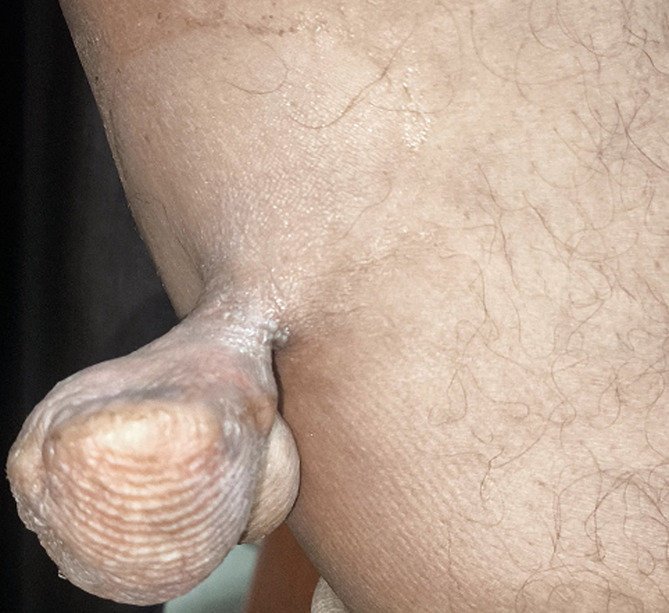 Figure 1
Peer Reviews
No public reviews on file for this paper yet. If you reviewed it on a platform where reviews are public (OpenReview, ICLR, NeurIPS, ICML), you can paste yours below so the community can read it here.
Videos
No videos yet. Explain this paper in a talk, walkthrough, or lecture? Add one.
Taxonomy
TopicsUrologic and reproductive health conditions · Congenital Anomalies and Fetal Surgery · Teratomas and Epidermoid Cysts
Image in medicine
A 41-year-old male patient presented with a two-month history of a progressively enlarging, pedunculated mass in the medial border of lower side of popliteal fossa of the left leg. The lesion was fleshy, skin-colored, tender, movable, and had mild discomfort when palpated. It was 4 cm in diameter. The patient mentioned no systemic symptoms, and no more abnormal findings were seen during the clinical assessment. The differential diagnosis includes acrochordon, skin tag, and soft fibroma. Skin tags, also known as acrochordons, are common benign growths in regions where skin rubs against skin or clothing, such as the neck, armpits, and groin. They are normally soft and harmless, ranging from a few millimeters to several centimeters. Skin tags are made up of loose collagen fibers and blood vessels that are surrounded by the epidermis and are frequently pedunculated. While they are usually asymptomatic, they can be irritated if they get trapped in jewelry or clothing.
pedunculated skin tag