A Multi-Dimensional Analysis of the Changing Role of Clinical and Community Pharmacists in Romanian Healthcare
Alexandra Cristina Tocai (Moțoc), Felicia Dragan, Daria Marina Dragan, Andrei George Teodorescu, Cristina Oana Daciana Teodorescu, Camelia Florentina Ciobanu, Diana Uivarosan, Dana Carmen Zaha

TL;DR
This paper reviews the evolving roles of Romanian pharmacists and highlights barriers and opportunities for their better integration into healthcare systems.
Contribution
The study provides a systematic and bibliometric analysis of pharmacist roles in Romania, identifying gaps and suggesting systemic changes.
Findings
Romanian pharmacists have untapped potential to improve treatment outcomes through clinical advice.
Pharmacovigilance is not currently emphasized in university curricula, contributing to professional limitations.
Health insurance coverage and updated training are needed to fully integrate pharmacists into multidisciplinary teams.
Abstract
Community and hospital pharmacists in Romania are valuable to healthcare, but their involvement in multidisciplinary teams is still not up to the mark when measured against international standards. A systematic literature review search was conducted using the PubMed, Embase, Web of Science, and Scopus databases, following the PRISMA 2020 guidelines, complemented by a bibliometric analysis with VOSviewer, to identify research trends and key contributors in the field. This review examines studies such as counseling effectiveness, clinical contribution, and professional obstacles faced by pharmacists in Romania published between 2014 and 2025 that mainly focus on community practice, integration into hospitals, and new areas such as pharmacogenetics and pharmacovigilance. The studies surveyed patients on how they evaluated counseling, tracked clinical pharmacists who adjusted drug doses…
Genes, proteins, chemicals, diseases, species, mutations and cell lines named across the full text — each resolved to its canonical identifier and authoritative record.
Click any figure to enlarge with its caption.
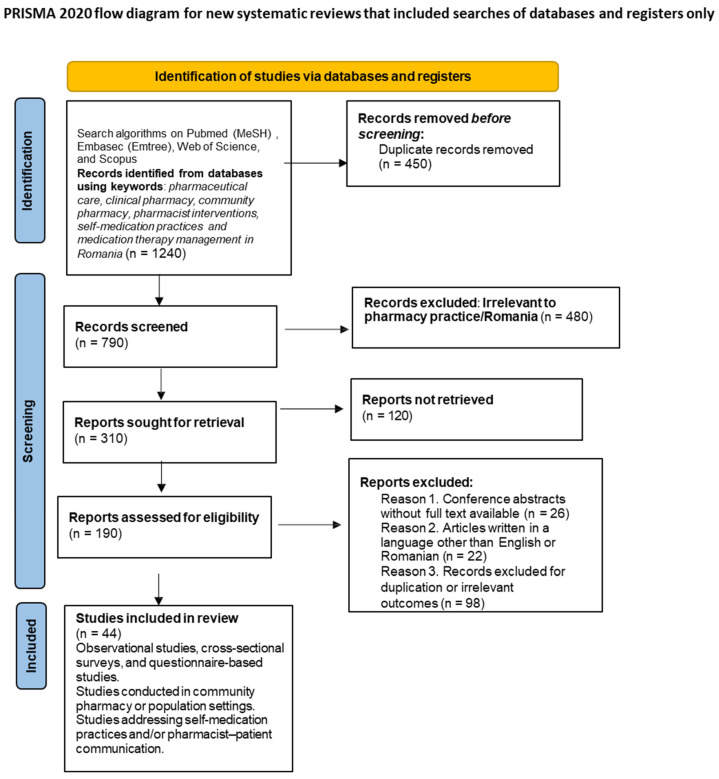 Figure 1
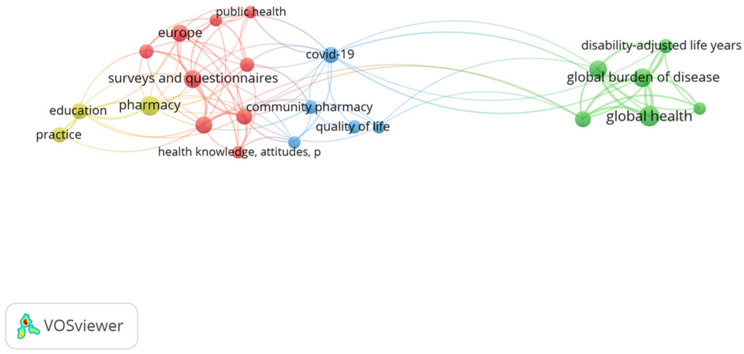 Figure 2
- —University of Oradea
Peer Reviews
No public reviews on file for this paper yet. If you reviewed it on a platform where reviews are public (OpenReview, ICLR, NeurIPS, ICML), you can paste yours below so the community can read it here.
Videos
No videos yet. Explain this paper in a talk, walkthrough, or lecture? Add one.
Taxonomy
TopicsPharmacovigilance and Adverse Drug Reactions · Pharmaceutical Practices and Patient Outcomes · Pharmaceutical studies and practices
1. Introduction
The World Health Organization (WHO) and the International Pharmaceutical Federation (IPF) now refer to the pharmacist as a caregiver, communicator, and leader who is part of the multidisciplinary healthcare team [1]. In the European Union, this change is reflected by structured medication utilization reviews, pharmacist-led immunization programs, and advanced clinical roles on hospital wards. On the other hand, in Romania, this change has a unique paradox. The Romanian healthcare system is chronically under-funded, and there are shortages of doctors in rural areas, but the country is well-stocked with pharmacies and has a very accessible network of pharmacists [2,3]. Even though pharmacists have greater accessibility, their role remains largely limited to dispensing medications. Although national legislation nominally recognizes clinical pharmacy, the practical integration of these professionals into hospital teams and primary care is often fragmented [4,5].
Romanian pharmacists offer full pharmaceutical care mainly in community pharmacies through various activities including dispensing of prescription and non-prescription medicines, patient counseling, medicine compounding, vaccine administration, testing health parameters, and carrying out health campaigns. All these activities are regulated by Law 266/2008, and the Pharmacies College supervises their implementation [6]. Apart from providing regular pharmacy services, Romanian pharmacists took part in various vaccination programs and health education campaigns during the COVID-19 pandemic, thus showcasing the extension of their public health role [7,8]. Pharmacist counselling typically follows a structured sequence: (a) assessment of the patient’s medication history and health status; (b) information provision on indication, dose, route, timing, and possible side effects and interactions; (c) verification of understanding through the teach-back method or open-ended questions; (d) adherence support (e.g., refill planning); and (e) documentation of the encounter in the patient record [7,8].
Academic programs in Romania have brought the curriculum up to EU standards, so that graduates have clinical skills in pharmacogenetics and therapeutic drug monitoring. However, these specialists, as soon as they start their professional careers, face institutional obstacles: lack of payment for cognitive services, excessive bureaucracy, and a legal framework oriented more towards organizational and supply chain safety mechanisms than towards clinical intervention [9,10]. Despite the fact that there is more and more data confirming the positive clinical impact of pharmacists in Romania in terms of patient safety and therapy optimization, their job descriptions are still somewhat informal, non-standardized, and their integration into the national health insurance system is very superficial [3]. This paper aims to fill the knowledge gap regarding how pharmacists’ responsibilities have shifted in practice by synthesizing a decade of research (2014–2025) to evaluate pharmaceutical healthcare from the perspective of both the clinical and community pharmacists in Romania and to outline its development path.
2. Materials and Methods
2.1. Study Design
This study was realized as a systematic review, and it followed PRISMA 2020 guidelines. A structured search strategy was implemented in PubMed, Embase, Web of Science, and Scopus databases. These keywords and Boolean combinations were used: “clinical pharmacist”, “community pharmacist”, “pharmaceutical care”, “medication therapy management”, and “Romania”. The search covered publications indexed between 1 January 2014 and 1 January 2026. Studies published between 2014 and 2025 that met the eligibility criteria were included in the final review.
2.2. Eligibility Criteria
Studies were selected according to predefined inclusion and exclusion criteria. Inclusion criteria were primarily based on studies conducted in Romania, with papers published between 2014 and 2025, written in Romanian or English, and studies involving pharmacists or aspects of pharmaceutical practice, whether from community or hospital pharmacies. Observational studies, cross-sectional surveys, interventional studies, descriptive analyses, policy evaluations, and pharmaceutical practice-based research were considered.
The exclusion criteria considered were conference abstracts without full availability or editorials, opinion articles, and articles that do not have a direct link to pharmaceutical practice or to the specific activities carried out by pharmacists.
2.3. Study Selection Process
The study selection process is summarized in a PRISMA flowchart [11] (Figure 1), which complements the bibliometric analysis.
A total of 1240 records were identified by searching different databases. After removing 450 duplicate records, 790 titles and abstracts remained and were further analyzed for their relevance to the subject of the analysis. Of these, 480 records were excluded because they did not meet the inclusion criteria (not related to pharmaceutical practice or not conducted in Romania). Full texts of 310 reports were requested for retrieval, of which 120 were not available. The eligibility of 190 full-text articles was checked, and after applying the exclusion criteria (conference abstracts without full text, articles in other languages, irrelevant scope, or lack of pharmacist involvement), 44 studies were finally included in the analysis. All database-specific search strategies are provided in Supplementary Table S1 to ensure transparency and reproducibility.
The 44 studies covered in the systematic review are the References [12,13,14,15,16,17,18,19,20,21,22,23,24,25,26,27,28,29,30,31,32,33,34,35,36,37,38,39,40,41,42,43,44]. References [1,6,10,11,39] were only cited to provide the international contextual background and have not been included in the systematic review dataset reflected in the PRISMA flow diagram.
2.4. Bibliometric Analysis
A bibliometric analysis of author keywords was conducted using VOSviewer (version 1.6.20; Leiden University, Leiden, The Netherlands) (Figure 2). A total of 609 keywords were identified from the included publications. To enhance interpretability, a minimum occurrence threshold of five was applied, resulting in 40 keywords being included in the final co-occurrence network. The visualization map represents keywords as nodes, with node size proportional to their frequency of occurrence. Links between nodes indicate co-occurrence relationships, with link strength reflecting the frequency of joint appearances. Clustering was performed automatically by VOSviewer to identify major thematic areas within the literature. The keywords in the list are categorized into 4 clusters, reflecting the central study regions of the study. Cluster 1, presented as the Red Cluster, underpins the community pharmacy. This is a dominant topic specializing in public health, Europe, and using surveys and questionnaires. It bridges the gap between community pharmacy settings and broader health knowledge and attitudes. Cluster 2, or the Green Cluster, is about discussion on reimbursement and workforce distribution. This distinct thematic vicinity focuses on macroeconomic health metrics, which include global health, the worldwide burden of disease, and disability-adjusted life years. Cluster 3, or the Blue Cluster, refers to the expansion of services caused by the pandemic, inspecting its effect on community pharmacy and the resulting quality of life for patients. Cluster 4, or the Yellow Cluster, highlights the foundational aspects of the field, in particular, it specifically focuses on pharmacy education and the evolution of professional practice development.
The thematic clusters identified through the bibliometric analysis informed the structural organization of the review. The Red Cluster, or public health, surveys, and community pharmacy practice, lines up with Section 3, which examines community pharmacists’ counseling and patient perception. The Green Cluster, which covers global health indicators and the burden of disease, underpins Section 4 and Section 9, which focus on clinical pharmacist impact and patient safety. Then, the Blue Cluster, or COVID-19 and quality of life, relates to Section 5 and Section 6, addressing advanced roles and crisis-driven professional expansion. The yellow cluster is all about education and professional development in pharmacy, and aligns with Section 6, which tackles education, workforce trends, and professional identity. This whole bibliometric mapping not only visualizes research trends but also guides the thematic synthesis presented in Section 3, Section 4, Section 5, Section 6, Section 7, Section 8, Section 9 and Section 10.
3. Community Pharmacist Counseling and Patient Perception
As identified in the bibliometric analysis, community pharmacy practice and public health-oriented survey research represent a dominant thematic group (Cluster 1 or the Red Cluster), forming the foundation of the following section.
Multiple surveys carried out in Romanian community pharmacies show that pharmacists provide medication counseling every day. The same studies keep finding blind spots; patients rarely hear how the drug might change blood test results, when it expires, or how to bring back leftover tablets, especially psychotropics [9].
Nevertheless, identifying qualitative gaps was a continuous feature of the studies. Concordance studies also revealed that there were differences between the pharmacists’ self-reported counseling and the patients’ perceptions, especially in the case of safety-related information such as adverse drug reactions, where the level of agreement was very low. Community pharmacists are also at the forefront of handling minor ailments and guiding self-medication. According to surveys, analgesics and gastrointestinal drugs are in daily demand, while antibiotic self-medication for serious illnesses is at an alarming level. Experienced pharmacists were less likely to promote inappropriate self-medication, thus professional judgment and communication skills are of great importance [12,13]. All relevant studies are summarized in Table 1.
4. Clinical Pharmacist Impact on Patient Safety
Across hospital and clinical research settings, it has been demonstrated that clinical pharmacists’ efforts in medication management greatly improve patient safety and health outcomes [17]. All studies related to the clinical pharmacist are summarized in Table 2.
Within ICU, geriatric, and infectious-ailment settings, Romanian records reliably suggest that clinical pharmacists considerably enhance patient well-being. Their movements start from therapeutic drug oversight and renal-dosage tuning to systematic medicine evaluation using STOPP/START guidelines, and oversight of limited antibiotics addresses principal origins of avoidable problems like kidney damage, prescribing gaps, and antibiotic overuse.
Although individual studies demonstrate safety gains, the clinical pharmacy services in Romanian healthcare remain fragmented across institutions because they are unpaid, lack systematic EHR support, and are not embedded in national policies.
5. Pharmacovigilance, Safety, and Advanced Roles
Several studies highlight the untapped potential of pharmacists to play a major role in pharmacovigilance, contrasting it with current legislative and educational deficiencies [22]. Pharmacists indicated that safety communications had changed their patient counseling practices the most. Comparative studies between the Romanian legal framework and European standards of Good Pharmaceutical Practice have shown that pharmacovigilance education should not be considered optional and that the pharmacist’s role is mainly to inform patients and report adverse reactions [23].
Highly professional functions, including systematic tracking and subsequent procedures, are being developed. This section suggests that, despite the fact that Romanian pharmacists are legally considered contributors to pharmacovigilance, the lack of mandatory training, the lack of organizational alignment, and the non-existence of standardized safety services limit them to providing only slightly improved affected person confidentiality, and public health interventions are strongly contradicted because it has been demonstrated that they may each be possible and essential [24]. A summary of studies about pharmacovigilance is provided in Table 3.
This series of evidence suggests that Romanian pharmacists are acknowledged but underused pharmacovigilance contributors. While state-of-the-art capabilities in risk reduction, dosage refinement, immunization, and emergency response are demonstrably effective, their implementation is limited by legal, academic, and structural obstacles. Resolving those deficiencies is essential to completely leverage pharmacists’ capability in improving affected patient health and public health.
6. Education, Professional Identity, and Workforce Issues
Studies exploring the perceptions of healthcare professionals have established a substantial reputation for the significance of interdisciplinary collaboration. While nearly all respondents stated its value, poor communication was often reported as having a negative impact on affected patient care. Over half of healthcare professionals believed that integrating clinical pharmacists into healthcare groups might extensively enhance healing consequences of early detection of interactions and optimization of treatment [30].
Ethical issues have additionally been raised, especially around the affected person’s confidentiality, highlighting systemic issues that extend beyond pharmaceutical practice. During the COVID-19 pandemic, pharmacists’ extended roles in testing, vaccination support, and public health education have similarly established their adaptability and clinical application while regulatory boundaries have been temporarily relaxed [29]. A summary of studies on the professional development of pharmacists in Romania is provided in Table 4.
This section underscores a structural gap amongst education, professional status, and workforce balance in Romanian pharmacists. While pharmacists welcome superior features and EU-conforming educational structures are present, minimal investment for healthcare, constraining statutes, restricted clinical independence, and insufficient post-graduate possibilities impede professional advancement, satisfaction, and ultimately constrain the development of pharmacy practice. Entry-level pharmacy education in Romania is at a level with European standards and gives students a basic knowledge of clinical practice. However, to be specialists in pharmacogenetics, antimicrobial stewardship, therapeutic drug monitoring, and management of chronic diseases, pharmacists need structured postgraduate programs. Just as it is the case in other health professions, greater clinical authority of pharmacists should be backed by formal certification, supervised clinical training, and continuous professional development (CPD). A few extended services form the basic level of competencies (e.g., medication counselling), while others require the need for formal education and credentialing for frontline professionals in order to ensure patient safety and professional accountability.
7. Interdisciplinary Collaboration and Policy Barriers
Based on the national survey, it is evident that, in general, pharmacists in Romania have favorable views towards advanced practices such as pharmacogenetics, medication therapy management, and patient-centered care. On the other hand, an in-depth analysis of the pharmacy workforce reveals a scenario in which workers show a lack of satisfaction with the law, salaries, and budget limitations, considering how much they had to study during their education [33]. Furthermore, a comparative assessment of Good Pharmaceutical Practice requirements amongst countries additionally indicates that Romanian guidelines are at a lower level than worldwide ones concerning acknowledgment and charge of pharmaceutical cognitive services [34]. A summary of studies about pharmacy practice policy is provided in Table 5.
This section illustrates that in the Romanian healthcare system, interdisciplinary collaboration is not always limited by specialist approval, but by political, legal, and organizational impediments. Although findings and practitioner perspectives certainly prefer the inclusion of pharmacists in various groups, restrictive rules, absence of fees for duties, and structural sluggishness limit their active involvement in treatment choices. International and local examples reveal that after policy setups enable partnership, pharmacists considerably increase safety, efficiency, and results for patients.
Across all themes, the proof reliably indicates that Romanian pharmacists presently offer enormous resources to patient aid and drug security, mainly in which clinical pharmacy services are established. However, those contributions stay fragmented, inconsistently recognized, and insufficiently supported by legislation, fee systems, and structured training pathways.
8. Community Pharmacy Practice in an International Context
Internationally, community pharmacists are often considered providers of only recently structured services, such as Medication Utilization Reviews in the United Kingdom, Medication Initiation Services in Denmark, Medication Therapy Management Programs in the United States, and Medication Review Services, which are reimbursed in several EU health systems [39,40]. These interventions are standardized, protocol-based, documented, and financially remunerated, with a wealth of evidence supporting improvements in medication adherence, reduction in medication-related problems, and patient safety. Comparatively, community pharmacists in Romania offer detailed medication counseling, as word-of-mouth testimony to advise on dosage, administration, and interactions is extremely high. In fact, these rates are often higher than those of international benchmarks. However, contrary to structured and reimbursed international pharmaceutical services, medication counselling in Romania is often informal, variably documented, and not financially compensated [18,34]. Pharmaceutical counselling, in contrast to psychological counselling, is drug-focused and clinically directed with the purpose of enabling patients to make informed decisions and manage their conditions safely [18].
Although pharmacists frequently provide detailed medicine-related advice, the absence of standardized documentation systems and performance indicators makes it difficult to measure clinical impact or integrate these activities into national healthcare quality metrics [13].
Among the recurring themes of Romanian research on community pharmacy is the finding that there is a significant gap between the pharmacists’ self-reported counselling behavior and the patients’ understanding of it, especially regarding adverse drug reactions. This phenomenon has also been described globally, but the data from Romania reveal a greater disparity, which is probably due to the limited professional training in patient-centered communication and the lack of standardized counselling frameworks [18,27]. International frameworks increasingly revolve around concepts such as sharing decision-making, risk communication, and the use of structured counselling checklist techniques [41], which could be used to tackle the gaps that have been identified in the practice of community pharmacy in Romania.
Furthermore, the involvement of Romanian community pharmacists in self-medication management is, on the one hand, the source of increasing opportunities and, on the other hand, the source of risks from an international point of view. Just like the rest of the world, patients rely on pharmacists as their first-line healthcare providers when ailments are minor [13,24]. These results point to a pressing need for clearer professional authority, focused public communication, and enhanced integration of community pharmacists in primary care pathways in Romania.
9. Clinical Pharmacy and Patient Safety: Romania Versus International Evidence
Worldwide evidence demonstrates that clinical pharmacist-led initiatives have been shown to markedly enhance patient safety, therapeutic outcomes, and health system efficiency [42]. In nations with a well-developed clinical pharmacy sector, pharmacists are essential members of multidisciplinary teams and perform functions such as therapeutic drug monitoring, antimicrobial stewardship, medication reconciliation, and organizing medication reviews. Such interventions lead to fewer adverse drug reactions, medication errors, shorter hospital stays, and lower healthcare expenditure. The observations of Romanian hospitals are remarkably in agreement with the international results; however, the number and coverage of studies are limited. Pharmacists in Romanian ICUs were able to identify a large extent of initial vancomycin dose errors, which is in line with what has been reported worldwide [19]. This implies that Romanian pharmacists, when given the clinical authority to intervene, can deliver safety outcomes comparable to those reported in advanced clinical pharmacy systems on the global scene; it has been proven that the regular participation of clinical pharmacists in stewardship programs contributes to lessening the extent of inappropriate antibiotic use and therefore fights antimicrobial resistance. In fact, Romanian data confirm this approach, revealing that pharmacist engagement could greatly enhance the quality of prescribing; however, such involvement is still implemented sporadically, as it depends on local initiative rather than being driven by national policy.
Medication review investigations of elderly patients in Romania have also helped to highlight the agreement between local and global evidence. Employing validated instruments such as STOPP/START criteria, clinical pharmacists found a wide range of drug-related problems, including inappropriate drug use and prescription of unnecessary drugs in some cases [20]. Such discoveries go hand in hand with the international literature, which indicates that pharmacist-led medication reviews bring about reductions in morbidity, hospital admissions, and help older people live better lives. Yet, whereas in many European nations medication review is part of the healthcare system and funded [43], Romanian measures continue to be fragmentary and experimental. From a policy standpoint, the rollout of expanded pharmacist services calls for a sound use of resources. Domestic and worldwide examples, including integrated health systems like Kaiser Permanente (USA), show that pharmacists’ interventions in chronic disease management and medication review lead to a decline in hospital admissions, emergency visits, and long-term complications; thus, cost savings can be used to pay for services [42]. Economic evaluations of healthcare are frequently the main instrument to convince government and insurance authorities to pay for cognitive pharmaceutical services. Lack of credible Romanian cost-effectiveness studies is a major obstacle, a threat, and a challenge, and at the same time, an opportunity in the field of national pharmacy practice reform.
In general, comparing Romanian with international data points to an identical pattern: the clinical effects of pharmacist-led interventions in Romania are in line with the ones indicated internationally; however, their execution is devoid of sustainability, standardization, and policy backing. This difference highlights that the main constraint of clinical pharmacy in Romania is not skills and professionalism but rather the lack of structural integration, legal recognition, and reimbursement systems that would grant pharmacists the ability to fully engage in ensuring patient safety nationwide.
10. Pharmacovigilance and Advanced Roles in a European Perspective
Pharmacists are becoming increasingly identified within Europe as integral professionals within pharmacovigilance, and their role is no longer confined to the passive reporting of drug reactions but also includes the areas of active surveillance, follow-up, risk minimization, and safety educational activities. Within some European states, the skills of pharmacovigilance are incorporated into the postgraduate and undergraduate curricula and are encouraged by strict regulatory and development activities. Evidence from Romania suggests that a good level of knowledge and awareness of important safety communications, like those regarding adverse reactions with fluoroquinolones, identified in Direct Healthcare Professional Communications, has been observed in pharmacists [27,44]. However, their level of knowledge and concordance with their behaviors seem moderate, especially when considering their engagement in a later stage after safety communications by regulatory bodies. This has been consistent with findings that single safety communications cannot provide constant pharmacovigilance to ensure effective engagement with regular training. One important departure from best practices in Europe regards the regulatory and educational environment for pharmacovigilance in Romania. While these best practices include mandatory training for pharmacovigilance and well-defined professional roles, such regulatory restrictions in Romania have, until recently, confined professional roles for pharmacists merely to counseling patients and submitting spontaneous reports. The optional aspect of pharmacovigilance educational training in Romania also limits the ability of pharmacists for advanced safety work, such as monitoring patients on high-risk therapies [44]. New fields of highly developed practice for pharmacists, such as pharmacogenetics and personalized medicine, also demonstrate the discrepancy between the Romanian and European implementation levels. The enthusiasm and attitude toward pharmacogenetic practice, shared by pharmacists in Romania, are identical to those found in Europe. However, reduced confidence, lack of education, cost associated with the test, and no system to obtain reimbursement stand between pharmacogenetic practice and its implementation in Europe. Meanwhile, pharmacogenetic practice has already found its implementation in the healthcare system of Europe [31].
In general, when examined from a European perspective, Romanian pharmacists are ready and motivated to engage with expanded roles of pharmacovigilance and advanced clinical practice. For the Romanian system to conform to European standards, there would need to be more than legislative changes invested if their potential in ensuring pharmaceutical safety is to be fully realized.
11. Limitations
Taken together, the evidence reviewed highlights a continual gap between pharmacists’ established scientific ability and their formal position inside the Romanian healthcare system. These barriers are, in the main, structural and regulatory rather than professional. Table 6 summarizes the current state of pharmacy practice in Romania, the corresponding required future state, and the important movements required to permit the transition towards patient-centered pharmaceutical care.
12. Conclusions
The data collected from 2014 to 2025 affirms that the Romanian pharmacist represents a vastly underused resource within the healthcare system. The outcomes show a professional organization that is addressing the scientific understanding by significantly lowering prescription mistakes, overseeing long-term illnesses, and enhancing affected person confidentiality, but it is restricted by an out-of-date operational structure. While local pharmacists provide common guidance, there is a remarkable divide among pharmacists and patients regarding vital protection information, including adverse drug events. In clinical settings, pharmacist-led interventions, especially in vancomycin TDM and antimicrobial oversight, have proven successful in lessening kidney harm and prescribing faults, matching worldwide success rates. The elimination of pharmacovigilance from obligatory coursework and the absence of payment for professional services (immunization, medicinal drug reviews) act as the most important deterrents to expert development. In conclusion, understanding the entire functionality of the Romanian pharmacist is not simply a professional goal; it is a public health necessity. Defining these capabilities officially will result in a more resilient, secure, and less expensive healthcare structure for the Romanian population. Taken together, the constraints affecting Romanian pharmacy practice are not associated with professional competence; rather, the constraints are associated with structural underutilization, regulatory inertia, and inadequate system-level integration.
The reference list from the paper itself. Each links out to its DOI / PubMed record.
- 1Ogbu U.C. Arah O.A. World Health Organization International Encyclopedia of Public Health Elsevier Amsterdam, The Netherlands 201746146710.1016/B 978-0-12-803678-5.00499-9 · doi ↗
- 2CherecheșM.C. Popa C.O. Factors Influencing the Choice of a Pharmacy in Romania: Comparation between Studies Performed in 2012 and 2020 Acta Marisiensis-Ser. Medica 202066155159
- 3Boboia A. Research on applying risk management in the field of quality in order to improve the pharmacy activity. I. Applying quality management methods to highlight the causes that can lead to risks of errors in activities performed by the pharmacist in pharmacy Farmacia 2019671106111510.31925/farmacia.2019.6.25 · doi ↗
- 4Rusu A. Brief assessment of pharmacist-patient communication efficiency in romanian pharmacies Farmacia 2018661091109610.31925/farmacia.2018.6.25 · doi ↗
- 5Crişan O. Iacob S. Codes of deontology for health professionals—A comparative analysis Farmacia 201664625632
- 6Law of Pharmacy No. 266 of November 7, 2008. The Parliament of Romania. National Medicines Agency Available online: https://www.anm.ro/en/_/LEGI%20ORDONANTE/Law%20of%20Pharmacy%20no.%20266%20of%2007.11.2008.pdf(accessed on 2 January 2026)
- 7Manoliu-Hamwi E.-M. Dascălu C.G. Zegan G. Cărăușu E.-M. Ghiciuc C.M. Ivănescu M.C. Stan C.D. Patient’s Satisfaction Level with Community Pharmacies Services in Romania: A Questionnaire-Based Study J. Pharm. Policy Pract.202417238110410.1080/20523211.2024.238110439081709 PMC 11288202 · doi ↗ · pubmed ↗
- 8Bungau S. Tit D. Fodor K. Cioca G. Agop M. Iovan C. Cseppento D. Bumbu A. Bustea C. Aspects Regarding the Pharmaceutical Waste Management in Romania Sustainability 201810278810.3390/su 10082788 · doi ↗