Investigation of the Suitability of the ROTEM Assay to Measure Coagulation Potential in Blood From Patients on Concizumab Prophylaxis
Hermann Eichler, Nora V. Butta, Anne Riddell, Cecilia Augustsson, Marianne Kjalke, Kasper Jensen, Andrea Paramo‐Florencio, Jan Astermark, Pratima Chowdary, Victor Jiménez‐Yuste

TL;DR
This study evaluates whether a modified ROTEM assay can reliably monitor coagulation in patients using concizumab for hemophilia, but finds it unsuitable due to inconsistent results.
Contribution
The study introduces a modified ROTEM assay to assess coagulation in patients on concizumab and evaluates its suitability for clinical monitoring.
Findings
In vitro experiments showed concizumab reduced clot time and increased clot development in hemophilia-like blood.
ROTEM parameters weakly correlated with concizumab exposure and thrombin generation, indicating limited clinical utility.
The modified ROTEM assay showed inconsistent performance and cannot be recommended for general monitoring.
Abstract
Rotational thromboelastometry (ROTEM) aims to measure the coagulation potential in whole blood. Concizumab, an anti‐tissue factor pathway inhibitor (TFPI) antibody for prophylaxis in haemophilia, enhances tissue factor (TF)‐initiated coagulation by preventing inhibition of activated factor X (FXa), thus increasing thrombin generation. To evaluate a modified ROTEM assay for monitoring patients on concizumab prophylaxis. The TF reagent (r_exTEM) was diluted 50,000‐fold to make the ROTEM assay sensitive to haemophilia and to concizumab. The effect of concizumab was evaluated in the modified ROTEM in haemophilia A (HA)‐like blood (normal blood with added anti‐FVIII antibody). ROTEM analysis was performed in blood from patients participating in the explorer7/8 trials during 24 weeks of concizumab prophylaxis. Rotrol N plasma was used as quality control. In vitro experiments showed…
Genes, proteins, chemicals, diseases, species, mutations and cell lines named across the full text — each resolved to its canonical identifier and authoritative record.
Click any figure to enlarge with its caption.
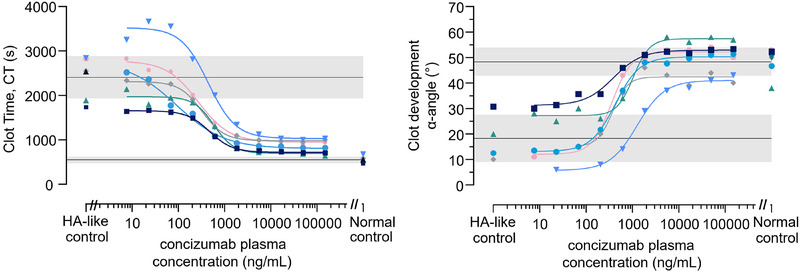 Figure 1
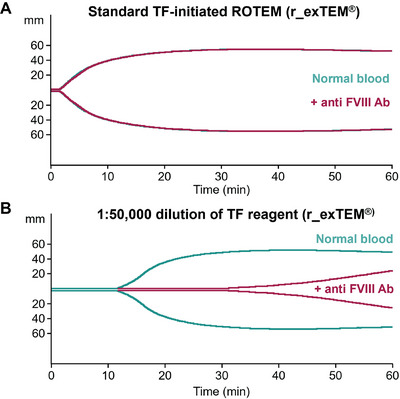 Figure 2
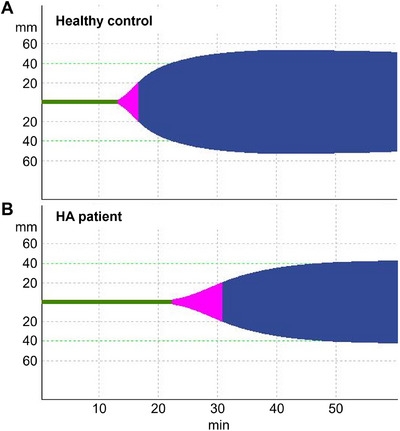 Figure 3
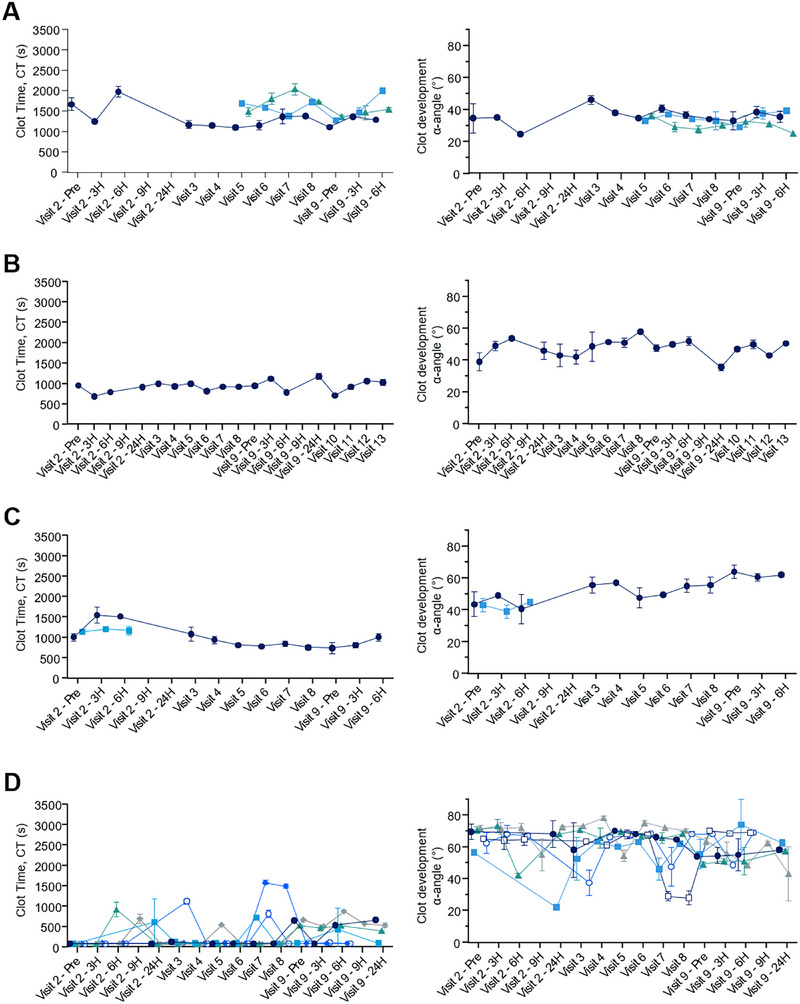 Figure 4
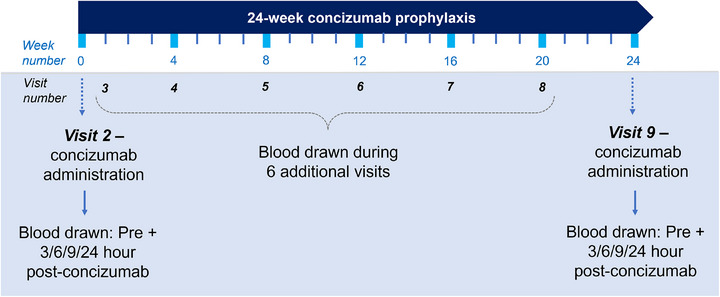 Figure 5
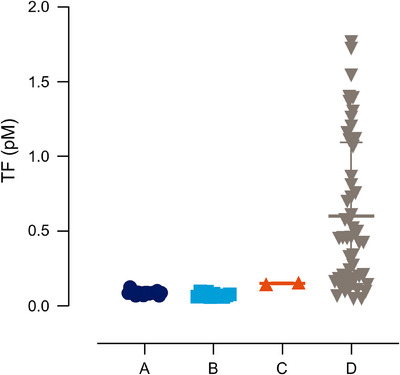 Figure 6
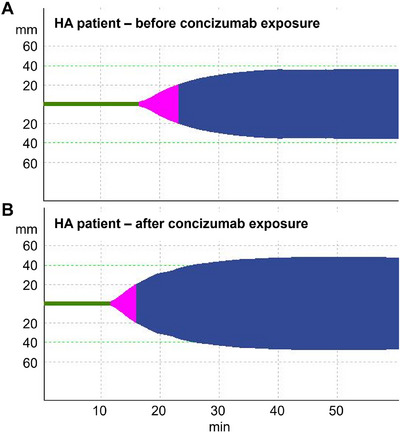 Figure 7
Peer Reviews
No public reviews on file for this paper yet. If you reviewed it on a platform where reviews are public (OpenReview, ICLR, NeurIPS, ICML), you can paste yours below so the community can read it here.
Videos
No videos yet. Explain this paper in a talk, walkthrough, or lecture? Add one.
Taxonomy
TopicsTrauma, Hemostasis, Coagulopathy, Resuscitation · Hemophilia Treatment and Research · Blood Coagulation and Thrombosis Mechanisms