Novel antiemetic effect of naldemedine in patients initiating opioids for cancer pain: a secondary analysis of a randomized clinical trial
Takahiro Higashibata, Takaomi Kessoku, Shinya Kajiura, Mami Hirakawa, Shunsuke Oyamada, Keisuke Ariyoshi, Takeshi Yamada, Yoshiyuki Yamamoto, Toshikazu Moriwaki, Hiroka Nagaoka, Yasuyuki Takashima, Kosuke Doki, Bryan J Mathis, Kosuke Tanaka, Akiko Fuyuki, Atsushi Nakajima

TL;DR
Naldemedine helps prevent nausea and vomiting in cancer patients starting opioid pain medications, in addition to easing constipation.
Contribution
This study shows naldemedine has a direct antiemetic effect, not just a side benefit from reducing constipation.
Findings
Naldemedine significantly improved the complete response rate for preventing vomiting and antiemetic use.
Nausea and vomiting scores were much lower in the naldemedine group at weeks 1 and 2.
About 21.9% of the antiemetic effect was mediated through reducing opioid-induced constipation.
Abstract
Several studies have suggested that naldemedine may reduce opioid-induced constipation (OIC) as well as opioid-induced nausea and vomiting (OINV). This study aimed to investigate prophylactic effects of naldemedine on OINV in patients initiating regular, oral, strong opioids for cancer pain. In this preplanned secondary analysis of a multicenter, double-blind, randomized, placebo-controlled trial investigating the preventive effects of naldemedine on OIC, eligible patients were randomized in a 1:1 ratio to receive either naldemedine 0.2 mg or placebo once daily for 14 days. The primary endpoint was the complete response (CR) rate, defined as the proportion of patients with no vomiting episodes and no use of rescue antiemetics within the first three days of opioid initiation. The secondary endpoint was the nausea and vomiting score of the European Organization for Research and Treatment…
Genes, proteins, chemicals, diseases, species, mutations and cell lines named across the full text — each resolved to its canonical identifier and authoritative record.
Click any figure to enlarge with its caption.
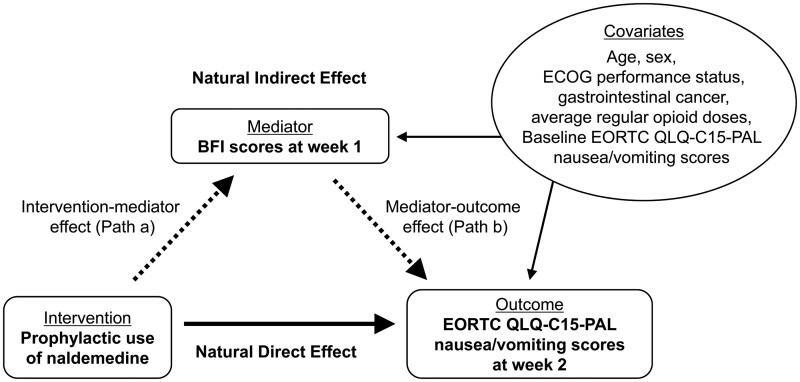 Figure 1
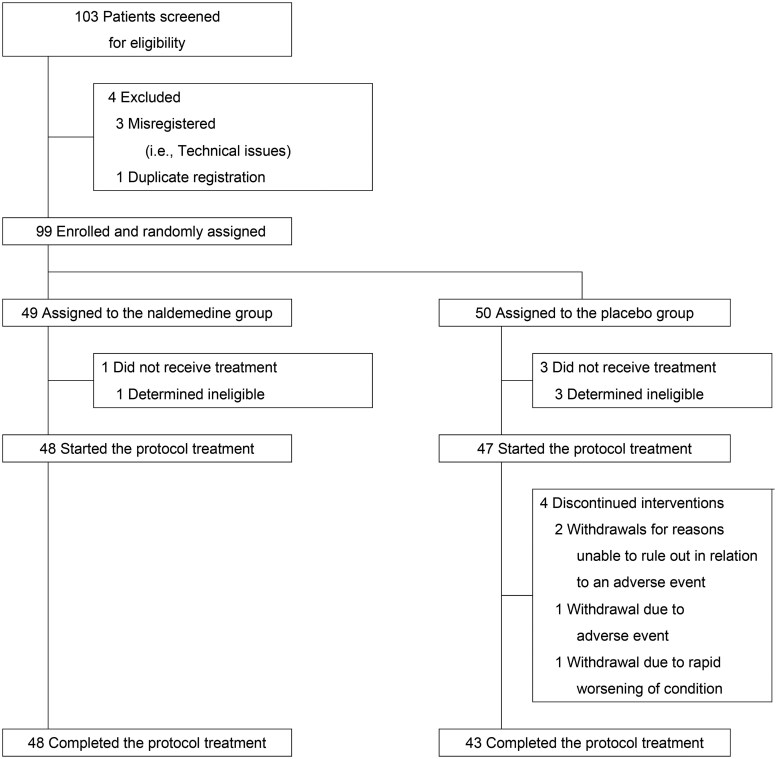 Figure 2
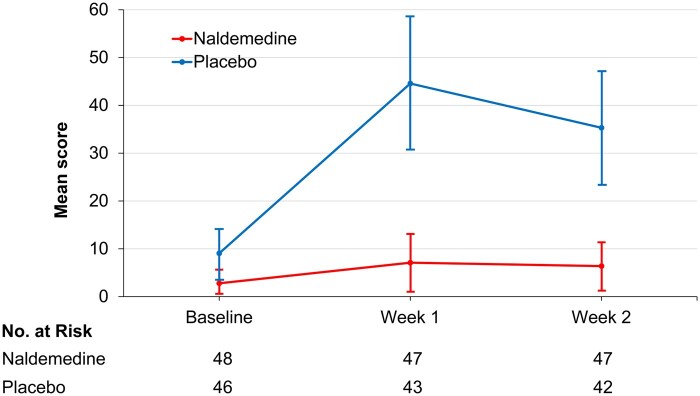 Figure 3
Peer Reviews
No public reviews on file for this paper yet. If you reviewed it on a platform where reviews are public (OpenReview, ICLR, NeurIPS, ICML), you can paste yours below so the community can read it here.
Videos
No videos yet. Explain this paper in a talk, walkthrough, or lecture? Add one.
Taxonomy
TopicsNausea and vomiting management · Enhanced Recovery After Surgery · Gastrointestinal motility and disorders