Positive Margin Location and Prostate Biopsy Route: A Consecutive Cohort Comparison of Transperineal and Transrectal Techniques
Abdullah Al-Khanaty, Kieran Sandhu, Marian S. Wettstein, Tess Howard, Modher Al-Shawi, William Nolan, Marlon Perera, Nathan Lawrentschuk, Cédric Poyet, Damien Bolton, Gregory Jack

TL;DR
This study compares transperineal and transrectal prostate biopsy techniques and finds no difference in cancer spread at the surgical edge after prostate removal.
Contribution
The study provides evidence that transperineal biopsy does not increase the risk of positive surgical margins compared to transrectal biopsy.
Findings
Overall positive surgical margin rates were similar between transperineal and transrectal biopsy methods.
Transperineal biopsy did not increase the risk of positive margins at the apex of the prostate.
Adjusting for various factors showed no association between biopsy technique and margin risk.
Abstract
Transperineal (TP) prostate biopsy is increasingly used because it lowers infection risk and improves sampling of certain regions of the prostate compared with the traditional transrectal (TR) approach. However, concerns have been raised that TP biopsy might cause more scarring near the apex of the prostate, potentially increasing the chance of leaving microscopic cancer at the edge of the specimen during subsequent prostate removal surgery (radical prostatectomy), known as a positive surgical margin. In our study of over 1000 men during the transition from TR to TP biopsy, 260 went on to have surgery. We found no difference between the two biopsy methods in overall positive surgical margin rates or in specific margin locations. After adjusting for tumour features and surgical factors, biopsy technique was not associated with margin risk, supporting the oncologic safety of the…
Genes, proteins, chemicals, diseases, species, mutations and cell lines named across the full text — each resolved to its canonical identifier and authoritative record.
Click any figure to enlarge with its caption.
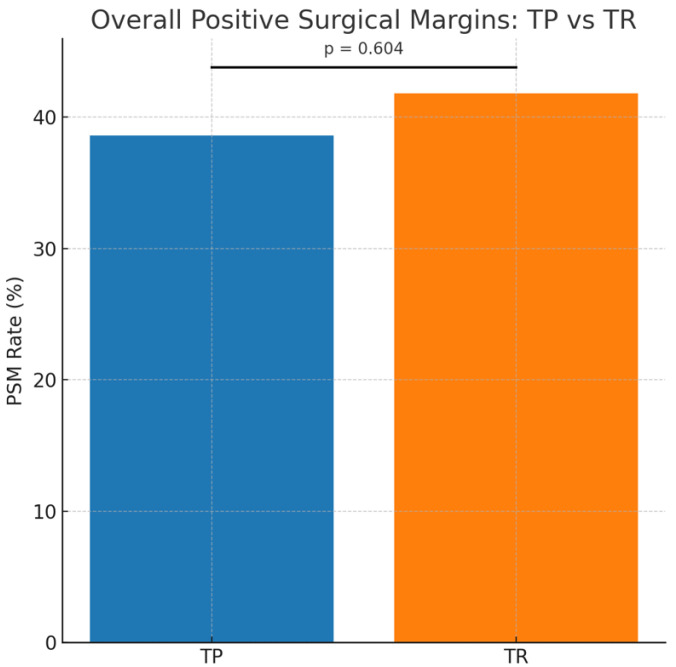 Figure 1
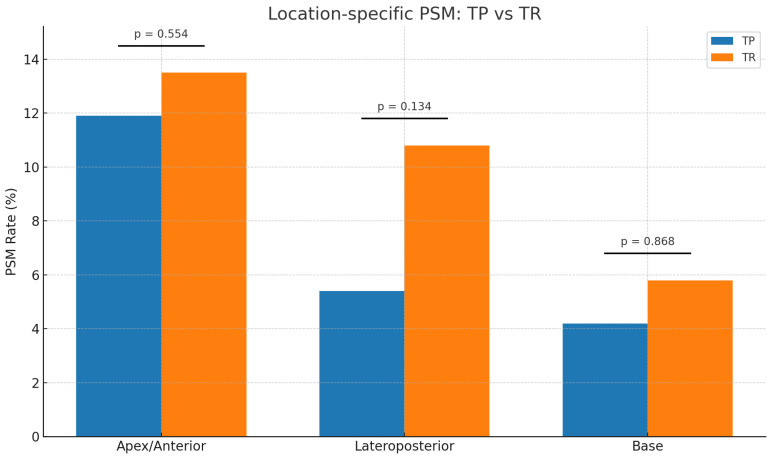 Figure 2
Peer Reviews
No public reviews on file for this paper yet. If you reviewed it on a platform where reviews are public (OpenReview, ICLR, NeurIPS, ICML), you can paste yours below so the community can read it here.
Videos
No videos yet. Explain this paper in a talk, walkthrough, or lecture? Add one.
Taxonomy
TopicsProstate Cancer Diagnosis and Treatment · Prostate Cancer Treatment and Research · Urologic and reproductive health conditions