Tumor-Associated Macrophage Polarization in Wilms’ Tumor After Neoadjuvant Chemotherapy
Karolina Malić Tudor, Sandra Zekić Tomaš, Ana Dunatov Huljev, Višnja Armanda Bogdan, Antonela Matana, Marin Ogorevc, Sven Seiwerth, Božo Krušlin, Jasminka Stepan Giljević, Ivana Kuzmić Prusac

TL;DR
This study explores how macrophages in Wilms’ tumor respond to chemotherapy and their potential role as biomarkers or treatment targets.
Contribution
The study characterizes macrophage polarization in Wilms’ tumor after chemotherapy and links it to tumor size and biochemical markers.
Findings
Larger Wilms’ tumors had higher densities of both M1 and M2 macrophages, with M2 macrophages being more prevalent.
The M1/M2 macrophage ratio was higher in regressive subtypes and tumors with elevated creatinine and neuron-specific enolase levels.
Macrophage infiltration was not significantly associated with tumor stage or risk group.
Abstract
While survival rates for Wilms’ tumor are high, a subset of high-risk patients are prone to treatment resistance. Evidence suggests that tumor-associated macrophages may influence therapeutic response. The aim of our study was to characterize macrophage infiltration and polarization in Wilms’ tumors treated with neoadjuvant chemotherapy and to evaluate their association with clinicopathological features. Analysis of tumor samples from 46 patients revealed that larger tumors had a higher density of both M1 and M2 macrophages, with M2 macrophages predominating in general. The M1/M2 ratio was significantly higher in regressive histological subtypes, larger tumors, and in tumors of patients with elevated serum neuron-specific enolase and creatinine. No significant associations were observed between macrophage infiltration and tumor stage or risk group. Macrophage polarization in Wilms’…
Genes, proteins, chemicals, diseases, species, mutations and cell lines named across the full text — each resolved to its canonical identifier and authoritative record.
Click any figure to enlarge with its caption.
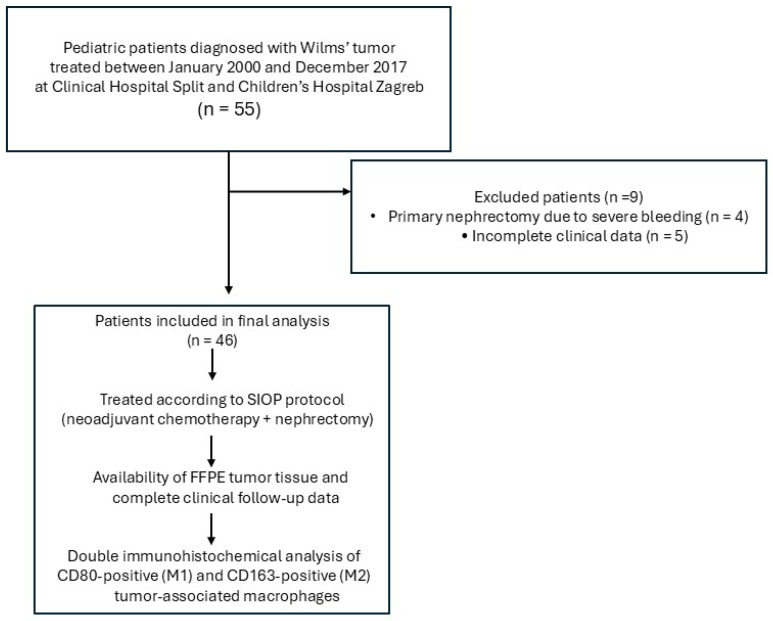 Figure 1
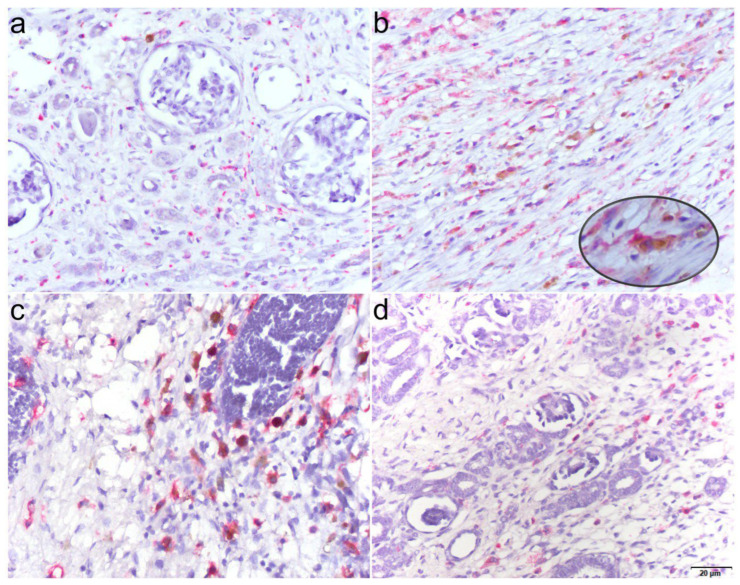 Figure 2
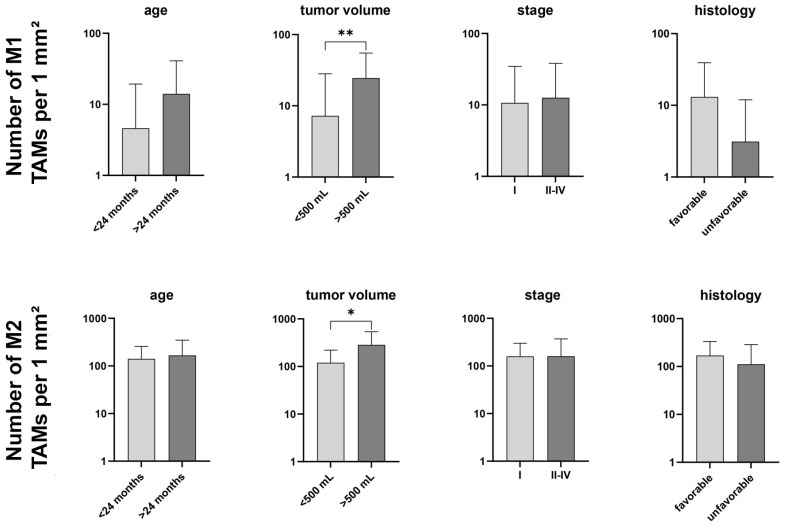 Figure 3
Peer Reviews
No public reviews on file for this paper yet. If you reviewed it on a platform where reviews are public (OpenReview, ICLR, NeurIPS, ICML), you can paste yours below so the community can read it here.
Videos
No videos yet. Explain this paper in a talk, walkthrough, or lecture? Add one.
Taxonomy
TopicsRenal and related cancers · Immune cells in cancer · Chemotherapy-induced organ toxicity mitigation