The Impact of Motor Symptom Asymmetry on the Relationship Between Non-Motor Manifestations and Neurometabolic Profiles in Parkinson’s Disease
Lilla Bonanno, Giulia Marafioti, Alessia Biondo, Amelia Brigandì, Fabrizia Caminiti, Rosa Morabito, Angelo Quartarone, Chiara Sorbera, Rosaria Torre, Rosella Ciurleo

TL;DR
This study explores how motor symptom asymmetry in Parkinson’s disease affects the relationship between non-motor symptoms and brain metabolism.
Contribution
The study reveals distinct neurometabolic profiles in Parkinson’s patients with right- or left-predominant motor symptoms.
Findings
LPD patients showed increased NAA in the right SN and reduced Ins in both hemispheres, linked to anxiety and sleep disturbances.
RPD patients had elevated Glx in the right GP and higher Cho in the right SN associated with sleep issues.
Motor asymmetry influences how neurometabolites correlate with non-motor symptoms in Parkinson’s disease.
Abstract
Parkinson’s disease (PD) is characterized by asymmetric motor symptoms (MSs), which may influence non-motor symptoms (NMSs). This study investigated the relationship between NMSs and the neurometabolic profile of the substantia nigra (SN) and globus pallidus (GP) of patients with PD, examining how these associations vary according to MS asymmetry. Forty-three PD patients (20 with right-predominant motor symptoms—RPD, and 23 with left-predominant motor symptoms—LPD) and 20 healthy controls (HCs) underwent single-voxel proton magnetic resonance spectroscopy, along with comprehensive clinical assessments of MSs and NMSs. Compared with HCs, PD patients showed higher N-acetylaspartate (NAA) levels in the SN, lower myo-inositol (Ins) levels in both sides of the SN, and higher glutamate/glutamine (Glx) levels in the right GP. Choline (Cho) in the left GP was positively associated with…
Genes, proteins, chemicals, diseases, species, mutations and cell lines named across the full text — each resolved to its canonical identifier and authoritative record.
Click any figure to enlarge with its caption.
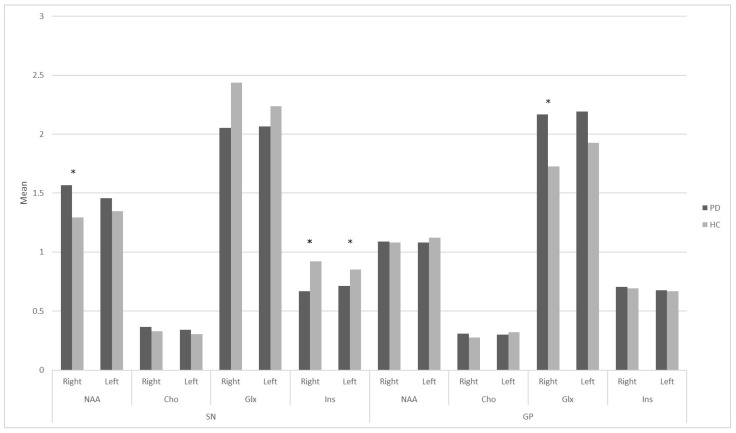 Figure 1
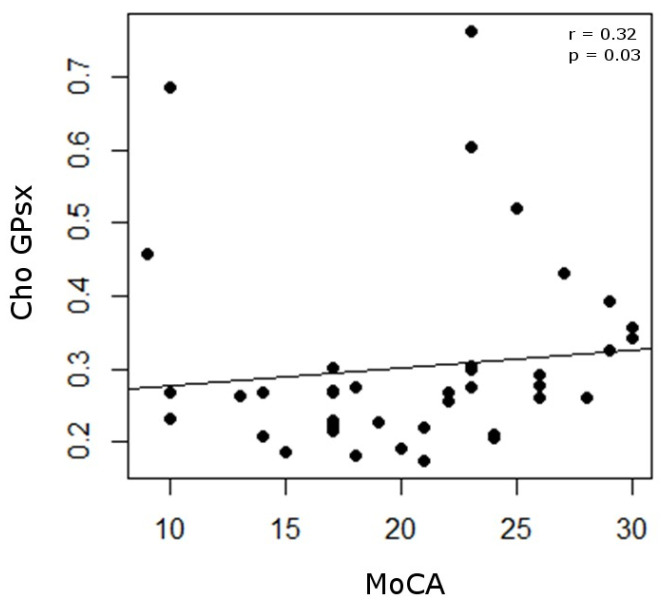 Figure 2
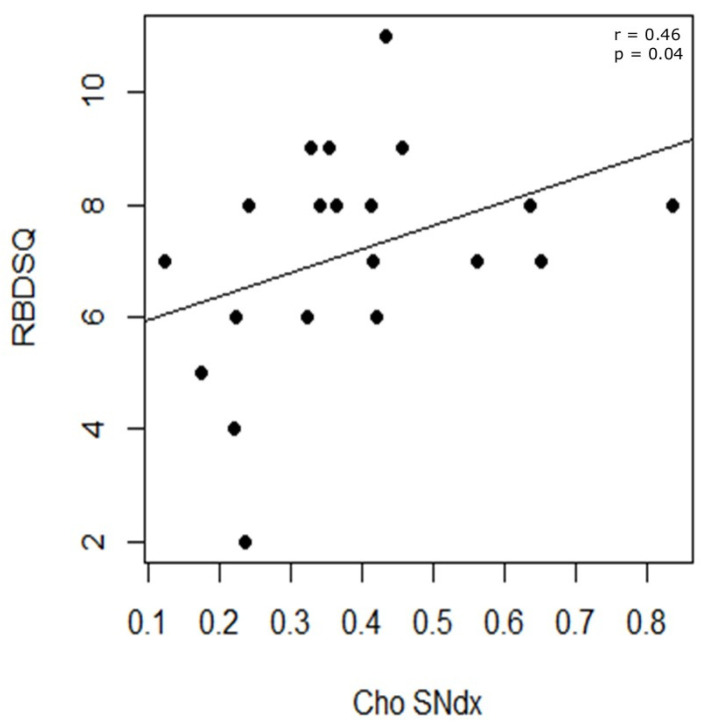 Figure 3
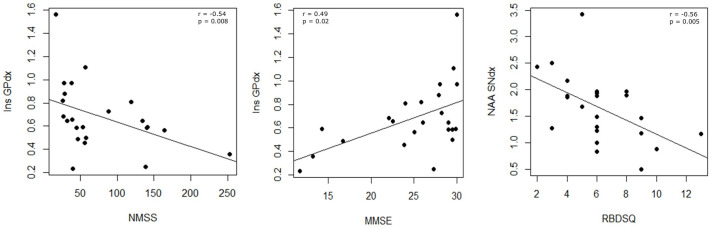 Figure 4
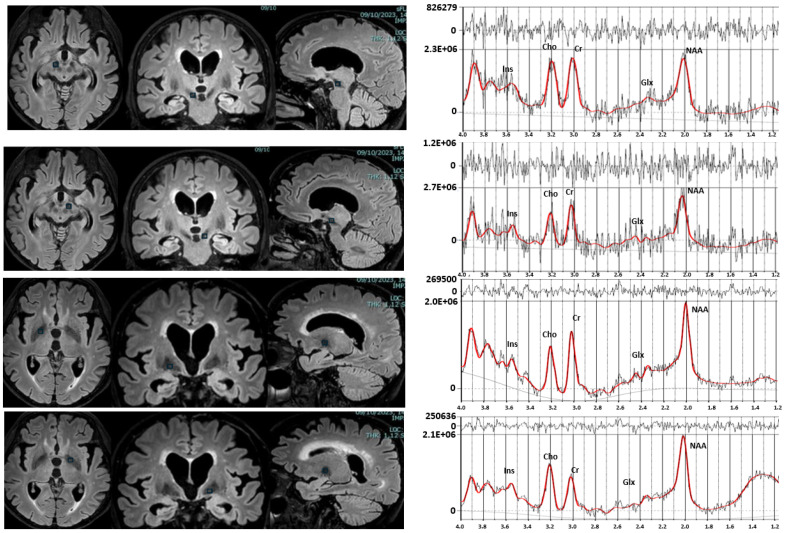 Figure 5
Peer Reviews
No public reviews on file for this paper yet. If you reviewed it on a platform where reviews are public (OpenReview, ICLR, NeurIPS, ICML), you can paste yours below so the community can read it here.
Videos
No videos yet. Explain this paper in a talk, walkthrough, or lecture? Add one.
Taxonomy
TopicsParkinson's Disease Mechanisms and Treatments · Hemispheric Asymmetry in Neuroscience · Spatial Neglect and Hemispheric Dysfunction