Distinct Patterns of Dyadic Mental Health in Patients with End-Stage Liver Disease and Their Care Partners
Lissi Hansen, Karen S. Lyons, Nathan F. Dieckmann, Michael F. Chang, Shirin O. Hiatt, Susan J. Rosenkranz, Christopher S. Lee

TL;DR
The study found three distinct mental health patterns in patients with end-stage liver disease and their care partners over 12 months, highlighting the need for dyadic care and early palliative support.
Contribution
The study identifies three unique mental health patterns in ESLD patient-care partner dyads and emphasizes the importance of addressing care partner mental health in clinical interventions.
Findings
Three distinct dyadic mental health patterns were identified: 'disparate: patient better', 'shared mental health', and 'disparate: care partner better'.
Care partners with worse mental health than patients should be prioritized in clinical care and intervention studies.
Early referral to palliative care is recommended based on the observed mental health patterns.
Abstract
What are the main findings? Mental health is interdependent in end-stage liver disease and affects both members of the care dyad.Three distinct and different patterns of dyadic mental health were found over 12 months. Mental health is interdependent in end-stage liver disease and affects both members of the care dyad. Three distinct and different patterns of dyadic mental health were found over 12 months. What are the implications of the main findings? Care partners who experience worse mental health than patients with end-stage liver disease should be the focus in dyadic intervention studies and clinical care.Early referral to palliative care is necessary. Care partners who experience worse mental health than patients with end-stage liver disease should be the focus in dyadic intervention studies and clinical care. Early referral to palliative care is necessary.…
Genes, proteins, chemicals, diseases, species, mutations and cell lines named across the full text — each resolved to its canonical identifier and authoritative record.
Click any figure to enlarge with its caption.
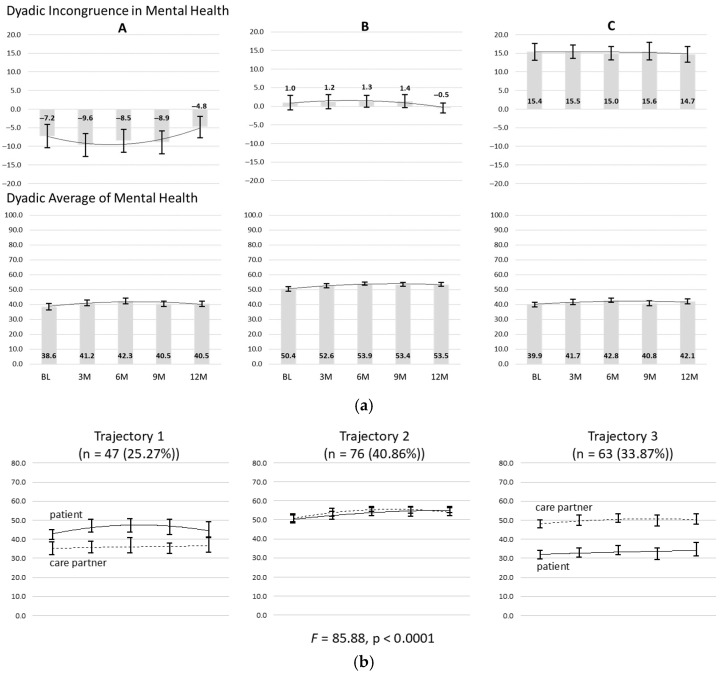 Figure 1
Peer Reviews
No public reviews on file for this paper yet. If you reviewed it on a platform where reviews are public (OpenReview, ICLR, NeurIPS, ICML), you can paste yours below so the community can read it here.
Videos
No videos yet. Explain this paper in a talk, walkthrough, or lecture? Add one.
Taxonomy
TopicsAttachment and Relationship Dynamics · Cancer survivorship and care · Hepatitis C virus research