How Sex Shapes Facial Morphology in Adults: A 3D Geometric Morphometric Study
Riccardo Solazzo, Daniele Maria Gibelli, Alice Alderighi, Claudia Dolci, Chiarella Sforza, Annalisa Cappella

TL;DR
This study uses 3D imaging to show how male and female faces differ in shape and structure, providing detailed data for medical and forensic use.
Contribution
The study provides high-resolution 3D facial data on sexual dimorphism in healthy Italian adults, revealing distinct facial traits specific to each sex.
Findings
Males had larger centroid sizes and exhibited facial traits like deep-set eyes and central facial projection.
Females displayed smaller faces with fuller cheeks and a more vertical forehead profile.
Color-coded maps highlighted sex-specific traits such as flatter labiomandibular folds in males and wider temples in females.
Abstract
Background/Objectives: An accurate description of facial sexual dimorphism is essential in clinical, forensic, and anthropological contexts to support accurate diagnosis of craniofacial dysmorphisms and differences, treatment planning and evaluation, as well as biological profiling, craniofacial reconstruction, and personal identification. This study investigates sexual dimorphism of the facial soft tissues in a sample of healthy Italian adults, providing reference data and deepening our understanding of normal craniofacial variation. Methods: Three-dimensional stereophotogrammetric facial images of 342 Italian adults (172 males and 170 females; 18–40 years old) were analyzed using a 3D spatially dense geometric morphometric approach to assess both shape and form. Principal Component Analysis (PCA) and Partial Least Squares Regression (PLSR) were used to explore facial variation and to…
Genes, proteins, chemicals, diseases, species, mutations and cell lines named across the full text — each resolved to its canonical identifier and authoritative record.
Click any figure to enlarge with its caption.
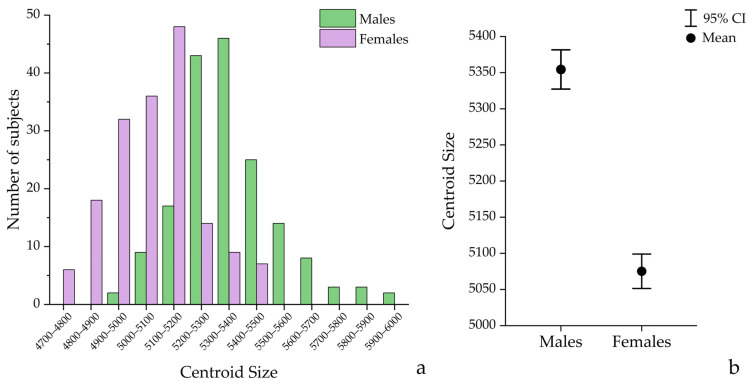 Figure 1
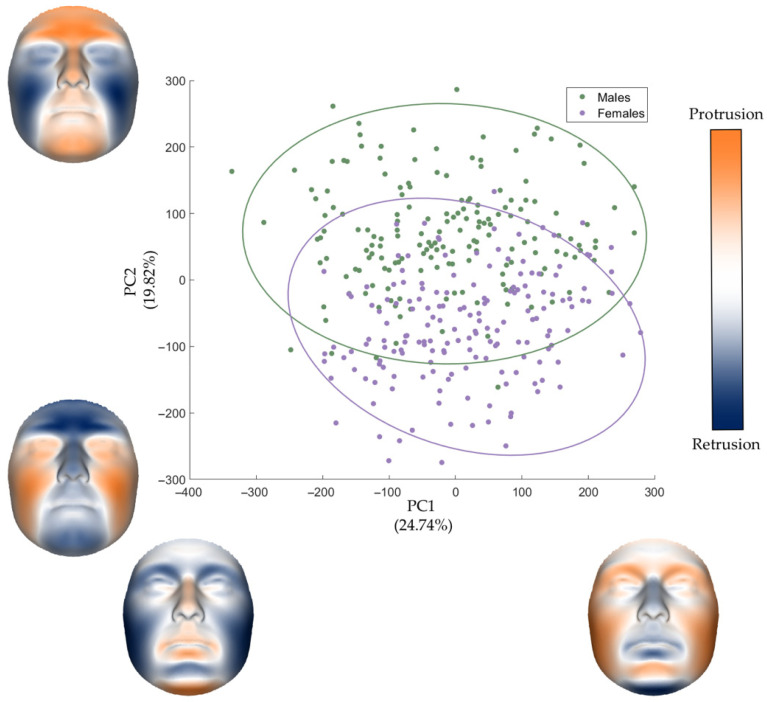 Figure 2
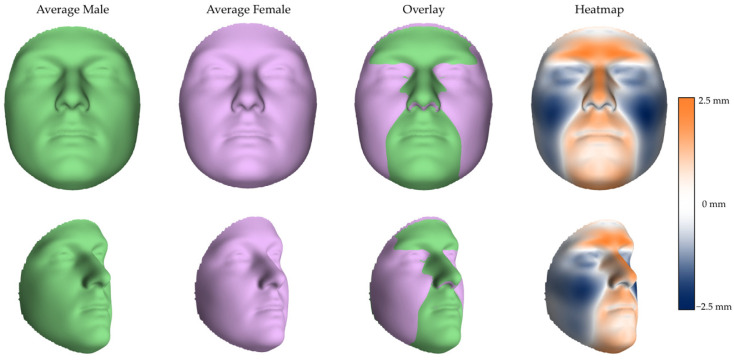 Figure 3
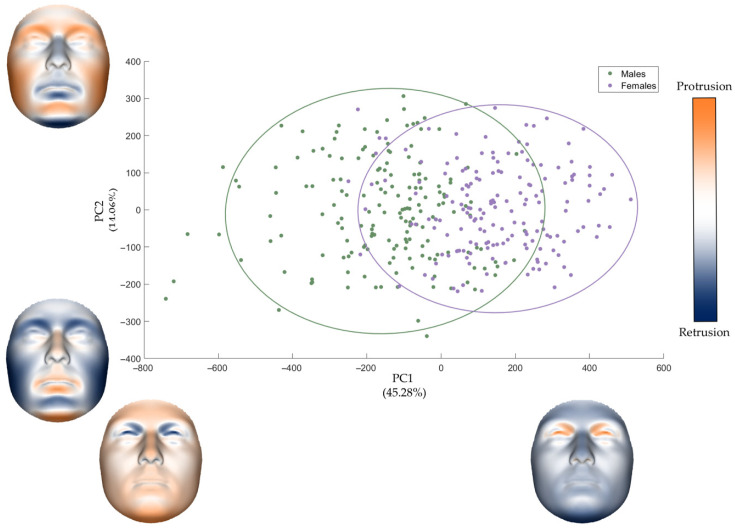 Figure 4
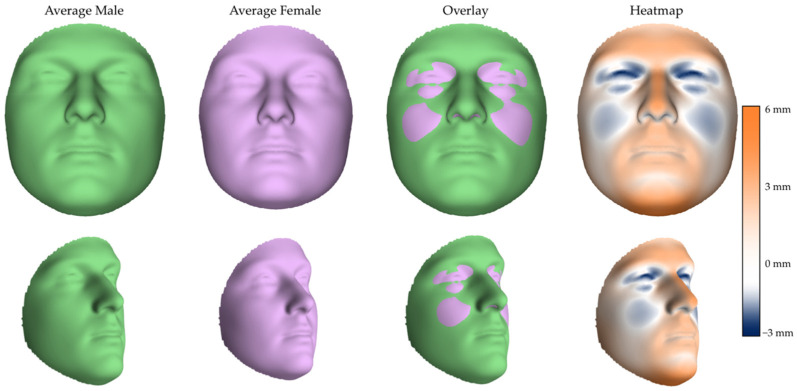 Figure 5
Peer Reviews
No public reviews on file for this paper yet. If you reviewed it on a platform where reviews are public (OpenReview, ICLR, NeurIPS, ICML), you can paste yours below so the community can read it here.
Videos
No videos yet. Explain this paper in a talk, walkthrough, or lecture? Add one.
Taxonomy
TopicsForensic Anthropology and Bioarchaeology Studies · Evolutionary Psychology and Human Behavior · Orthodontics and Dentofacial Orthopedics