Serum Gelsolin Combined with Albumin Might Be a Promising Marker for the Intensive Care Unit-Acquired Weakness—A Pilot Study
Zoltán Horváth-Szalai, Tihamér Molnár, Ildikó Rostás, Balázs Szirmay, Dániel Ragán, Péter Kustán, István Papp, Tamás Huber, Natália Tóth, Ákos Mérei, Attila Miseta, Tamás Kőszegi, Diána Mühl

TL;DR
This study suggests that low levels of serum gelsolin and albumin may help predict ICU-acquired muscle weakness in critically ill patients.
Contribution
The study introduces serum gelsolin as a potential biomarker for ICU-acquired weakness, particularly when combined with albumin.
Findings
ICU patients had significantly lower admission gelsolin levels compared to controls.
Lower gelsolin levels were associated with ICU-acquired weakness and predicted the need for invasive ventilation.
The combination of gelsolin, albumin, and procalcitonin improved diagnostic accuracy for ICU outcomes.
Abstract
Background/Objectives: Intensive care unit-acquired weakness (ICUAW) is a frequent complication characterized by symmetrical and proximal limb muscle weakness. Its diagnosis is primarily based on clinical symptoms; however, ICUAW assessment can often be uncertain. Blood biomarkers have not yet been widely investigated for this purpose. Serum gelsolin (GSN) is synthesized by skeletal muscle cells. It plays a crucial role in binding extracellular actin filaments and pro-inflammatory cytokines. In sepsis-associated ICUAW, GSN levels might massively decrease due to their buffering activity and muscle wasting. We elucidated the predictive capacity of GSN regarding ICUAW and its additional diagnostic/prognostic potential in sepsis compared to classical parameters. Methods: We recruited septic and non-septic ICU patients for our follow-up study. Patients were retrospectively categorized into…
Genes, proteins, chemicals, diseases, species, mutations and cell lines named across the full text — each resolved to its canonical identifier and authoritative record.
Click any figure to enlarge with its caption.
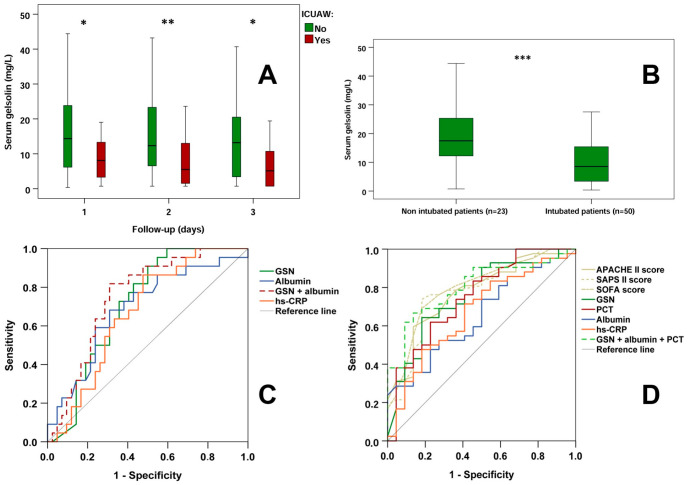 Figure 1
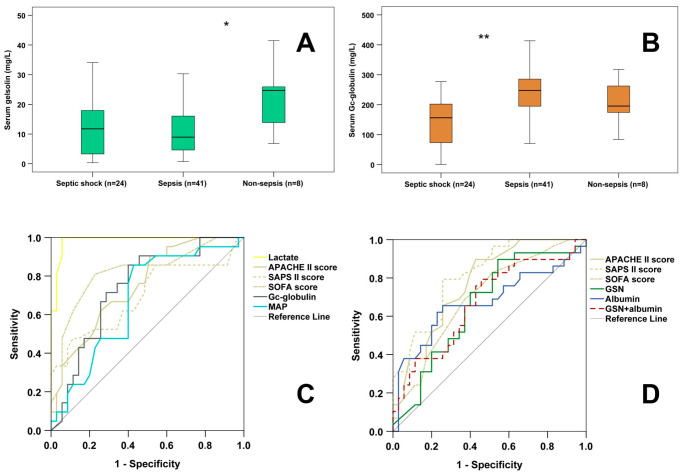 Figure 2
 Figure 3
Peer Reviews
No public reviews on file for this paper yet. If you reviewed it on a platform where reviews are public (OpenReview, ICLR, NeurIPS, ICML), you can paste yours below so the community can read it here.
Videos
No videos yet. Explain this paper in a talk, walkthrough, or lecture? Add one.
Taxonomy
TopicsSepsis Diagnosis and Treatment · Cardiomyopathy and Myosin Studies · Intensive Care Unit Cognitive Disorders