Echocardiographic Guidance for Percutaneous Left Atrial Appendage Occlusion: A Systematic Review of Outcomes in High-Risk Populations Including Chronic Liver Disease and Prior Gastrointestinal Bleeding
Tina Becic, Ivana Jukić, Petra Šimac Prižmić, Ivona Matulić, Hana Đogaš, Mislav Radić, Josipa Radić, Jonatan Vuković, Damir Fabijanić

TL;DR
This review examines how echocardiography guides left atrial appendage occlusion in high-risk patients, including those with chronic liver disease and prior gastrointestinal bleeding.
Contribution
The study provides a systematic review of echocardiographic guidance outcomes in high-risk populations for LAAO, emphasizing CLD and GI bleeding patients.
Findings
TEE is the most common imaging method for LAAO, offering high-resolution guidance.
ICE-guided LAAO shows high procedural success and reduced fluoroscopy time in selected patients.
LAAO is feasible and safe in patients with chronic liver disease and prior GI bleeding, though data remains limited.
Abstract
Background: Echocardiographic imaging has become central to planning and guiding percutaneous left atrial appendage occlusion (LAAO), particularly in patient populations in whom long-term anticoagulation is unsuitable. This systematic review synthesizes current evidence on transesophageal (TEE) and intracardiac echocardiography (ICE) guidance during LAAO, with special emphasis on outcomes in high-risk cohorts, including chronic liver disease (CLD) and prior gastrointestinal (GI) bleeding. Methods: Following PRISMA 2020 guidelines, four databases (PubMed, Scopus, Web of Science, and Cochrane CENTRAL) were searched up to 5 December 2025. Eligible studies included adult patients with atrial fibrillation (AF) undergoing percutaneous LAAO with intraprocedural echocardiographic guidance. Eight studies (n = 1739 patients) met the inclusion criteria. Data were synthesized qualitatively due to…
Genes, proteins, chemicals, diseases, species, mutations and cell lines named across the full text — each resolved to its canonical identifier and authoritative record.
Click any figure to enlarge with its caption.
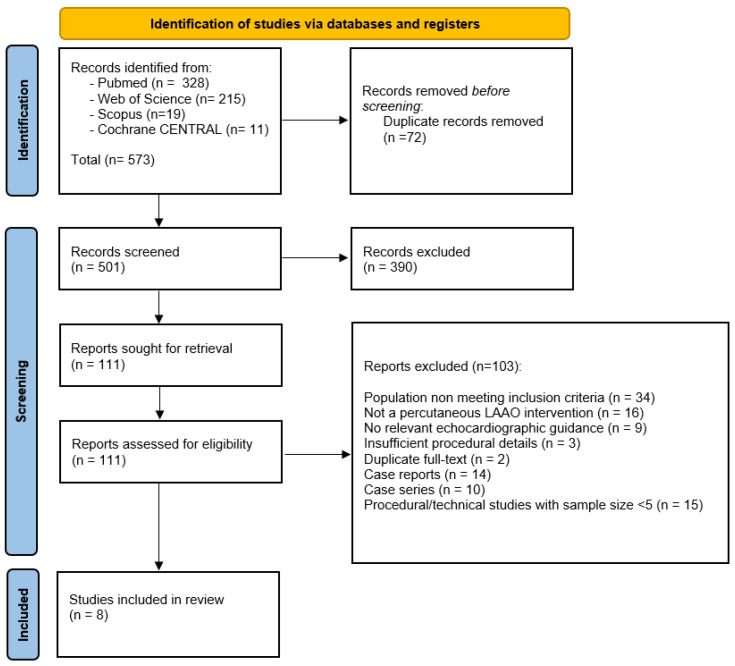 Figure 1
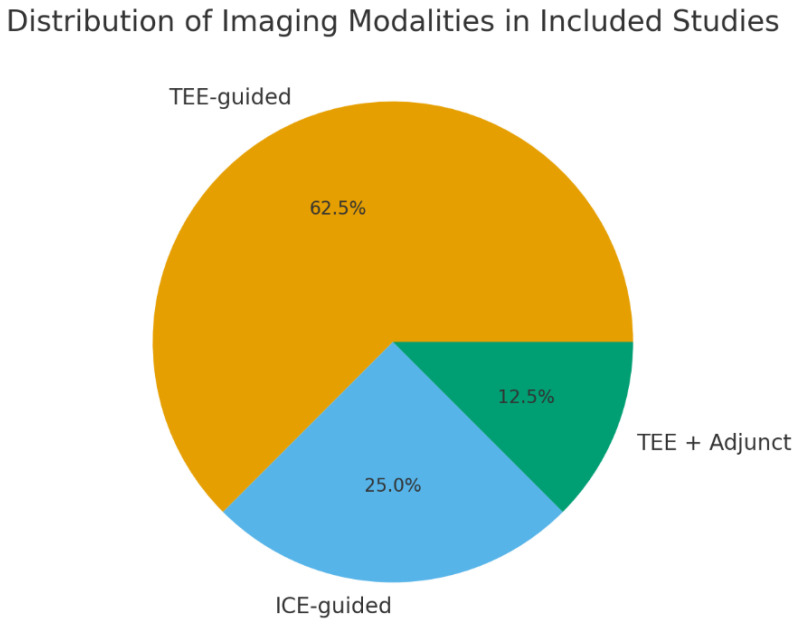 Figure 2
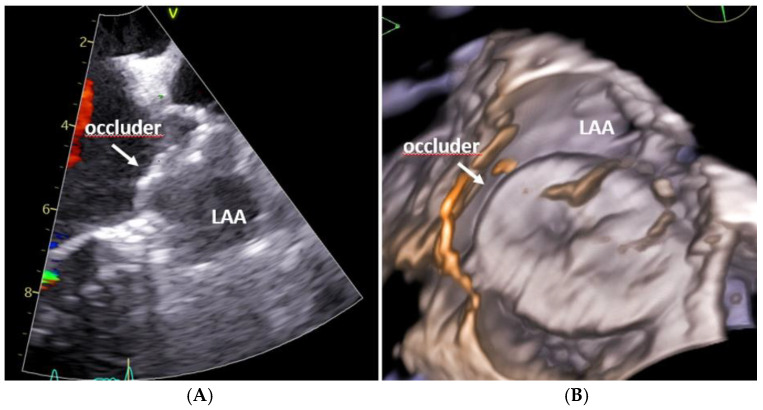 Figure 3
Peer Reviews
No public reviews on file for this paper yet. If you reviewed it on a platform where reviews are public (OpenReview, ICLR, NeurIPS, ICML), you can paste yours below so the community can read it here.
Videos
No videos yet. Explain this paper in a talk, walkthrough, or lecture? Add one.
Taxonomy
TopicsAtrial Fibrillation Management and Outcomes · Pericarditis and Cardiac Tamponade · Cardiac pacing and defibrillation studies