Physical Restraint Use in Acute Care Hospitals: A Diagnostic Study on Knowledge, Documentation, and Patient Safety from a Humanization Perspective
Alicia Albalat-Rodríguez, Ana Fernández-García, Violeta Hernández-De Arribas, Nuria Pérez-Panizo, Patricia Nieto-Alcantud, Sara Guillén-Tolbaños, Jesús De Cabo-Calvo, Marina De la Matta-Canto, Natalia Mudarra-García, Francisco Javier García-Sánchez

TL;DR
This study identifies gaps in training and documentation practices related to physical restraints in hospitals, highlighting the need for better education and standardized procedures to improve patient safety and care.
Contribution
The study provides new insights into the disconnect between institutional policies and healthcare professionals' practices regarding physical restraints.
Findings
Over half of healthcare professionals reported no formal training in physical restraint use.
Only 31% consistently documented restraint removal, indicating poor adherence to documentation standards.
There were significant discrepancies between regulatory definitions and professionals' perceptions of restraint documentation requirements.
Abstract
Background: The use of physical restraints in hospital settings remains a controversial practice due to its ethical, legal, and safety implications. Although restraints are intended to prevent falls or manage agitation, their inappropriate use may compromise patient dignity, autonomy, and quality of care. Current healthcare policies emphasize restraint reduction, appropriate documentation, and professional training as key elements of humanized and safe care. Methods: A descriptive cross-sectional study based on an anonymous self-administered survey was conducted in a tertiary university hospital as the diagnostic phase of a quality improvement project aimed at evaluating healthcare professionals’ knowledge, perceptions, and documentation practices related to physical restraint use. A structured ad hoc questionnaire was distributed to registered nurses and nursing assistants working in…
Genes, proteins, chemicals, diseases, species, mutations and cell lines named across the full text — each resolved to its canonical identifier and authoritative record.
Click any figure to enlarge with its caption.
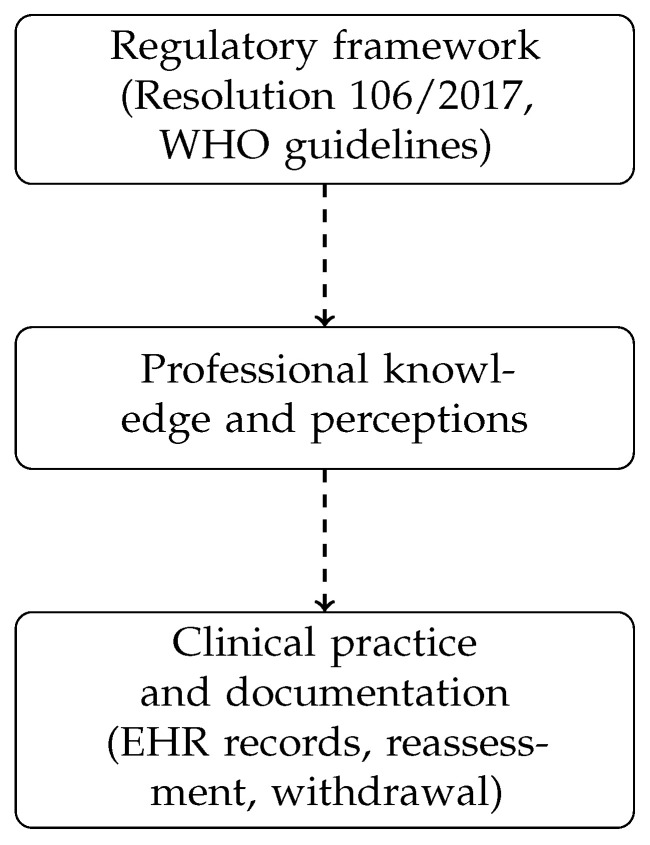 Figure 1
 Figure 2
Peer Reviews
No public reviews on file for this paper yet. If you reviewed it on a platform where reviews are public (OpenReview, ICLR, NeurIPS, ICML), you can paste yours below so the community can read it here.
Videos
No videos yet. Explain this paper in a talk, walkthrough, or lecture? Add one.
Taxonomy
TopicsHealthcare Decision-Making and Restraints · Workplace Violence and Bullying · Medical Malpractice and Liability Issues