Deep Learning-Based Alzheimer’s Disease Detection from Multi-Channel EEG Using Fused Time–Frequency Image Grids
Abdulnasır Yıldız, Hasan Zan

TL;DR
This paper presents a deep learning framework for detecting Alzheimer’s disease using multi-channel EEG data transformed into time–frequency images, showing high accuracy with specific methods.
Contribution
A novel framework for Alzheimer’s detection using fused time–frequency image grids and systematic TFR evaluation in multi-channel EEG data.
Findings
STFT with InceptionV3 achieved 98.8% accuracy in random splitting for Alzheimer’s detection.
CQT showed competitive performance, while HHT and WVD were less effective in classification.
Gradient-weighted class activation mapping provided interpretable visualizations of EEG channel contributions.
Abstract
Background/Objectives: Dementia is a progressive neurodegenerative disorder for which accurate and timely diagnosis remains a major clinical challenge. Electroencephalography (EEG) offers a noninvasive and cost-effective means of capturing neurophysiological alterations, motivating the development of reliable EEG-based automated diagnostic frameworks. This study aims to systematically examine how different time–frequency representations (TFRs) affect dementia classification performance within a unified multi-channel EEG image fusion framework. Methods: Resting-state, eyes-closed EEG recordings from 88 subjects, including Alzheimer’s disease, frontotemporal dementia, and cognitively normal controls, were preprocessed and segmented. Channel-wise signals were converted into two-dimensional time–frequency images using Short-Time Fourier Transform (STFT), Continuous Wavelet Transform (CWT),…
Genes, proteins, chemicals, diseases, species, mutations and cell lines named across the full text — each resolved to its canonical identifier and authoritative record.
Click any figure to enlarge with its caption.
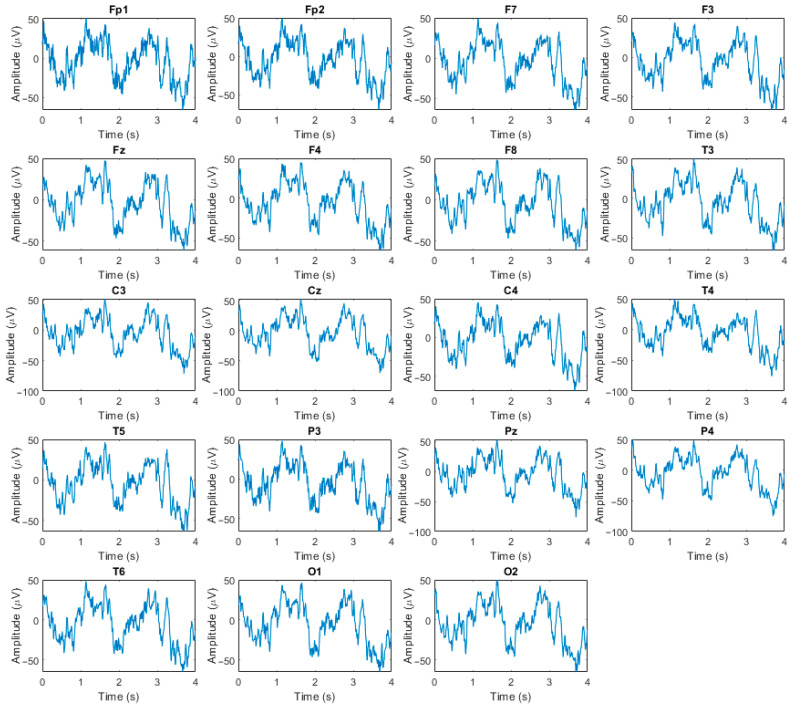 Figure 1
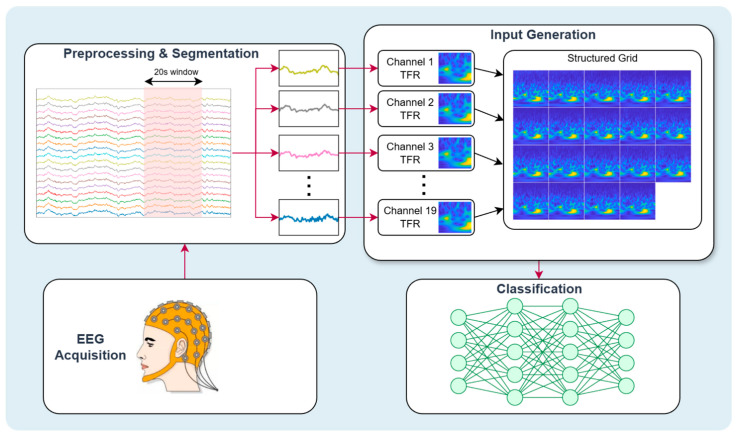 Figure 2
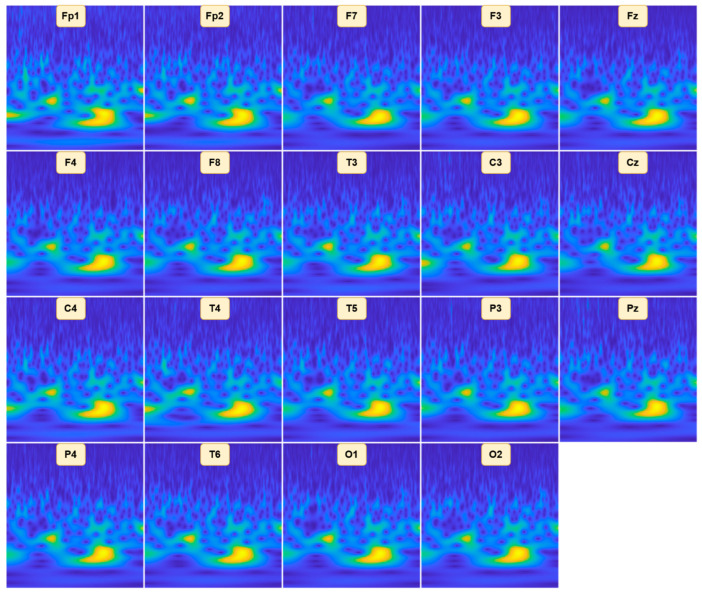 Figure 3
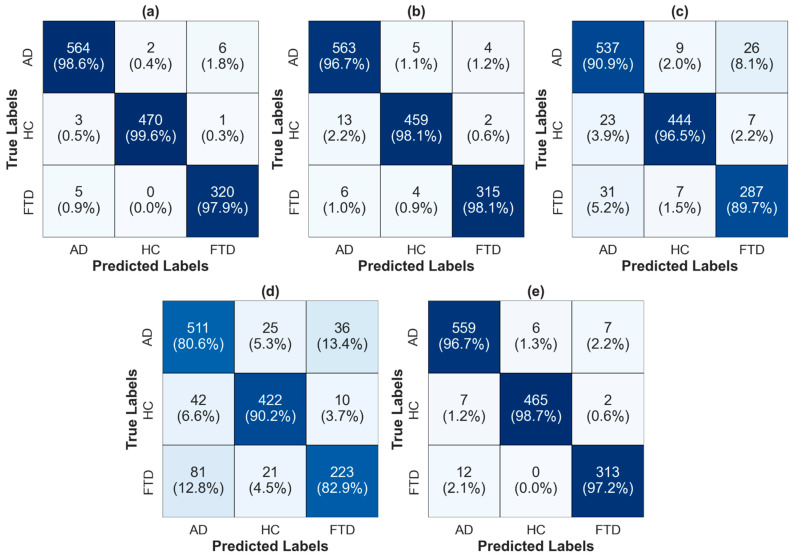 Figure 4
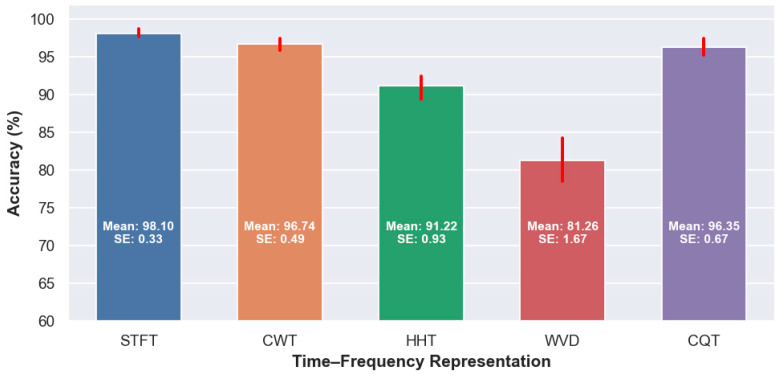 Figure 5
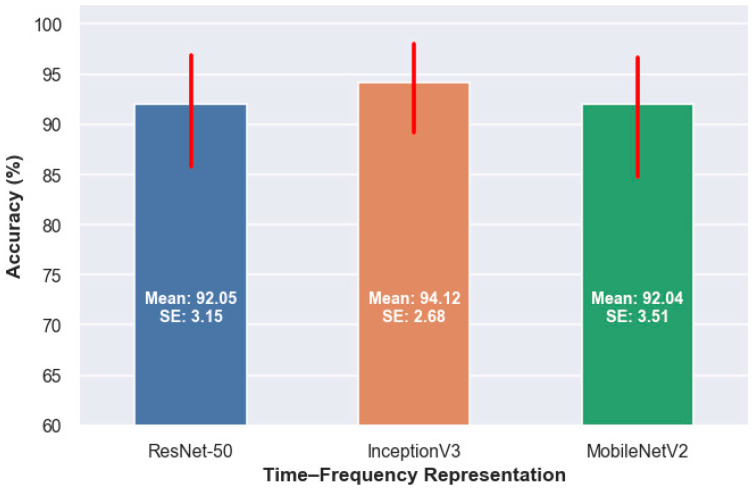 Figure 6
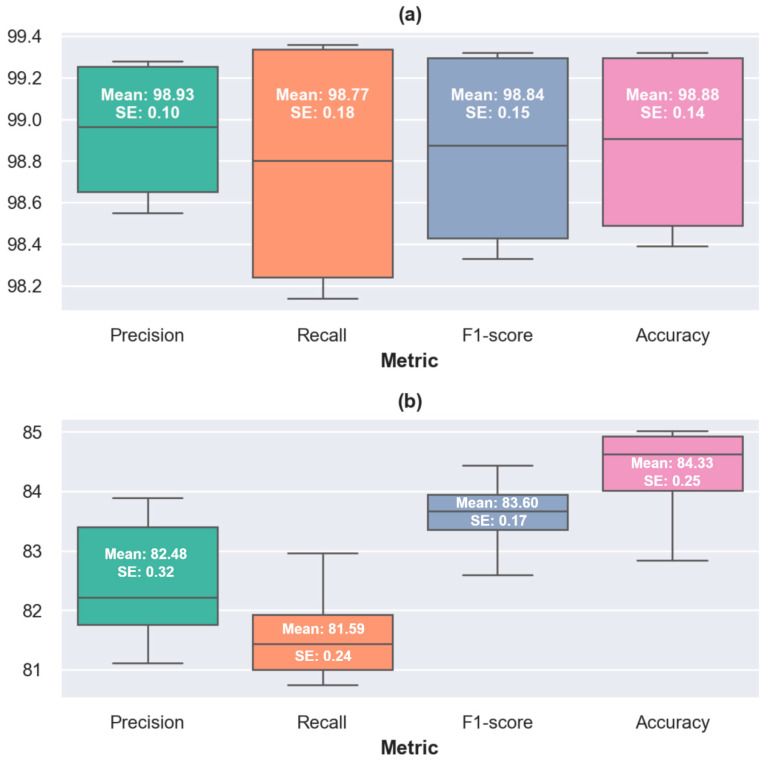 Figure 7
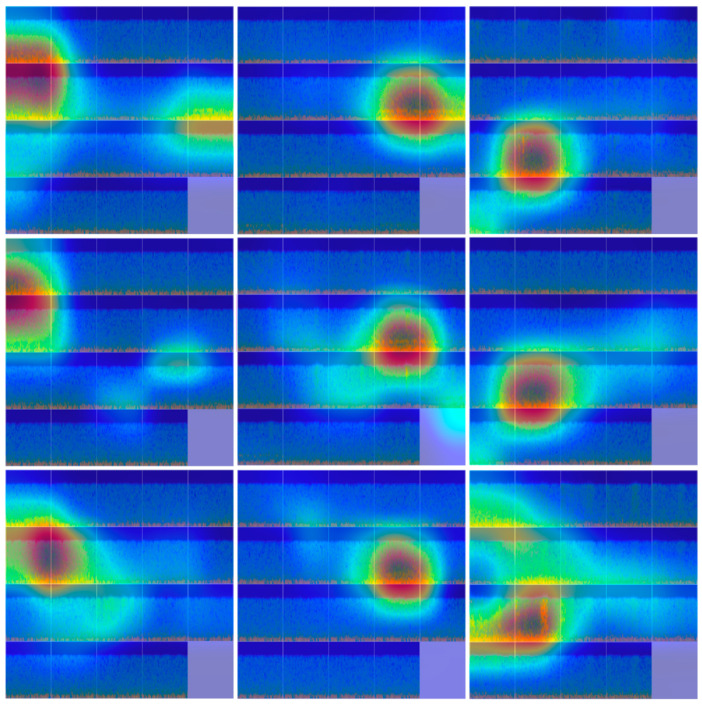 Figure 8
Peer Reviews
No public reviews on file for this paper yet. If you reviewed it on a platform where reviews are public (OpenReview, ICLR, NeurIPS, ICML), you can paste yours below so the community can read it here.
Videos
No videos yet. Explain this paper in a talk, walkthrough, or lecture? Add one.
Taxonomy
TopicsEEG and Brain-Computer Interfaces · Functional Brain Connectivity Studies · Dementia and Cognitive Impairment Research