Non-Coding Regulatory Variants in Autoimmune Disease: Biological Mechanisms, Immune Context, and Integrative Multi-Omics Interpretation
Ahmed S. A. Ali Agha, Nawras A. Al-Zaki, Saif Aldeen Nasser Alshammari, Lama Odeh, Renata Obekh, Nour Sameer, Hussam M. Askari, Nancy Hakooz, Ibrahim Al-Adham, Phillip J. Collier

TL;DR
This review explains how non-coding DNA changes contribute to autoimmune diseases by integrating genetic data with immune cell and tissue context using multi-omics and AI.
Contribution
A step-by-step framework for interpreting non-coding variants in autoimmunity using integrative multi-omics and context-aware analysis.
Findings
Risk variants often act in specific immune cell states or tissue environments.
Multi-omics and AI improve disease subtyping and drug repurposing potential.
Functional assays confirm regulatory effects of non-coding variants.
Abstract
Autoimmune diseases such as systemic lupus erythematosus and rheumatoid arthritis arise when the immune system attacks the body’s own tissues. Large genetic studies have found many DNA changes linked to these diseases, but most of these changes occur outside genes, in regions that control when and where genes are switched on. Because these “control” regions work differently depending on the immune cell type, its activation state, and the affected tissue, it is often difficult to explain how a risk variant contributes to disease. In this review, we describe a step-by-step approach to interpret non-gene DNA variants in autoimmunity by combining genetic signals with evidence from gene regulation maps, single-cell profiling, and tissue-level spatial studies. We summarize how newer methods can reveal which immune cells and inflammatory conditions expose the effects of risk variants, and how…
Genes, proteins, chemicals, diseases, species, mutations and cell lines named across the full text — each resolved to its canonical identifier and authoritative record.
Click any figure to enlarge with its caption.
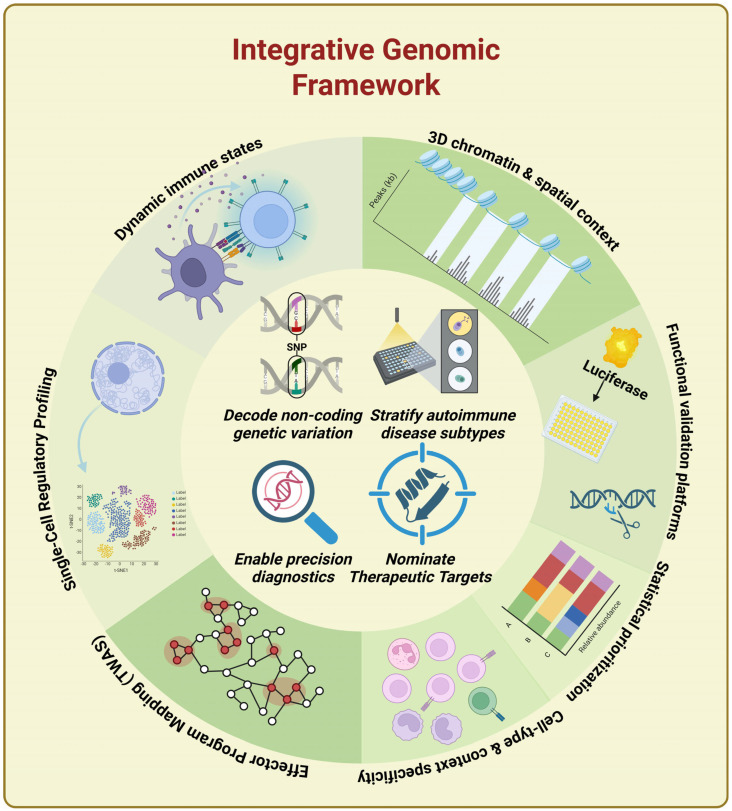 Figure 1
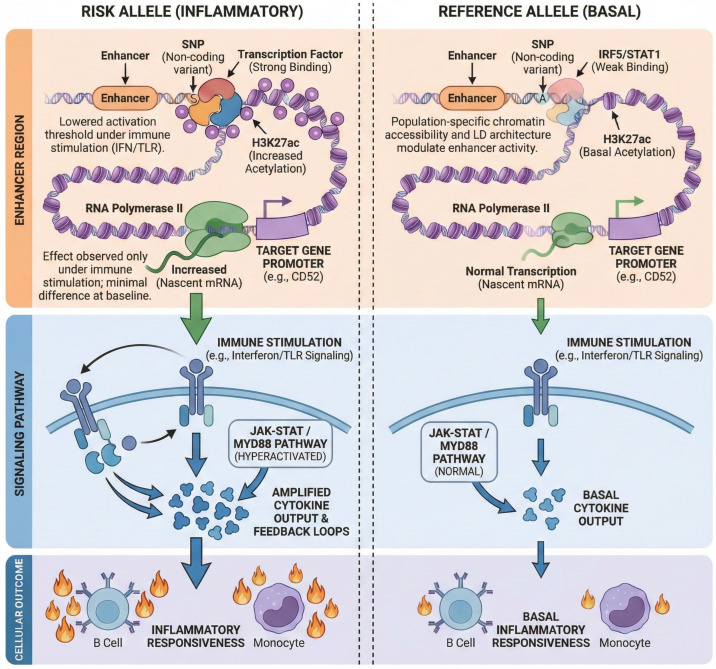 Figure 2
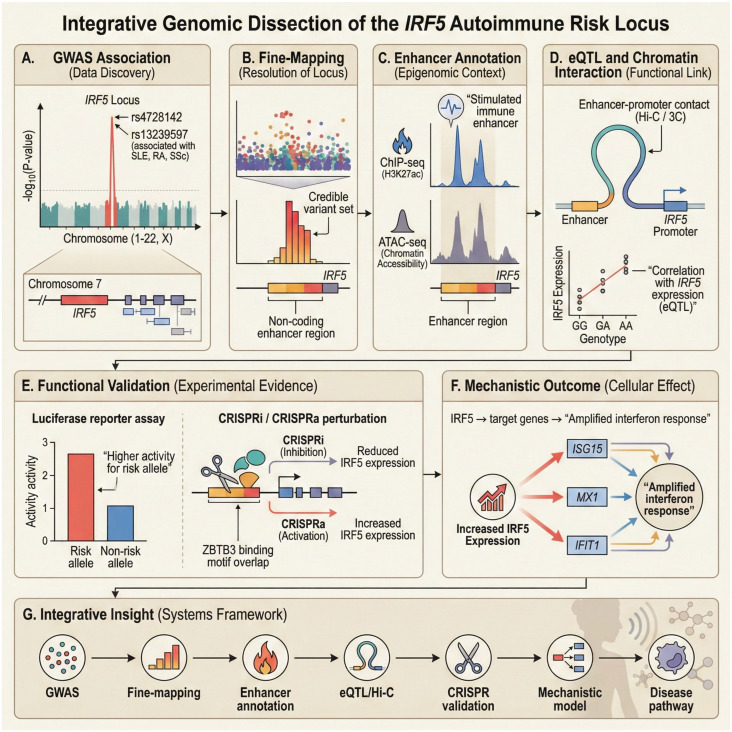 Figure 3
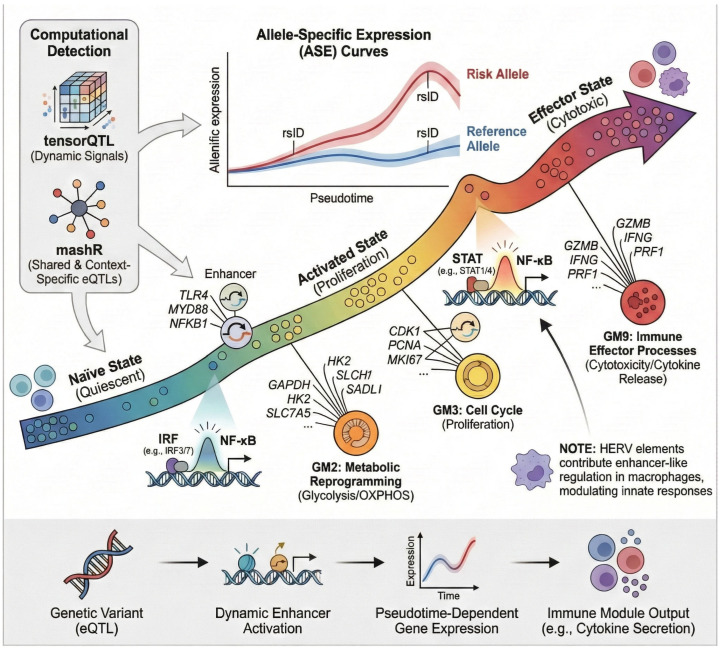 Figure 4
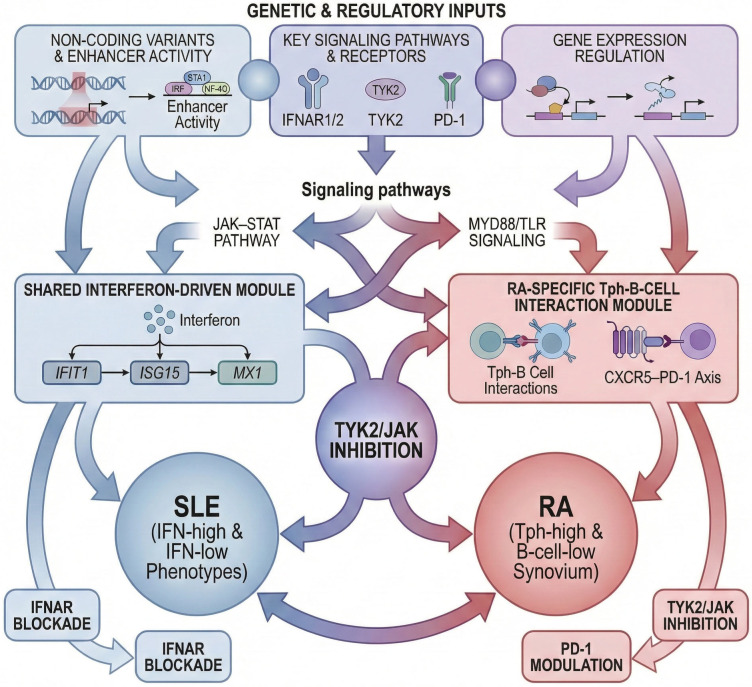 Figure 5
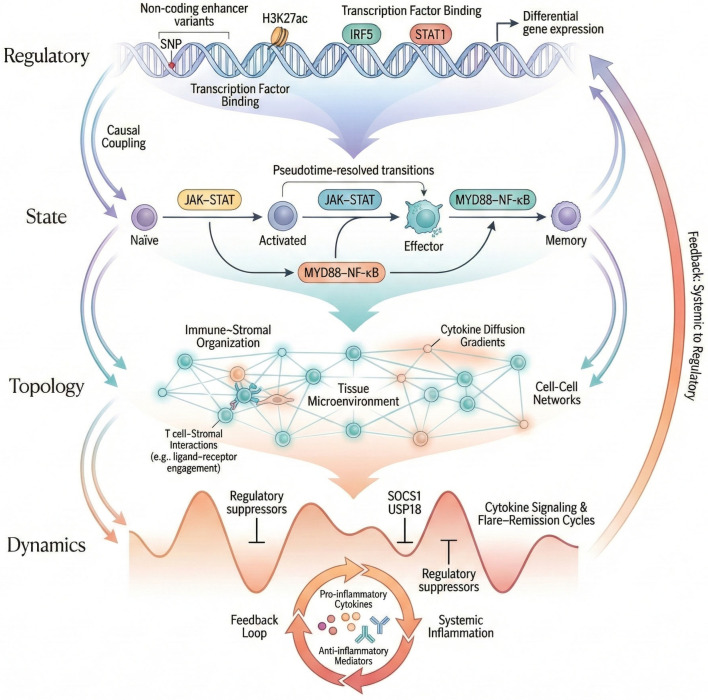 Figure 6
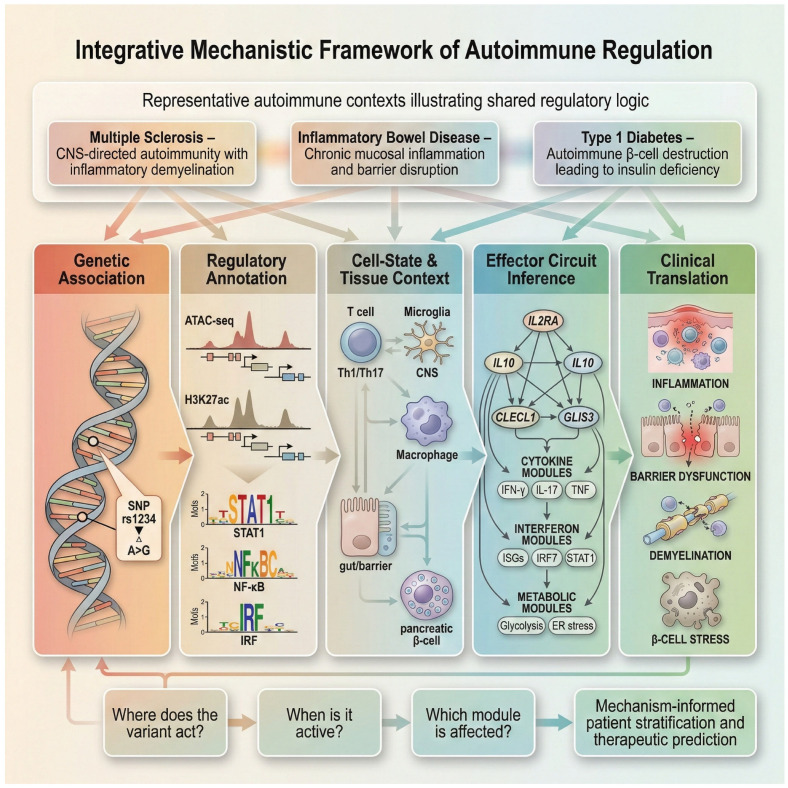 Figure 7
Peer Reviews
No public reviews on file for this paper yet. If you reviewed it on a platform where reviews are public (OpenReview, ICLR, NeurIPS, ICML), you can paste yours below so the community can read it here.
Videos
No videos yet. Explain this paper in a talk, walkthrough, or lecture? Add one.
Taxonomy
TopicsSingle-cell and spatial transcriptomics · Genetic Associations and Epidemiology · Systemic Lupus Erythematosus Research