Low-Intensity CD66c Expression Orchestrates an Immunosuppressive Niche Promoting Residual Disease in Pediatric ProB Acute Lymphoblastic Leukemia
Gabriela Zamora-Herrera, Rubí Romo-Rodríguez, Jebea A. López-Blanco, Laura Alfaro-Hernández, Diana Casique-Aguirre, Juan Carlos Núñez-Enriquez, Michael Schnoor, Dalia Ramírez-Ramírez, Rosana Pelayo

TL;DR
Low CD66c expression in pediatric leukemia cells helps them hide from the immune system, leading to higher relapse and mortality risks.
Contribution
The study reveals that low-intensity CD66c expression creates an immunosuppressive niche in bone marrow, promoting residual disease in ProB-ALL.
Findings
ProB-ALL blasts with low CD66c expression show a 'molecular stealth' phenotype linked to higher MRD and mortality.
Low CD66c expression leads to bi-directional remodeling of the bone marrow niche, fostering immune evasion.
Patients with low CD66c expression are at higher risk of relapse and misclassification by standard diagnostic methods.
Abstract
What are the main findings? ProB-ALL blasts with low-intensity CD66c expression exhibit a “molecular stealth” phenotype associated with a significantly higher risk of detectability of Measurable Residual Disease and mortality.Leukemic CD66clow cells orchestrate a bi-directional remodeling of the bone marrow niche. ProB-ALL blasts with low-intensity CD66c expression exhibit a “molecular stealth” phenotype associated with a significantly higher risk of detectability of Measurable Residual Disease and mortality. Leukemic CD66clow cells orchestrate a bi-directional remodeling of the bone marrow niche. What are the implications of the main findings? Beyond binary (positive/negative) CD66c assessment leading to intensity-based immunophenotypic substratification is essential for identifying hidden chemoresistant reservoirs at diagnosis.The low immunogenicity CD66clow blast population…
Genes, proteins, chemicals, diseases, species, mutations and cell lines named across the full text — each resolved to its canonical identifier and authoritative record.
Click any figure to enlarge with its caption.
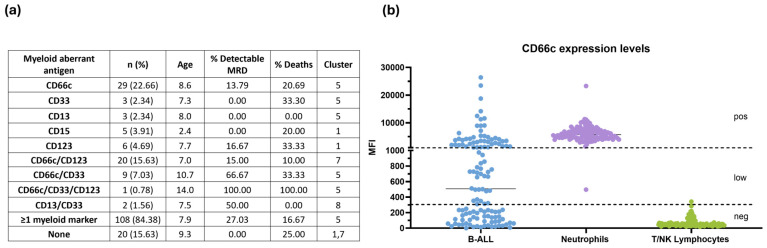 Figure 1
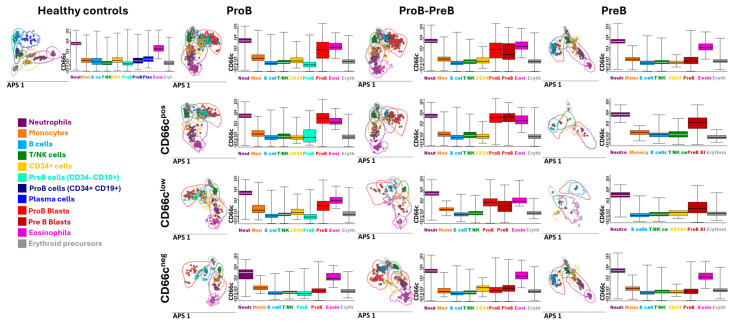 Figure 2
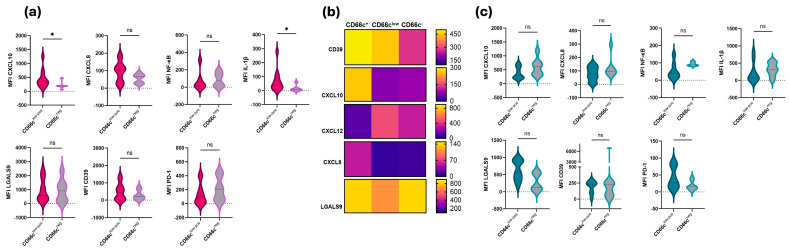 Figure 3
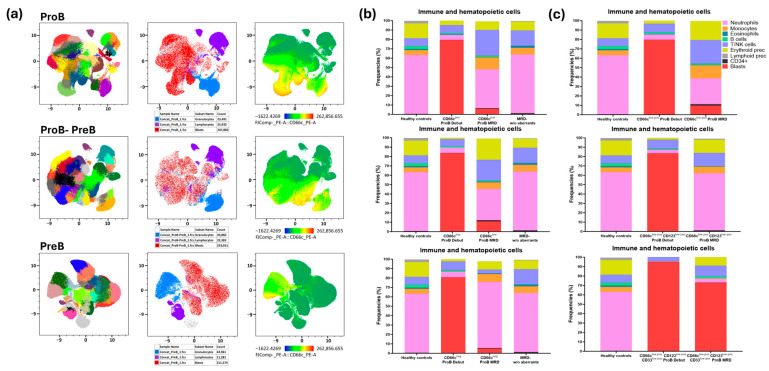 Figure 4
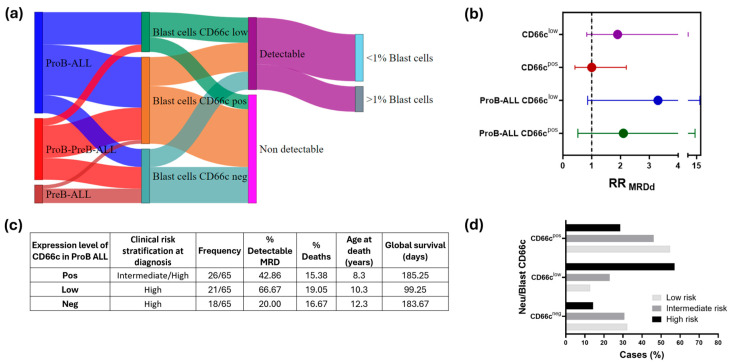 Figure 5
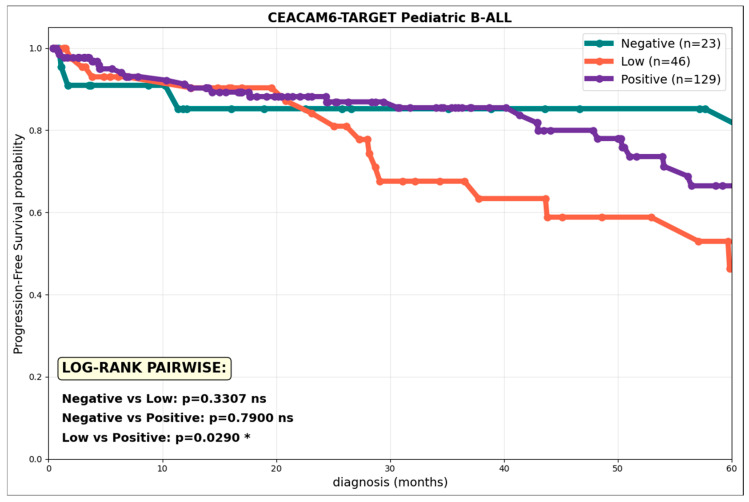 Figure 6
Peer Reviews
No public reviews on file for this paper yet. If you reviewed it on a platform where reviews are public (OpenReview, ICLR, NeurIPS, ICML), you can paste yours below so the community can read it here.
Videos
No videos yet. Explain this paper in a talk, walkthrough, or lecture? Add one.
Taxonomy
TopicsAcute Lymphoblastic Leukemia research · Acute Myeloid Leukemia Research · CAR-T cell therapy research