Comparative Analysis of the EF-1α Intergenic Region in Babesia divergens Isolates: Insights into TA Repeat Variation and Potential Regulatory Implications
Sezayi Ozubek, Alejandro Sanchez-Flores, Estrella Montero, Heba Alzan, Carlos E. Suarez, Ricardo Grande, Aitor Gil, Munir Aktas, Luis Miguel González

TL;DR
This study compares the EF-1α intergenic region in different Babesia divergens isolates, revealing variations in TA repeats that may affect gene regulation and host adaptation.
Contribution
The study identifies TA repeat variation in the EF-1α intergenic region of Babesia divergens isolates and suggests implications for gene regulation and transfection efficiency.
Findings
The Spanish isolate of B. divergens has the highest TA repeat expansion in the EF-1α intergenic region.
The Rouen 87 strain has the shortest EF-1α intergenic sequence compared to other isolates.
Variation in TA repeats may influence EF-1α transcription and host adaptation mechanisms.
Abstract
Babesia divergens, a zoonotic tick-borne pathogen, causes bovine and human babesiosis in Europe. The Elongation Factor 1 alpha (EF-1α) protein is important in many cellular processes and has emerged as a possible target for subunit vaccine development against parasitic infections, and its intergenic region (IG) is an important tool for genetic manipulation of Babesia parasites. While the EF-1α locus of B. divergens has been described, structural variation between isolates was poorly defined. In order to fill this gap, we performed a comparative analysis of the EF-1α-IG in B. divergens human (Rouen 87 and Spanish sample) and bovine (Türkiye) host isolates. Our findings revealed both conserved and variable elements, particularly in TA nucleotide repeat numbers and IG sequence length. The Spanish isolate exhibited the highest TA repeat expansion, whereas the Rouen 87 strain had the…
Genes, proteins, chemicals, diseases, species, mutations and cell lines named across the full text — each resolved to its canonical identifier and authoritative record.
Click any figure to enlarge with its caption.
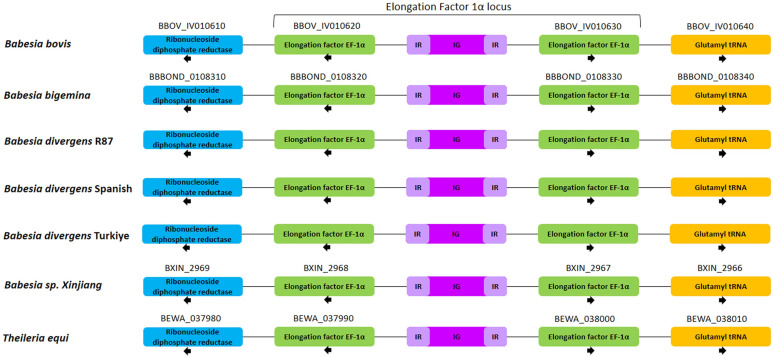 Figure 1
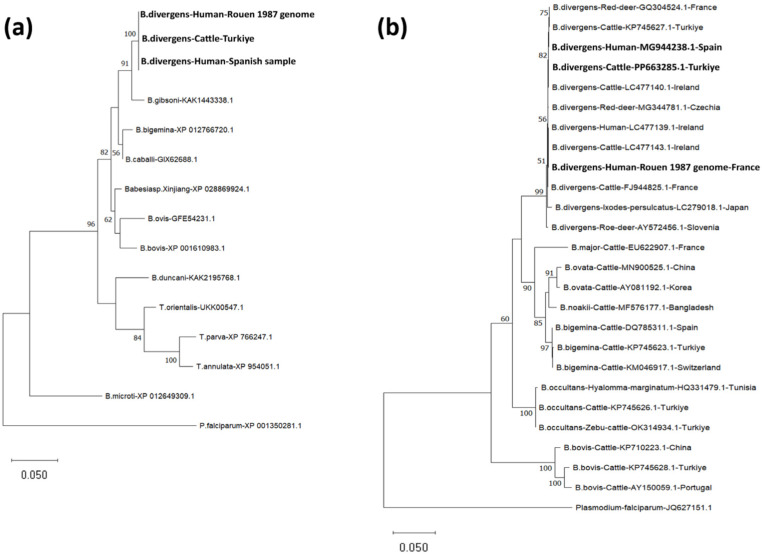 Figure 2
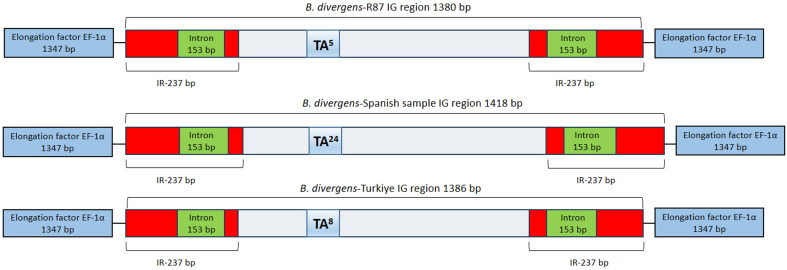 Figure 3
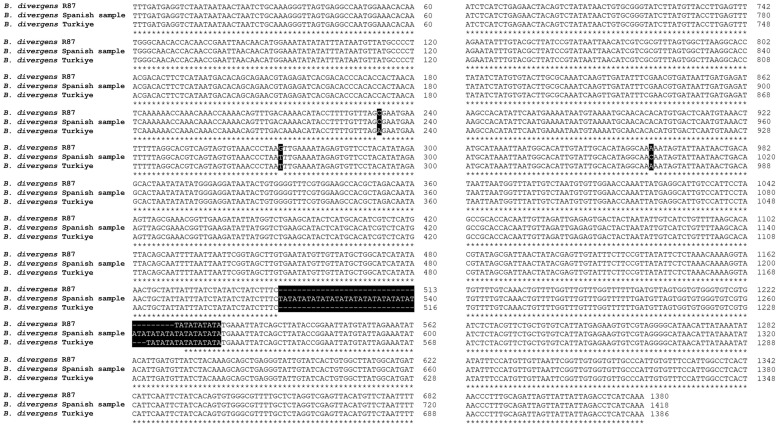 Figure 4
 Figure 5
Peer Reviews
No public reviews on file for this paper yet. If you reviewed it on a platform where reviews are public (OpenReview, ICLR, NeurIPS, ICML), you can paste yours below so the community can read it here.
Videos
No videos yet. Explain this paper in a talk, walkthrough, or lecture? Add one.
Taxonomy
TopicsVector-borne infectious diseases · Vector-Borne Animal Diseases · Complement system in diseases