Circulating Tumour DNA After Neoadjuvant Therapy in Non-Metastatic Colon Cancer: A Systematic Review and Implications for Surgical Decision-Making
Mahmoud M. Salama, Charles Eddershaw, Hugo C. Temperley, Arvin Kumar Perthiani, John O. Larkin, Brian J. Mehigan, Dara O. Kavanagh, Paul H. McCormick, David Gallagher, Charles Gillham, Emily Harrold, Michael E. Kelly

TL;DR
This study reviews how blood-based tumor DNA testing might help decide if surgery can be skipped after treatment for colon cancer, but finds current evidence insufficient for this use.
Contribution
It systematically evaluates the role of circulating tumor DNA in guiding surgical decisions after neoadjuvant therapy in non-metastatic colon cancer.
Findings
Clearance of ctDNA after treatment is associated with major or complete pathological response.
Persistent ctDNA reliably predicts residual tumor, but clearance alone is insufficient to safely omit surgery.
No study has formally evaluated ctDNA-guided surgical omission in non-metastatic colon cancer.
Abstract
Surgical resection remains the standard of care for patients with non-metastatic colon cancer. Recent advances in molecular testing of colon cancer have raised the question of whether neoadjuvant therapy may be an option for the management of these malignancies. Blood-based assays that detect tumour-derived genetic material are increasingly being investigated as minimally invasive tools to assess treatment response and residual disease. There is growing interest in whether clearance of tumour-derived material from the blood after neoadjuvant therapy could support consideration of non-operative management in select patients. This study systematically reviews the available evidence examining circulating tumour DNA dynamics in this setting. The findings indicate that, while changes in blood-based tumour markers may reflect pathological response, the current evidence base is limited in size…
Genes, proteins, chemicals, diseases, species, mutations and cell lines named across the full text — each resolved to its canonical identifier and authoritative record.
Click any figure to enlarge with its caption.
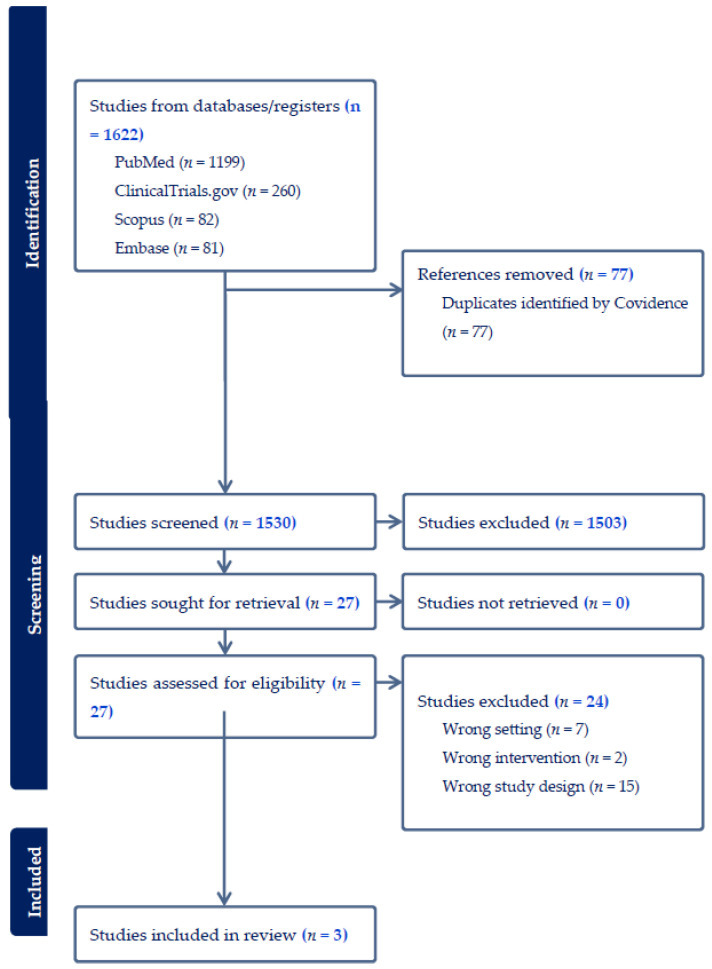 Figure 1
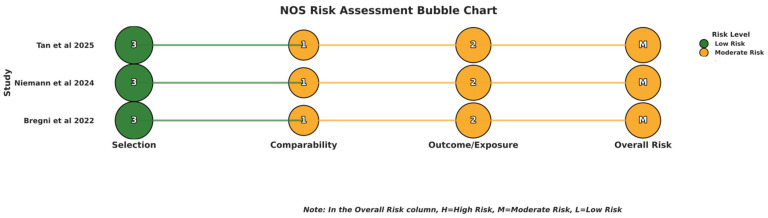 Figure 2
Peer Reviews
No public reviews on file for this paper yet. If you reviewed it on a platform where reviews are public (OpenReview, ICLR, NeurIPS, ICML), you can paste yours below so the community can read it here.
Videos
No videos yet. Explain this paper in a talk, walkthrough, or lecture? Add one.
Taxonomy
TopicsCancer Genomics and Diagnostics · Cancer Cells and Metastasis · Single-cell and spatial transcriptomics