Menstrual Effluent in the Pathogenesis and Diagnosis of Endometriosis—A Systematic Review
Rafał Watrowski, Stoyan Kostov, Eva Tsoneva, Sebastian D. Schäfer, Radmila Sparić, Mario Palumbo, Veronika Günther, Slavica Akšam, Angel Yordanov, Pierluigi Chieppa, Ingolf Juhasz-Böss, Salvatore Giovanni Vitale, Ibrahim Alkatout

TL;DR
This review explores menstrual effluent as a non-invasive biospecimen for understanding and diagnosing endometriosis, highlighting its potential for capturing disease mechanisms and diagnostic accuracy.
Contribution
The study systematically evaluates the pathophysiological relevance and diagnostic potential of menstrual effluent in endometriosis for the first time.
Findings
Menstrual effluent reflects key pathophysiological mechanisms of endometriosis, including immune dysregulation and progesterone resistance.
Aromatase mRNA showed the highest diagnostic accuracy (AUC 0.977) in detecting endometriosis.
Diagnostic assessments were based on case–control studies, with no prospective validation conducted.
Abstract
Background: The individual and social burden of endometriosis is high, and the diagnosis is usually delayed by 7–10 years. Menstrual effluent (ME) represents an accessible and uniquely informative biofluid. This systematic review evaluated the pathophysiological relevance and diagnostic potential of ME in endometriosis. Methods: Following PRISMA 2020 guidelines, we systematically searched PubMed/MEDLINE, EBSCOhost (Academic Search Premier, APA PsycArticles, APA PsycInfo, CINAHL, and MEDLINE), Semantic Scholar, and Google Scholar from inception to 30 November 2025. Original studies analyzing human ME or ME-derived cells in women with endometriosis versus controls were eligible. We extracted study design, analytic methods, diagnostic accuracy metrics (AUC, sensitivity, and specificity), mechanistic pathways, and risk of bias (QUADAS-2 for diagnostic, and NIH tools for mechanistic…
Genes, proteins, chemicals, diseases, species, mutations and cell lines named across the full text — each resolved to its canonical identifier and authoritative record.
Click any figure to enlarge with its caption.
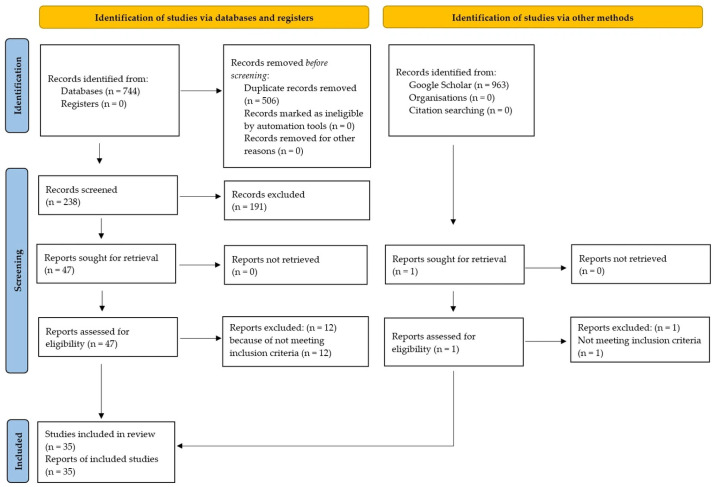 Figure 1
Peer Reviews
No public reviews on file for this paper yet. If you reviewed it on a platform where reviews are public (OpenReview, ICLR, NeurIPS, ICML), you can paste yours below so the community can read it here.
Videos
No videos yet. Explain this paper in a talk, walkthrough, or lecture? Add one.
Taxonomy
TopicsEndometriosis Research and Treatment · Uterine Myomas and Treatments · Reproductive System and Pregnancy