Functional and Interfacial Responses of Honeybee Pupa Water-Soluble Proteins to pH, Ionic Strength, and Sucrose
Feiying Yu, Xuejiao Wang, Linyan Zhou, Chaofan Guo, Junjie Yi

TL;DR
This study explores how pH, salt, and sugar affect the functional and interfacial properties of proteins from honeybee pupa, which could help in using them as food ingredients.
Contribution
The paper quantitatively evaluates how environmental factors influence honeybee pupa protein behavior, offering new insights for food processing applications.
Findings
Alkaline conditions (pH 11) significantly enhance foaming capacity (up to 90.88%) and emulsifying activity.
Moderate ionic strength (0.05 M NaCl) combined with sucrose improves protein spreadability and reduces contact angles.
High salt concentrations inhibit surfactant activity, while sucrose has minimal impact on emulsifying properties.
Abstract
The interfacial and functional properties of water-soluble protein (WP) from honeybee pupa are highly sensitive to environmental conditions, which govern its applicability in food systems. This study investigated the effects of pH (3–11), ionic strength (0–1 M NaCl), and sucrose concentration (0–1 M) on the colloidal behavior, surface hydrophobicity, sulfydryl exposure, functional properties, and interfacial characteristics of WP. These findings provide valuable reference data for future processing of bee pupa protein. Acidic conditions (pH 3) resulted in a high surface hydrophobicity (H0). Conversely, alkaline conditions enhanced protein interfacial activity. Specifically, the foaming capacity (FC) increased significantly with pH, reaching 90.88% at pH 11, which was approximately 2.5 times higher than that at pH 5 (35.10%). Moderate ionic strength (≤0.05 M NaCl) exerted minimal effects…
Genes, proteins, chemicals, diseases, species, mutations and cell lines named across the full text — each resolved to its canonical identifier and authoritative record.
Click any figure to enlarge with its caption.
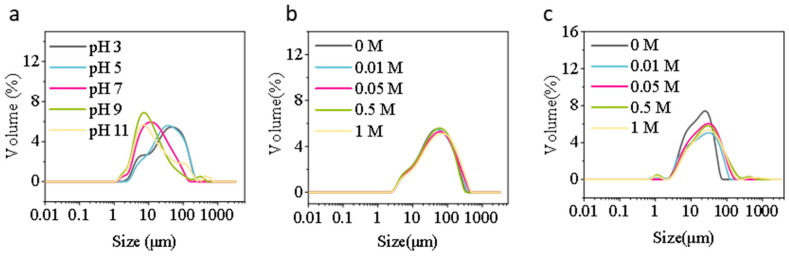 Figure 1
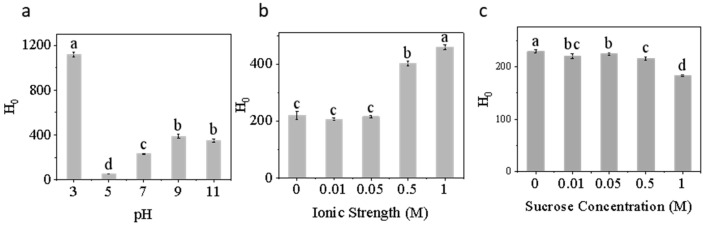 Figure 2
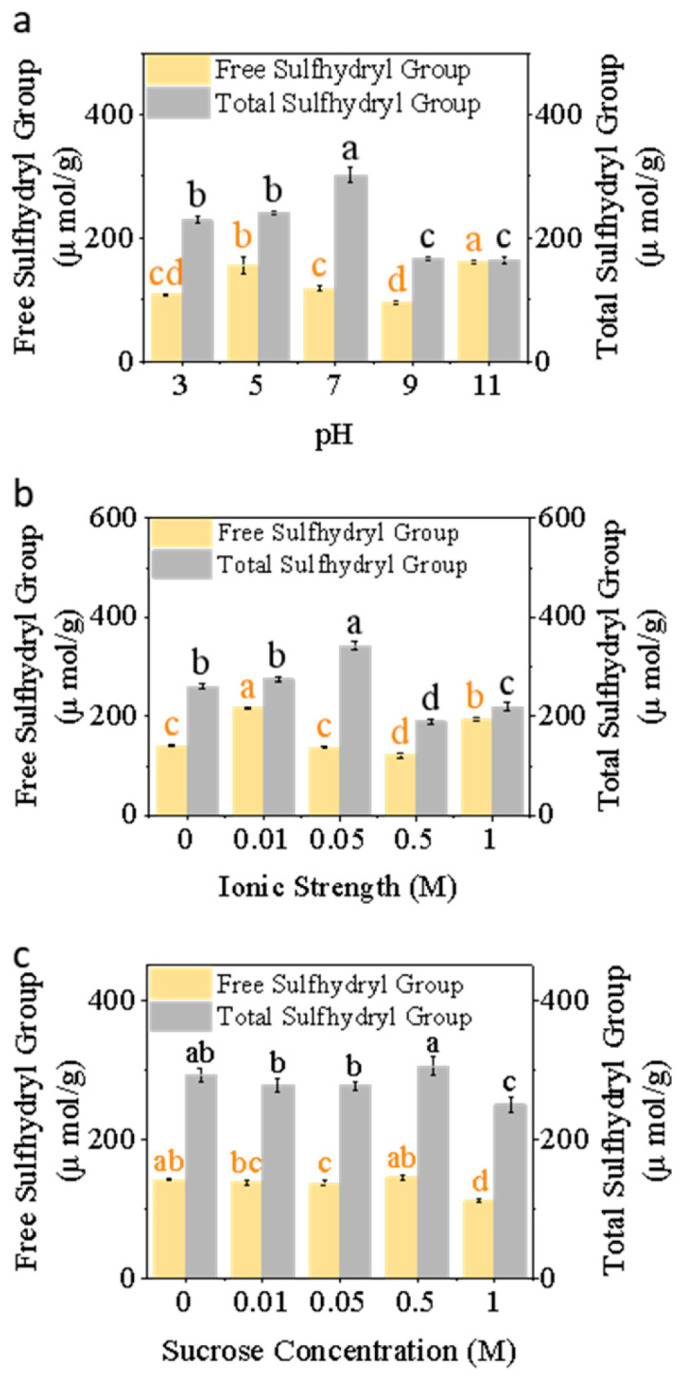 Figure 3
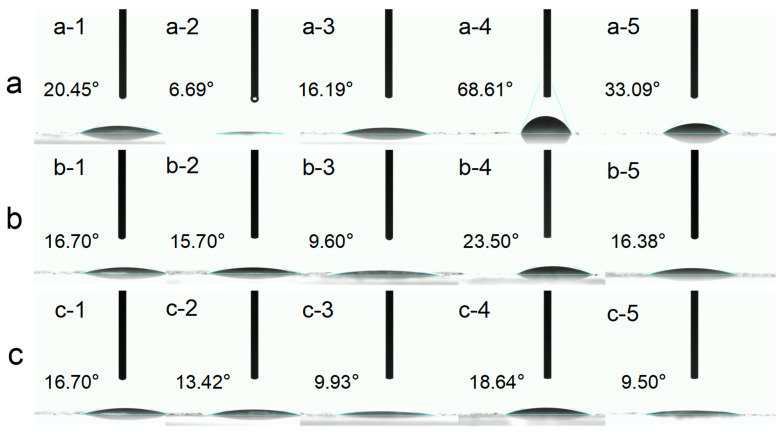 Figure 4
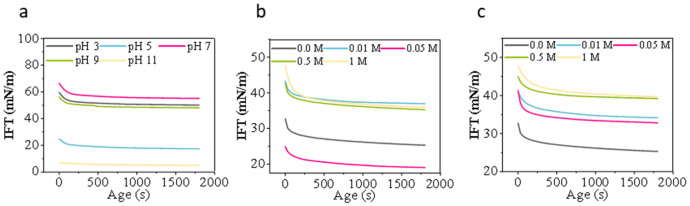 Figure 5
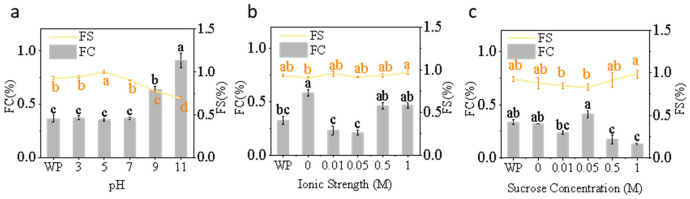 Figure 6
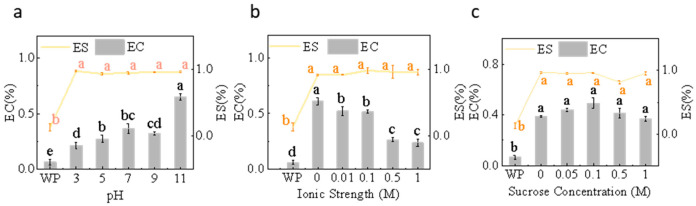 Figure 7
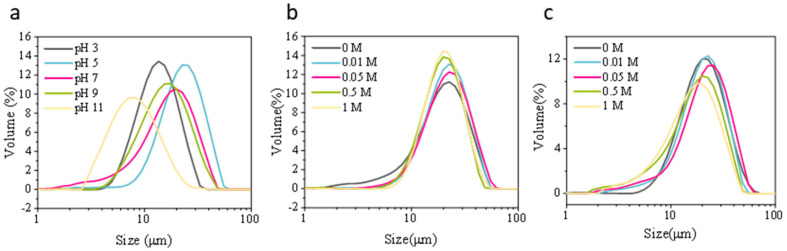 Figure 8
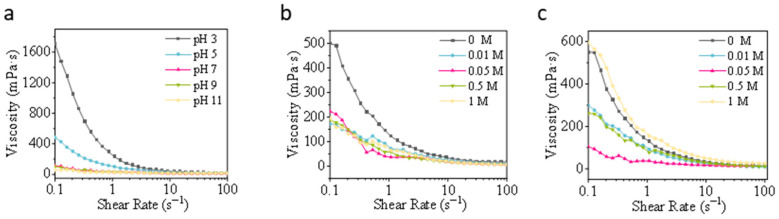 Figure 9
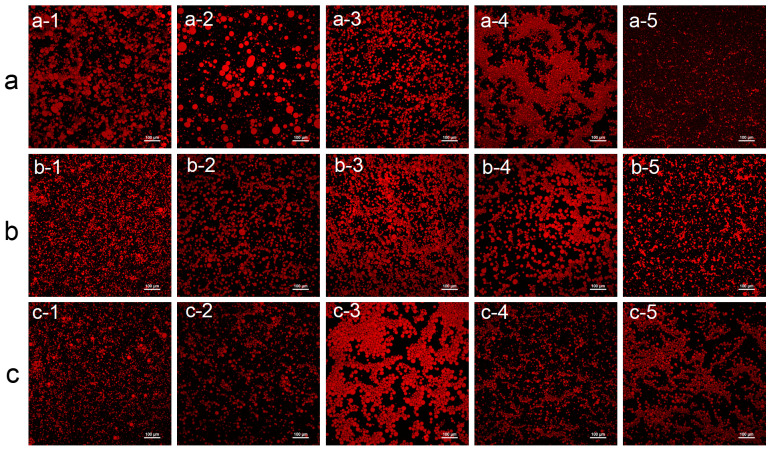 Figure 10
Peer Reviews
No public reviews on file for this paper yet. If you reviewed it on a platform where reviews are public (OpenReview, ICLR, NeurIPS, ICML), you can paste yours below so the community can read it here.
Videos
No videos yet. Explain this paper in a talk, walkthrough, or lecture? Add one.
Taxonomy
TopicsProteins in Food Systems · Pickering emulsions and particle stabilization · Meat and Animal Product Quality