How Childhood Maltreatment Contributes to Explaining Depressive Symptoms in Transgender and Gender-Diverse Individuals
Arkadiusz Parker, Aleksandra M. Rogowska

TL;DR
Transgender and gender-diverse individuals experience more childhood trauma and depression than cisgender people, with emotional abuse being a key factor linking gender identity to depressive symptoms.
Contribution
This study identifies emotional abuse as a primary mediator between gender identity and depression in transgender and gender-diverse individuals.
Findings
TGD individuals reported significantly higher levels of childhood trauma and depression than cisgender individuals.
Emotional abuse was the strongest mediator of the link between gender identity and depressive symptoms.
Trauma-informed and gender-affirming mental health care is essential for TGD populations.
Abstract
What are the main findings? Transgender and gender-diverse (TGD) individuals scored significantly higher in retrospectively assessed childhood trauma experiences and current depression symptoms than a sample of cisgender participants.Childhood trauma, especially emotional and sexual abuse, mediates the relationship between transgender and gender-diverse individuals and depression symptoms. Transgender and gender-diverse (TGD) individuals scored significantly higher in retrospectively assessed childhood trauma experiences and current depression symptoms than a sample of cisgender participants. Childhood trauma, especially emotional and sexual abuse, mediates the relationship between transgender and gender-diverse individuals and depression symptoms. What are the implications of the main findings? When diagnosing depression in gender minority populations, it is crucial to consider…
Genes, proteins, chemicals, diseases, species, mutations and cell lines named across the full text — each resolved to its canonical identifier and authoritative record.
Click any figure to enlarge with its caption.
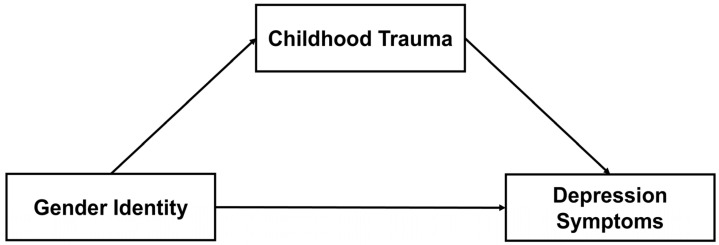 Figure 1
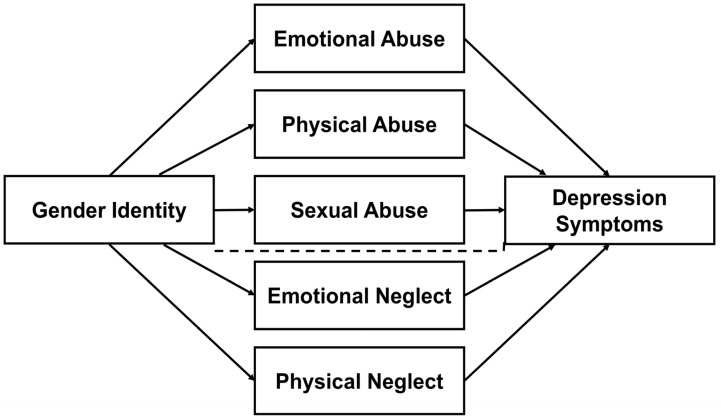 Figure 2
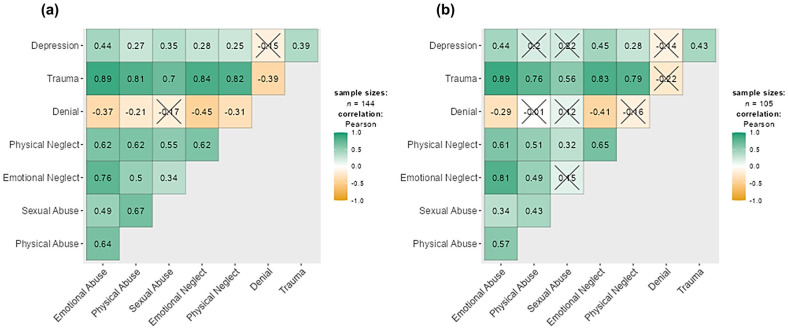 Figure 3
Peer Reviews
No public reviews on file for this paper yet. If you reviewed it on a platform where reviews are public (OpenReview, ICLR, NeurIPS, ICML), you can paste yours below so the community can read it here.
Videos
No videos yet. Explain this paper in a talk, walkthrough, or lecture? Add one.
Taxonomy
TopicsLGBTQ Health, Identity, and Policy · Child Abuse and Trauma · Attachment and Relationship Dynamics