MG53 in Early Skeletal Muscle Stem Cell Activation: Implications for Aged Muscle Regeneration
Yanping Xu, Jethro Wang Zih-Shuo, Zhentao Zhang, Peng Chen, Usman Alizai, Keerthika Sathish, Sakai Lilian, Zhiyu Yan, Bryan A. Whitson, Timothy M. Pawlik, Hua Zhu

TL;DR
The paper explores how MG53 helps early muscle stem cell activation in aging, suggesting that stabilizing this process could improve muscle regeneration in older individuals.
Contribution
MG53 is proposed as a stress-responsive regulator that stabilizes early muscle stem cell activation in aging, offering a new conceptual direction for regenerative therapies.
Findings
Aged muscle stem cells show instability in early activation despite preserved downstream myogenic programs.
MG53 may function as a regulator that stabilizes early activation by mitigating stress and maintaining coordination.
Targeting early activation dynamics, rather than proliferation, could better preserve regenerative capacity in aging muscle.
Abstract
What are the main findings? Early MuSC activation is discussed as a stress-sensitive transitional phase in skeletal muscle regeneration.Aging is associated with selective instability of this activation window, while downstream myogenic programs remain comparatively preserved. Early MuSC activation is discussed as a stress-sensitive transitional phase in skeletal muscle regeneration. Aging is associated with selective instability of this activation window, while downstream myogenic programs remain comparatively preserved. What are the implications of the main finding? Age-related regenerative decline can be interpreted in part as reduced activation fidelity rather than uniform loss of myogenic potential.Stabilizing early activation dynamics is considered as a possible conceptual direction for future investigation. Age-related regenerative decline can be interpreted in part as reduced…
Genes, proteins, chemicals, diseases, species, mutations and cell lines named across the full text — each resolved to its canonical identifier and authoritative record.
Click any figure to enlarge with its caption.
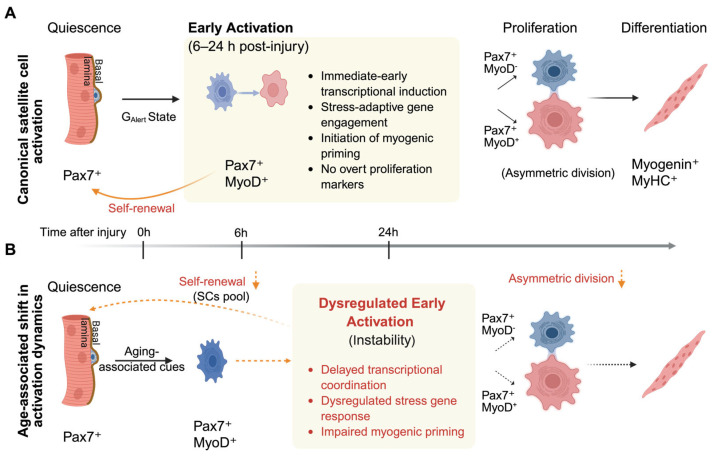 Figure 1
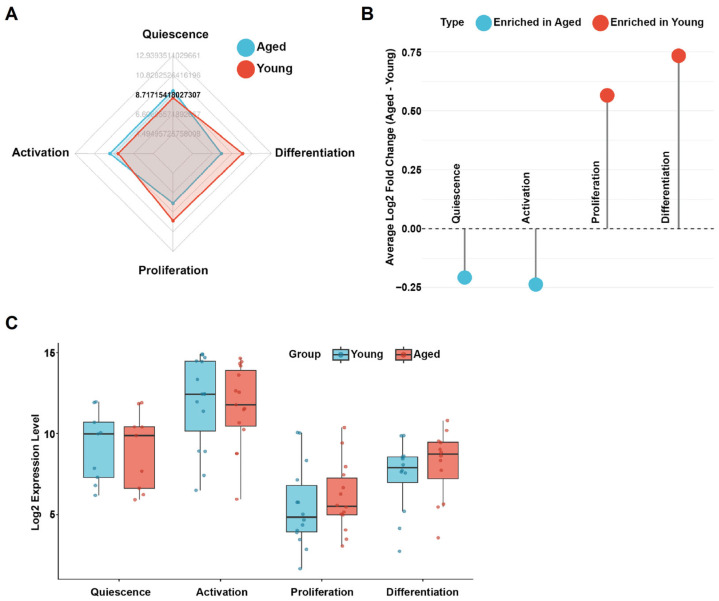 Figure 2
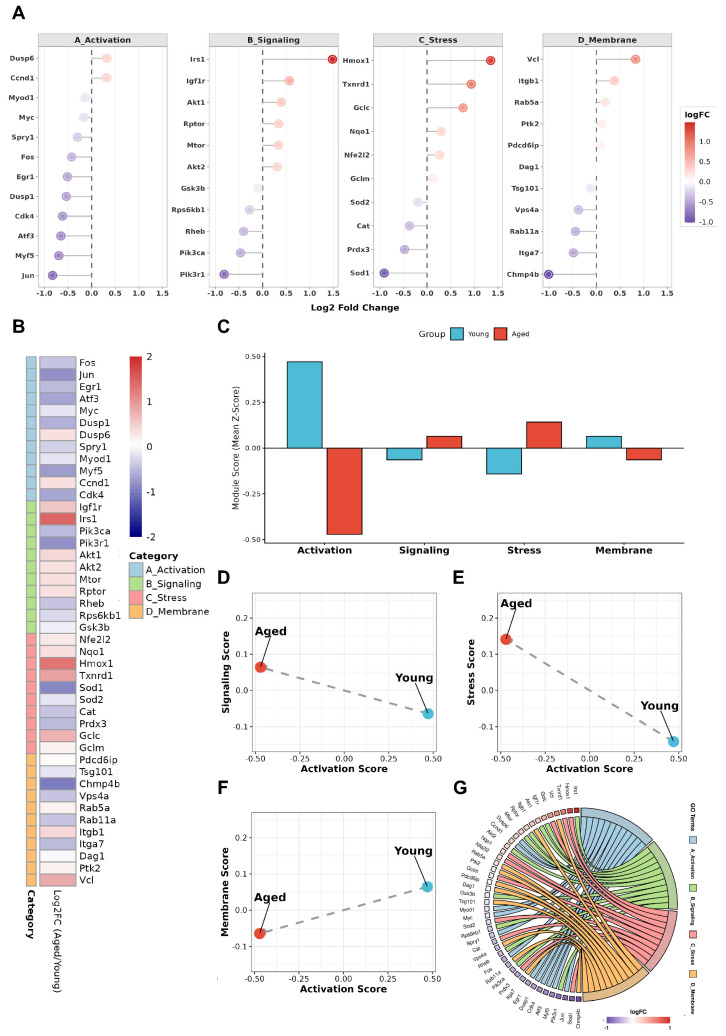 Figure 3
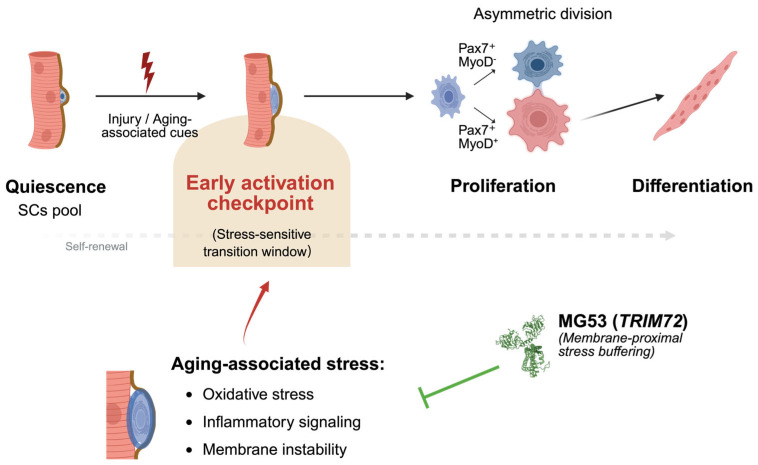 Figure 4
Peer Reviews
No public reviews on file for this paper yet. If you reviewed it on a platform where reviews are public (OpenReview, ICLR, NeurIPS, ICML), you can paste yours below so the community can read it here.
Videos
No videos yet. Explain this paper in a talk, walkthrough, or lecture? Add one.
Taxonomy
TopicsMuscle Physiology and Disorders · interferon and immune responses · Ubiquitin and proteasome pathways