Clinical Characterization of Atypical Diabetes: Insights from the GENEPEDIAB Study into the Spectrum Between Type 1 and Monogenic Diabetes
Antoine Harvengt, Gauthier Pirlot, Leyan Denizli, Zain Syed, Sophie Welsch, Dominique Beckers, Thierry Mouraux, Nicole Seret, Marie-Christine Lebrethon, Raphael Helaers, Pascal Brouillard, Miikka Vikkula, Philippe A. Lysy

TL;DR
This study shows that diabetes has overlapping features between type 1 and monogenic forms, with atypical diabetes acting as an intermediate stage.
Contribution
The study identifies a phenotypic gradient between type 1 diabetes and monogenic diabetes, emphasizing the need for better screening for accurate diagnosis.
Findings
Atypical diabetes represents an intermediate stage between type 1 and monogenic diabetes.
Glycemic control improves from type 1 diabetes to atypical diabetes and then to MODY.
Rare genetic variants were found in the atypical diabetes cohort, but no uniform causative variant was identified.
Abstract
What are the main findings? Our results suggest that diabetes encompasses heterogeneous clinical presentations, with features that may overlap between type 1 and monogenic forms. In this study, atypical diabetes represents the intermediate stage, thus bridging the gap between the two other forms.This gradient, although less statistically robust, was also observed when the atypical diabetes cohort was divided based on the number of positive DIAMODIA criteria met. Our results suggest that diabetes encompasses heterogeneous clinical presentations, with features that may overlap between type 1 and monogenic forms. In this study, atypical diabetes represents the intermediate stage, thus bridging the gap between the two other forms. This gradient, although less statistically robust, was also observed when the atypical diabetes cohort was divided based on the number of positive DIAMODIA…
Genes, proteins, chemicals, diseases, species, mutations and cell lines named across the full text — each resolved to its canonical identifier and authoritative record.
Click any figure to enlarge with its caption.
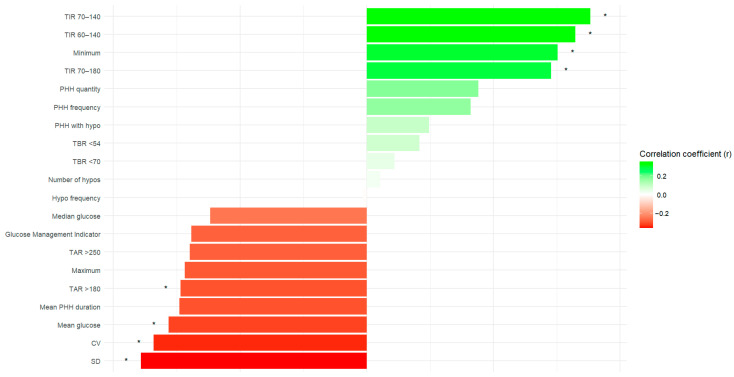 Figure 1
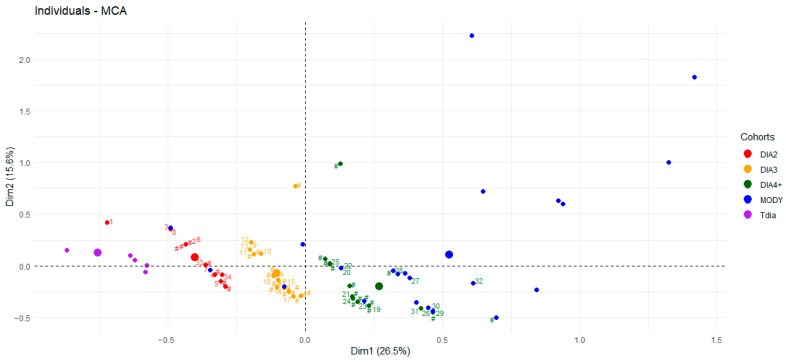 Figure 2
Peer Reviews
No public reviews on file for this paper yet. If you reviewed it on a platform where reviews are public (OpenReview, ICLR, NeurIPS, ICML), you can paste yours below so the community can read it here.
Videos
No videos yet. Explain this paper in a talk, walkthrough, or lecture? Add one.
Taxonomy
TopicsPancreatic function and diabetes · Diabetes and associated disorders · Diabetes Management and Research