Tactile Preferences in Goats: Implications for Animal-Assisted Interventions
Patrycja Magdalena Masier, Agnieszka Ziemiańska, Kamila Janicka, Wiktoria Janicka, Marta Wójcik, Iwona Rozempolska-Rucińska

TL;DR
This study explores how tactile contact affects goats and identifies preferences in touch location and sequence during human-animal interactions.
Contribution
The study reveals goats' tactile preferences for trunk-initiated contact and the importance of the initial touch in determining overall interaction duration.
Findings
Goats showed shorter contact durations when tactile interaction started first in the sequence.
Contact duration was longer when initiated on the trunk region of the goat.
Goats did not show environmental preference between a goat house and a pasture.
Abstract
Touch is an important part of animal-assisted interventions, but little is known about how animals themselves respond to this type of contact. This study examined the effect of tactile contact on adult goats. It explored whether goats show preferences for specific body regions (head/neck, trunk, hindquarters), the ordinal position in the stroking sequence, and the environment in which the tactile interaction takes place (goat house vs. pasture). Goats were less receptive to the first touch in the sequence. In addition, goats showed longer contact durations when the stroking session started from the trunk. No preferences regarding the environment were detected. The initial touch may therefore be important in the context of the entire contact, and starting the touch from the trunk may be more readily accepted by the animal. Contact with humans remained attractive to goats even in an…
Genes, proteins, chemicals, diseases, species, mutations and cell lines named across the full text — each resolved to its canonical identifier and authoritative record.
Click any figure to enlarge with its caption.
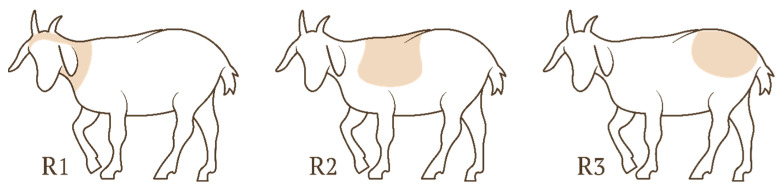 Figure 1
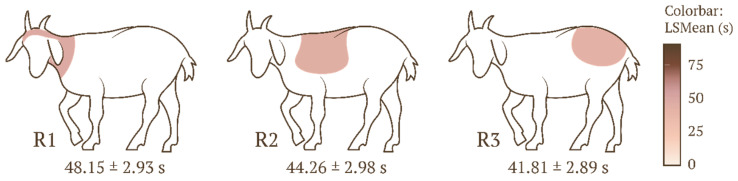 Figure 2
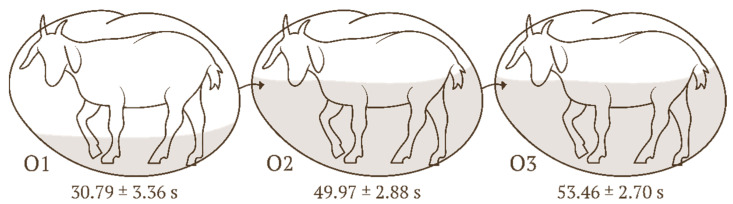 Figure 3
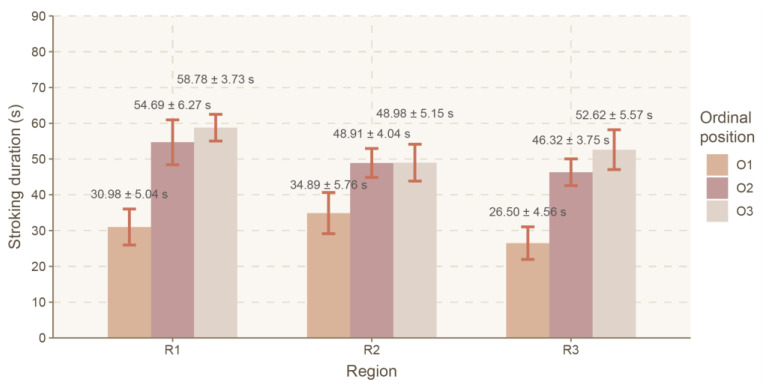 Figure 4
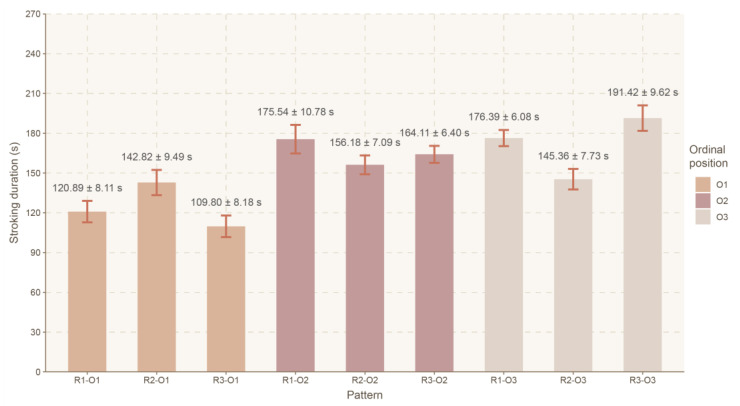 Figure 5
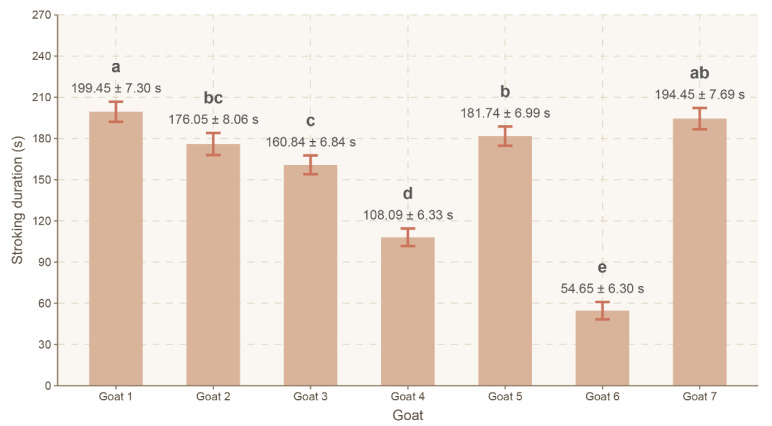 Figure 6
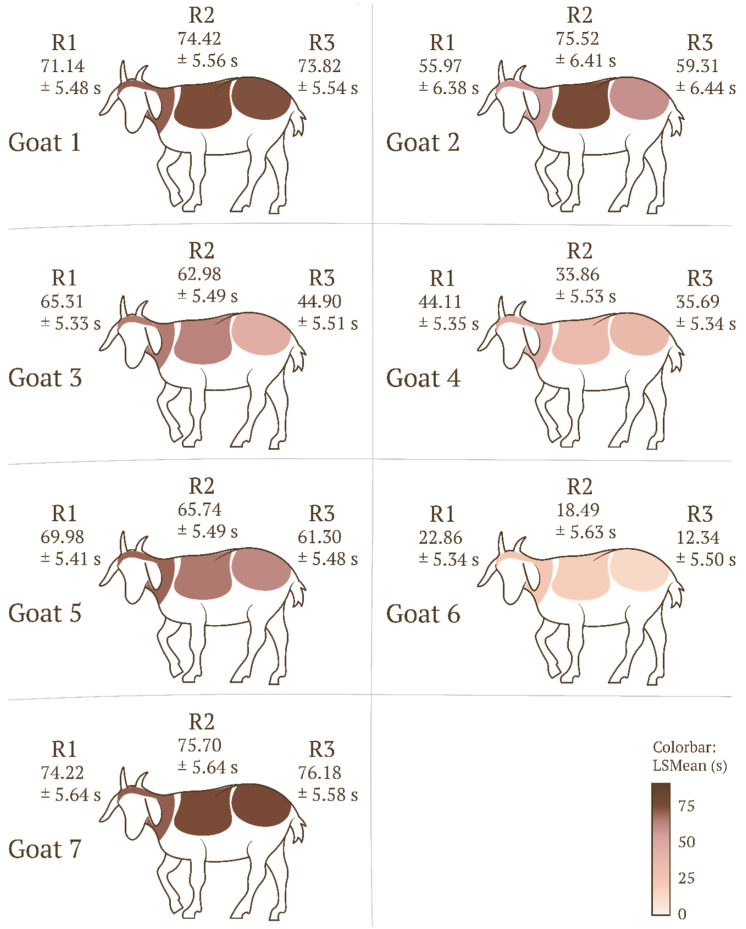 Figure 7
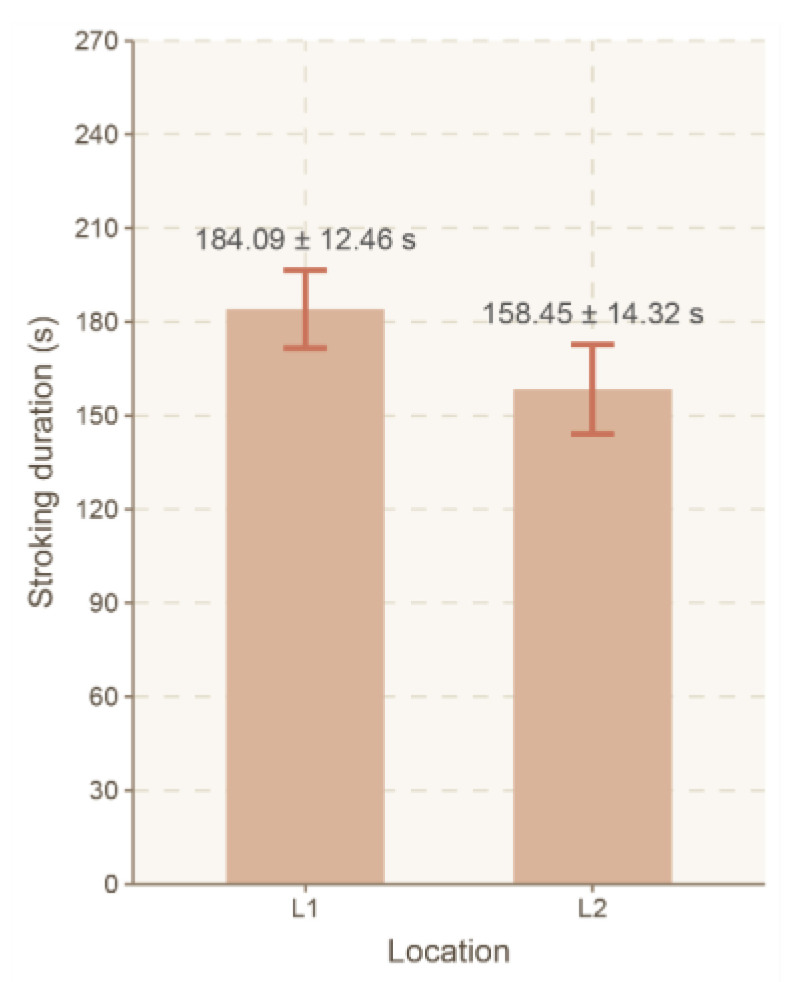 Figure 8
Peer Reviews
No public reviews on file for this paper yet. If you reviewed it on a platform where reviews are public (OpenReview, ICLR, NeurIPS, ICML), you can paste yours below so the community can read it here.
Videos
No videos yet. Explain this paper in a talk, walkthrough, or lecture? Add one.
Taxonomy
TopicsHuman-Animal Interaction Studies · Animal Behavior and Welfare Studies · Rabbits: Nutrition, Reproduction, Health