A Data-Efficient Machine Learning Approach for Breast Ultrasound Lesion Classification Integrating Image-Derived Features and Sonographic Descriptors
Adil Gursel Karacor, Sevim Sahin

TL;DR
This study proposes a data-efficient machine learning framework that combines image features and sonographic descriptors to improve breast ultrasound lesion classification in small datasets.
Contribution
The novel approach integrates image-derived features with clinical descriptors in a tabular learning framework for improved diagnostic performance in limited data settings.
Findings
Using sonographic descriptors alone, the LightGBM model achieved 88% accuracy and 95% AUC.
Adding image-derived features improved AUC to 96% and achieved 100% sensitivity for malignant lesion detection.
The fused framework showed more stable generalization, especially for malignant cases.
Abstract
Background/Objectives: Breast ultrasound is widely used for the diagnostic evaluation of breast lesions; however, reliable lesion characterization remains challenging due to substantial image heterogeneity and the limited size of most clinically available datasets. These constraints reduce the generalizability of end-to-end deep learning approaches in routine practice. The objective of this study was to evaluate a data-efficient diagnostic framework that integrates image-derived features with clinical sonographic descriptors to improve breast ultrasound lesion classification in small cohorts. Methods: Ultrasound images from the publicly available BrEaST-Lesions dataset were processed using a pretrained convolutional neural network to extract compact image feature representations from full images, lesion masks, and cropped tumor regions. These features were combined with manually…
Genes, proteins, chemicals, diseases, species, mutations and cell lines named across the full text — each resolved to its canonical identifier and authoritative record.
Click any figure to enlarge with its caption.
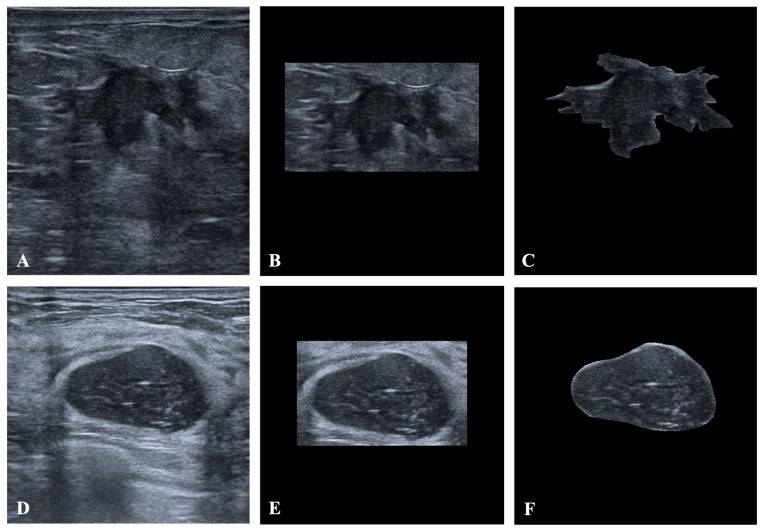 Figure 1
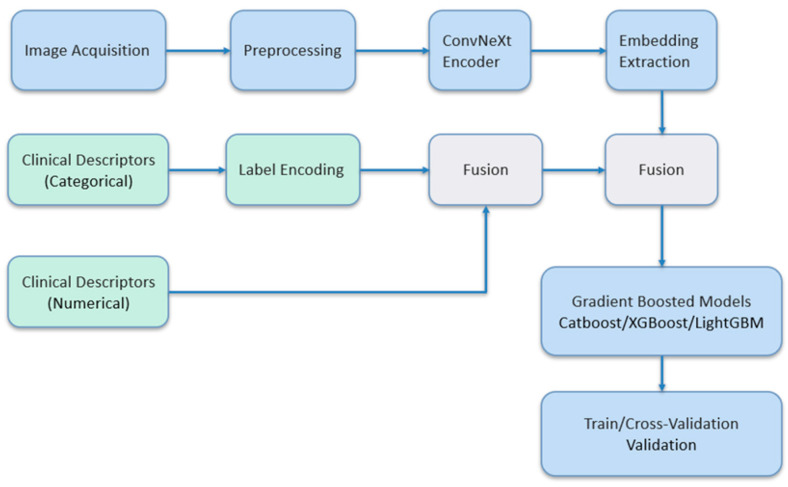 Figure 2
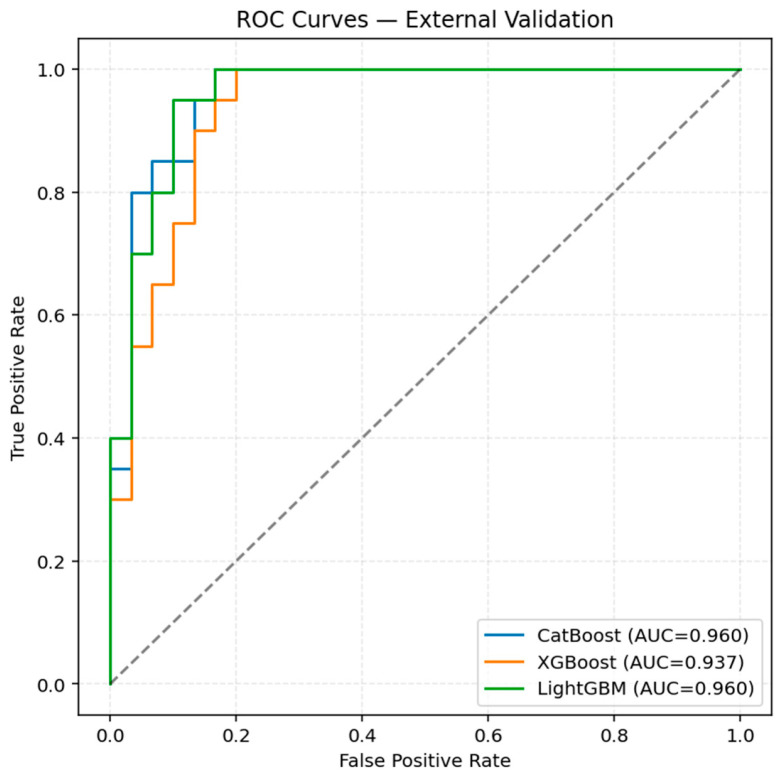 Figure 3
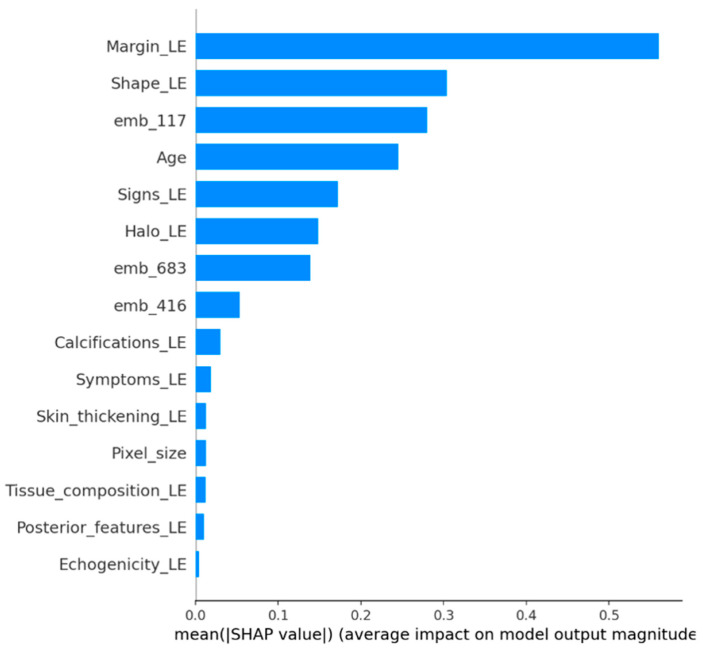 Figure 4
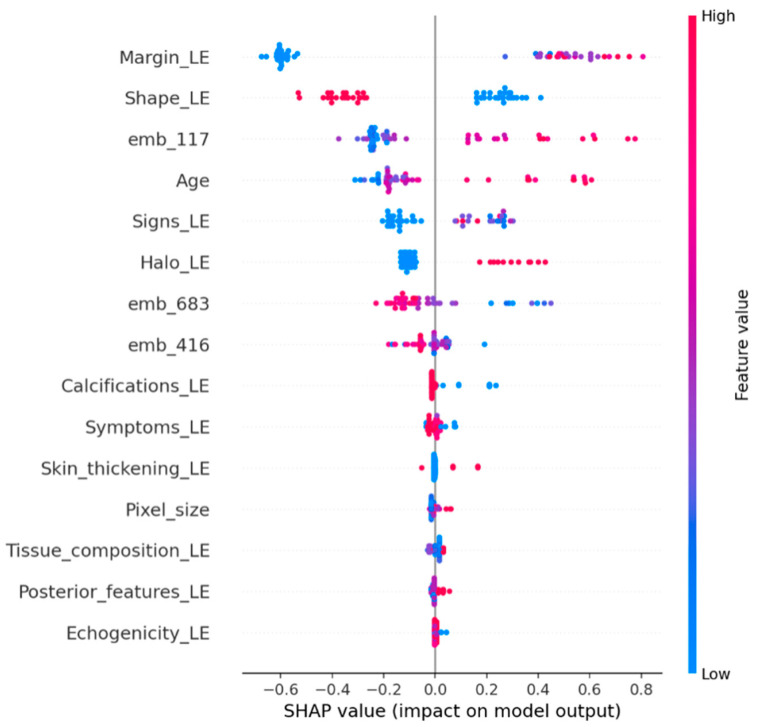 Figure 5
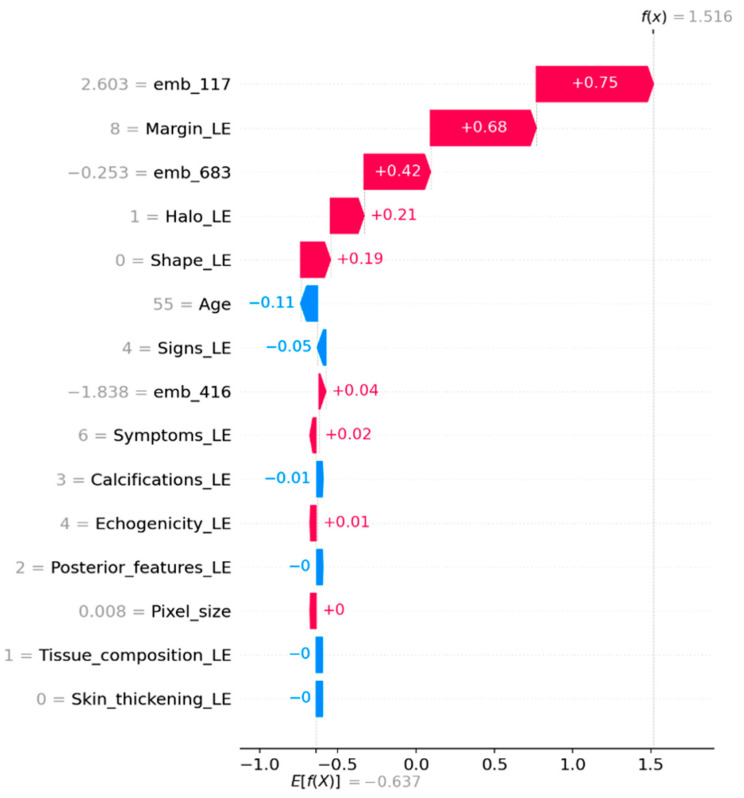 Figure 6
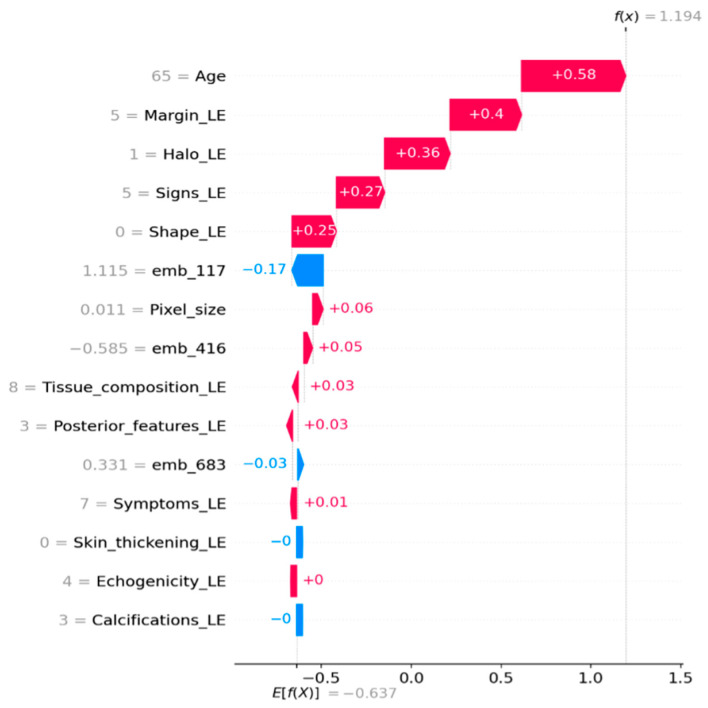 Figure 7
Peer Reviews
No public reviews on file for this paper yet. If you reviewed it on a platform where reviews are public (OpenReview, ICLR, NeurIPS, ICML), you can paste yours below so the community can read it here.
Videos
No videos yet. Explain this paper in a talk, walkthrough, or lecture? Add one.
Taxonomy
TopicsAI in cancer detection · Breast Lesions and Carcinomas · Ultrasound Imaging and Elastography