Immunological surveillance using anti-gSG6-P1 IgG biomarker reveals spatio-temporal dynamics of Anopheles exposure and gaps in malaria risk assessment in the Greater Mekong Subregion
Manop Saeung, Natapong Jupatanakul, Niramon Jampeesri, Aneta Afelt, Theeraphap Chareonviriyaphap, Sylvie Manguin

TL;DR
This study explores how an anti-gSG6-P1 IgG biomarker can track Anopheles mosquito exposure in Thailand, revealing how human activities and seasons influence malaria risk.
Contribution
The study introduces anti-gSG6-P1 IgG as a novel serological marker for Anopheles exposure and highlights its limitations in the Greater Mekong Subregion.
Findings
Seasonality had the strongest influence on anti-gSG6-P1 IgG levels, likely due to human activities like rubber tapping.
Higher frequency of rubber plot entry correlated with increased anti-gSG6-P1 IgG responses.
The biomarker's effectiveness is limited in regions with vector species having low salivary peptide homology to An. gambiae.
Abstract
Entomological parameters such as mosquito biting rates often fail to capture variability in human behavior, thereby limiting its accuracy for assessing the population-level malaria risk. This study investigated the use of previously described Anopheles gambiae-based anti-salivary biomarker, anti-gSG6-P1, as a serological marker for Anopheles exposure, and examined key entomological, human, and environmental risk factors in Sisaket Province, Thailand. Blood samples were collected via finger prick from the same set of 184 participants across three seasons: rainy (August 2022), cool-dry (December 2022), and hot-dry (April 2023). Anti-gSG6-P1 IgG levels were quantified using ELISA. Factor Analysis of Mixed Data revealed that seasonality exerted the strongest influence on anti-gSG6-P1 IgG levels, which was likely driven by human activities, particularly the frequency of rubber tapping…
Genes, proteins, chemicals, diseases, species, mutations and cell lines named across the full text — each resolved to its canonical identifier and authoritative record.
Click any figure to enlarge with its caption.
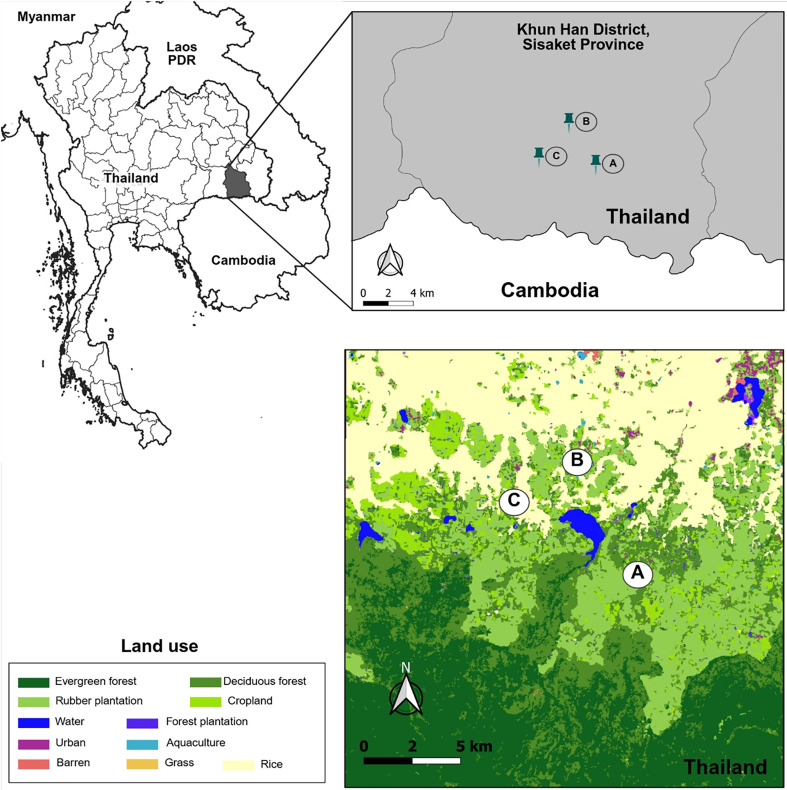 Figure 1
 Figure 1
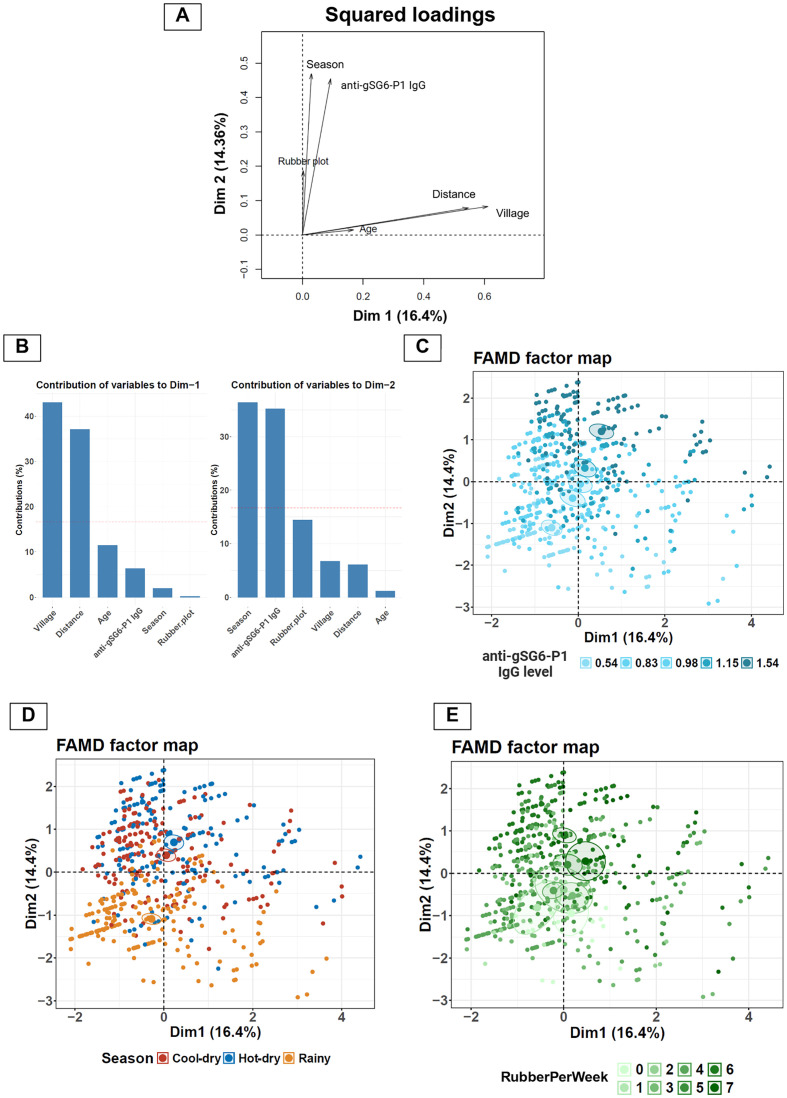 Figure 2
 Figure 2
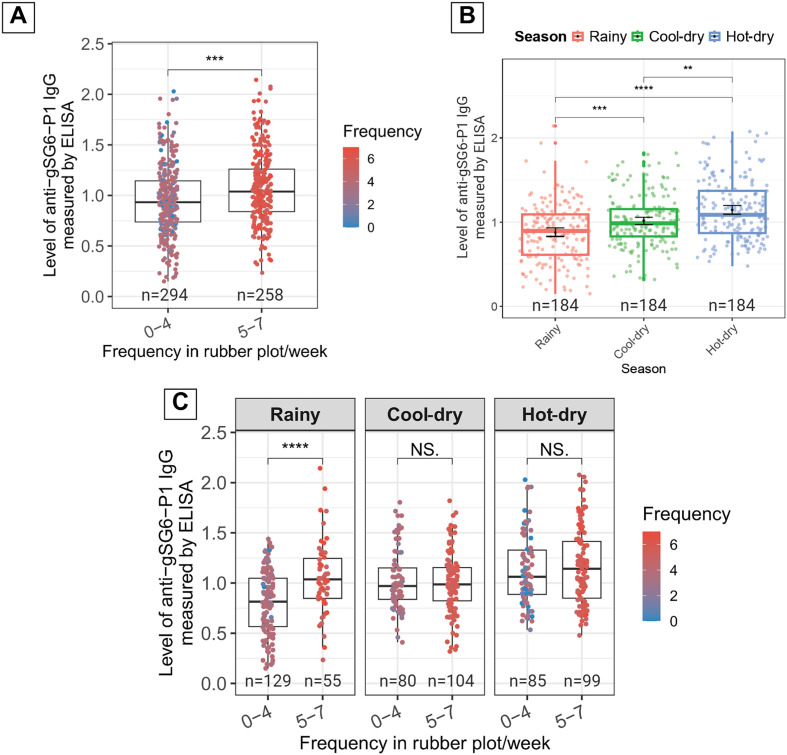 Figure 3
 Figure 3
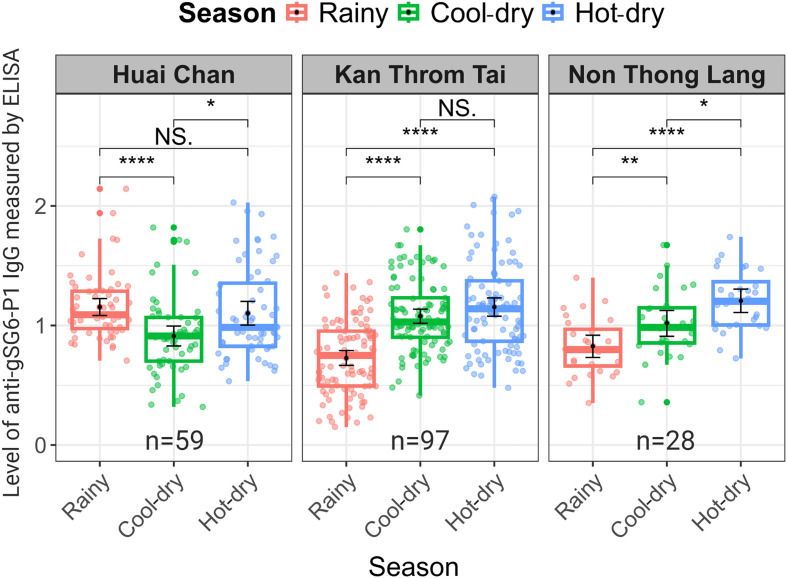 Figure 4
 Figure 4
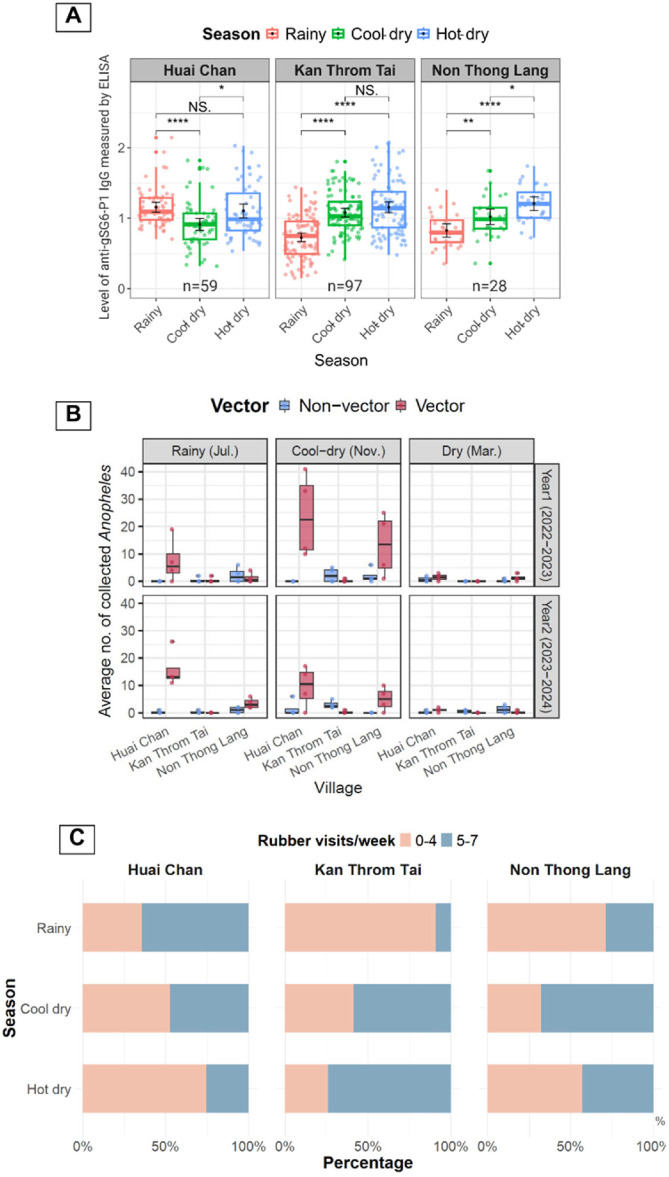 Figure 5
 Figure 5
Peer Reviews
No public reviews on file for this paper yet. If you reviewed it on a platform where reviews are public (OpenReview, ICLR, NeurIPS, ICML), you can paste yours below so the community can read it here.
Videos
No videos yet. Explain this paper in a talk, walkthrough, or lecture? Add one.
Taxonomy
TopicsMalaria Research and Control · Mosquito-borne diseases and control · Invertebrate Immune Response Mechanisms