Crohn's lymphoid aggregates with endothelial clusters colocalise with submucosal fibrosis in fibrostenosing Crohn's disease
Michael Glinka, Gregory J Wickham, Francesca Nadalin, Kathryn J Kirkwood, Helen Caldwell, Mike Wicks, Bill Hill, Derek Houghton, Mehran Sharghi, Amirhosein Kefayat, Bernard Haggarty, Albert Burger, Richard A Baldock, David J Adams, Irene Papatheodorou, Peter Bankhead

TL;DR
This study explores how lymphoid aggregates and endothelial clusters in Crohn's disease are linked to intestinal fibrosis, suggesting a potential role in disease progression.
Contribution
The study identifies colocalization of Crohn's lymphoid aggregates and endothelial clusters with fibrosis in fibrostenosing Crohn's disease.
Findings
Crohn's lymphoid aggregates and endothelial clusters are associated with submucosal fibrosis in fibrostenosing Crohn's disease.
Single-cell RNA sequencing reveals intercellular signaling between endothelial cells, lymphocytes, macrophages, and myofibroblasts in fibrostenosing lesions.
Abstract
Crohn's disease (CD) involves chronic transmural inflammation of the intestines, leading to progressive wall fibrosis with stenosis and luminal obstruction, predominantly in the terminal ileum. Fibrosis is a significant therapeutic challenge, thus improved understanding of localisation, cellular composition, and cell–cell interactions in CD fibrostenosing lesions (FSLs) may identify potential targetable pathways. Using CD FSL patient resection samples, we identify and quantify novel pathological changes in structure, collagen, and cell numbers for each ileal layer (mucosa, muscularis mucosae, submucosa, muscularis propria, serosa). In addition, fresh resection ileal samples were single‐cell RNA (scRNA)‐sequenced, validating the cell types and cell–cell interactions. We found significantly increased collagenous fibrosis expansion, significantly increased infiltration of lymphocytes,…
Genes, proteins, chemicals, diseases, species, mutations and cell lines named across the full text — each resolved to its canonical identifier and authoritative record.
Click any figure to enlarge with its caption.
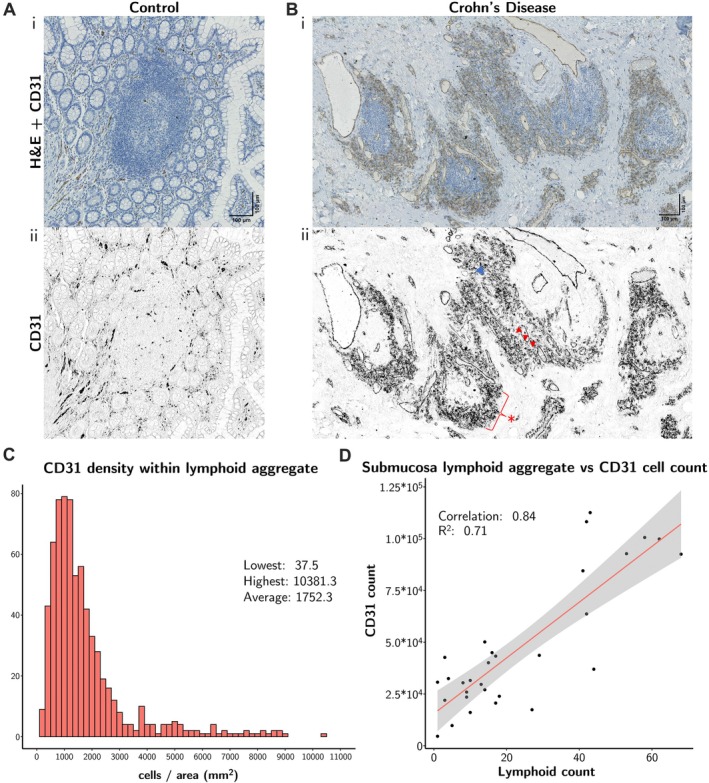 Figure 1
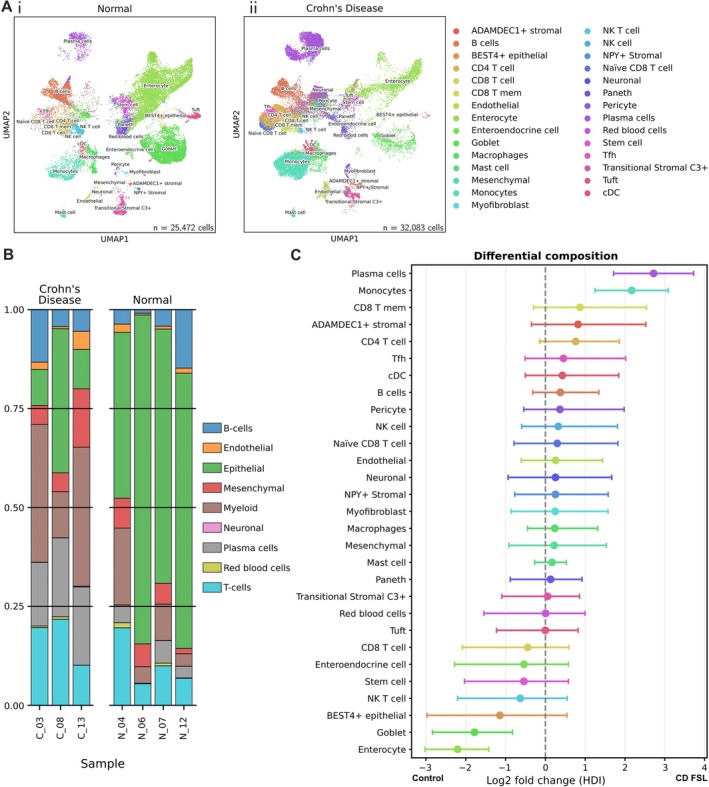 Figure 2
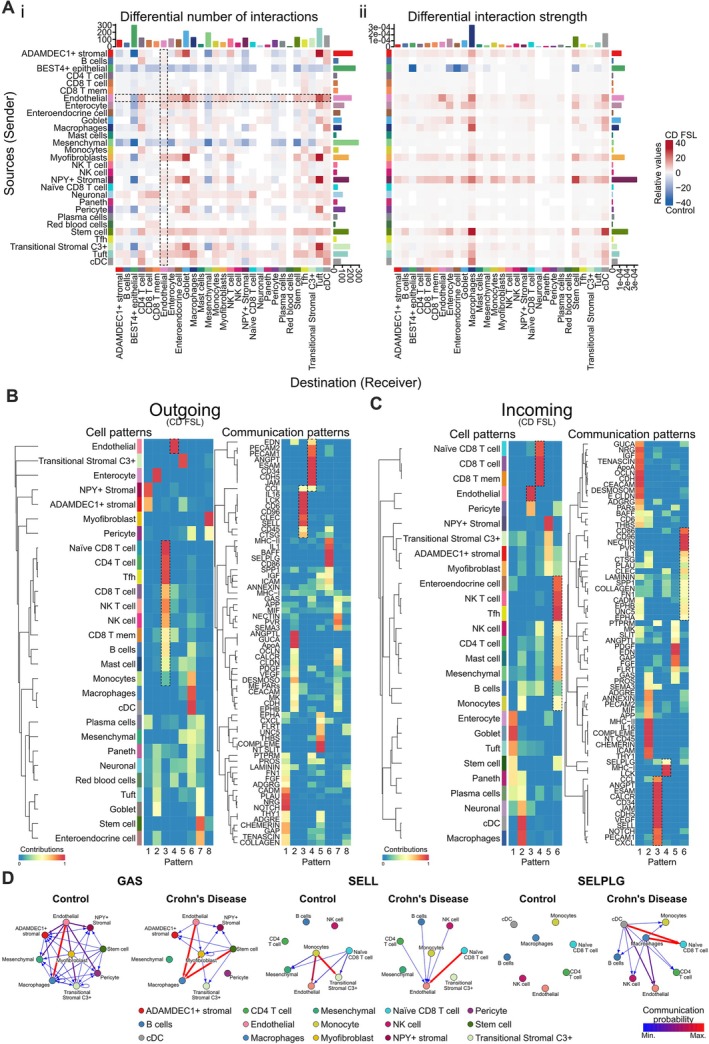 Figure 3
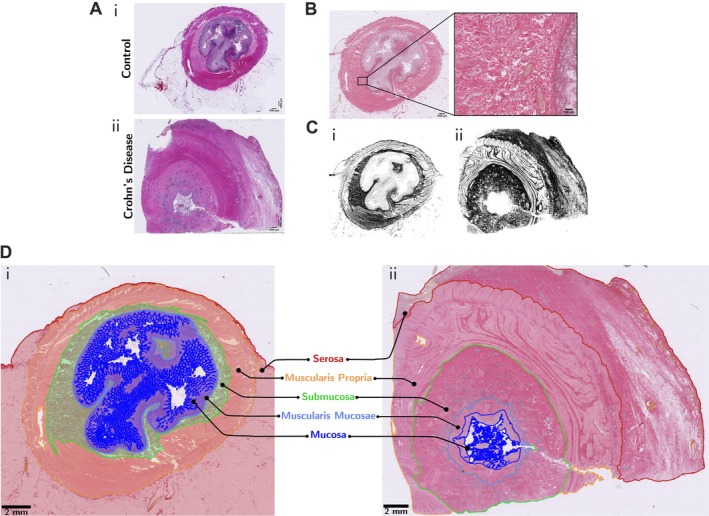 Figure 4
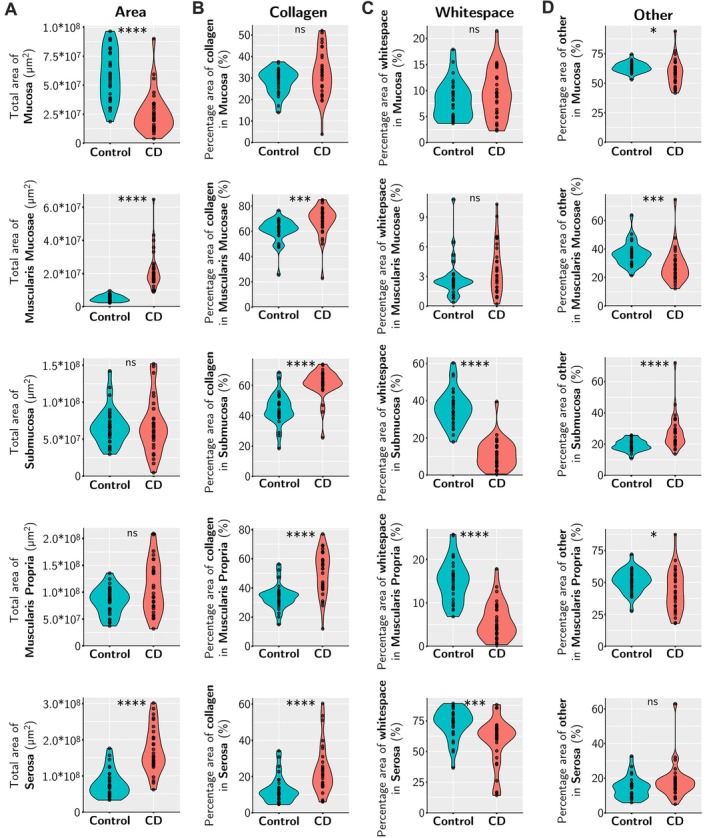 Figure 5
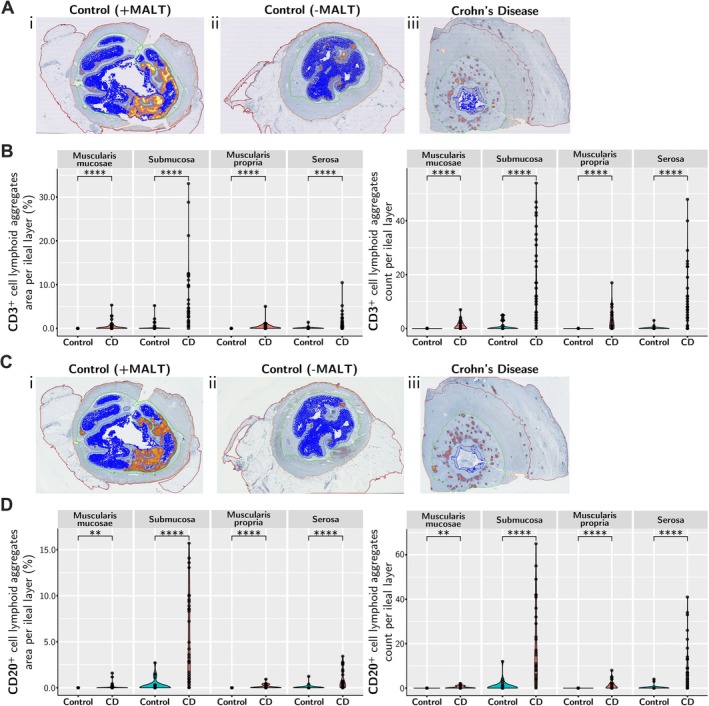 Figure 6
Peer Reviews
No public reviews on file for this paper yet. If you reviewed it on a platform where reviews are public (OpenReview, ICLR, NeurIPS, ICML), you can paste yours below so the community can read it here.
Videos
No videos yet. Explain this paper in a talk, walkthrough, or lecture? Add one.
Taxonomy
TopicsInflammatory Bowel Disease · Single-cell and spatial transcriptomics · Immune cells in cancer