Uncoupling TGFβ1 signalling from collagen protein synthesis in Dupuytren's disease
Gabriella Cooper, Jade A Gumbs, Sahem Alkharabsheh, Katie J Lee, Alan Carter, Hannah Coleman, Niamh S O'Heneghan‐Yates, Rama Ijaz, Emma Beamish, Lisa A Menezes, Triantafillos Liloglou, Peter D Clegg, Elizabeth G. Canty‐Laird

TL;DR
This study explores how TGFβ1 signaling contributes to Dupuytren's disease, finding it may influence cell behavior more than collagen production.
Contribution
The study uncouples TGFβ1's role in collagen synthesis from its signaling effects in Dupuytren's disease.
Findings
TGFβ1 treatment increases type I collagen protein in Dupuytren's nodule cells but not in normal tissue.
TGFβ1 inhibition does not alter collagen synthesis in Dupuytren's tissue or TSK mouse models.
COL1A1 and COL1A2 mRNA levels are higher in Dupuytren's tissue compared to normal tissue in aged human cells.
Abstract
Dupuytren's disease is a fibroproliferative disorder of the palmer fascia (PF) characterised by flexion contractures in the hand. Dupuytren's disease can be treated surgically, but disease recurrence rates are high, potentially due to continual production of matrisomal proteins. Here, metabolic labelling and proteomics identified differences in the new synthesis and composition of matrisomal proteins between Dupuytren's tissue and normal PF. Dupuytren's tissue actively synthesised type I collagen, fibronectin (FN1), matrix metalloproteinases‐2 and ‐3 (MMP2, MMP3) and tissue inhibitor of metalloproteinases 2 (TIMP2). Both tissues actively synthesised insulin‐like growth factor binding protein 7 (IGFBP7). Label‐free analysis implicated the transforming growth factor‐β (TGFβ) pathway in the matrisomal profile of Dupuytren's tissue. The effect of TGFβ isoforms on COL1 mRNA expression was…
Genes, proteins, chemicals, diseases, species, mutations and cell lines named across the full text — each resolved to its canonical identifier and authoritative record.
Click any figure to enlarge with its caption.
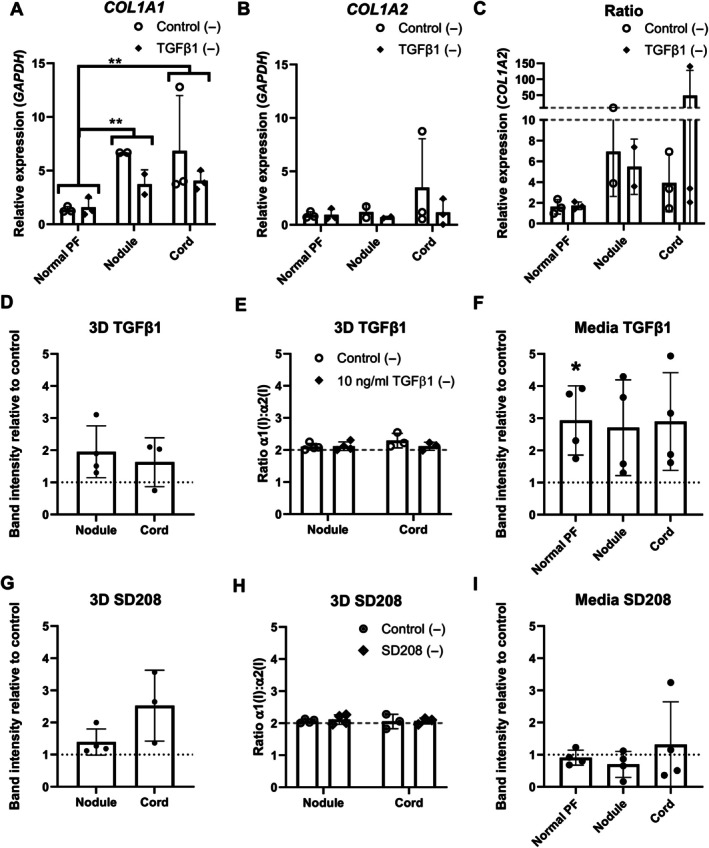 Figure 1
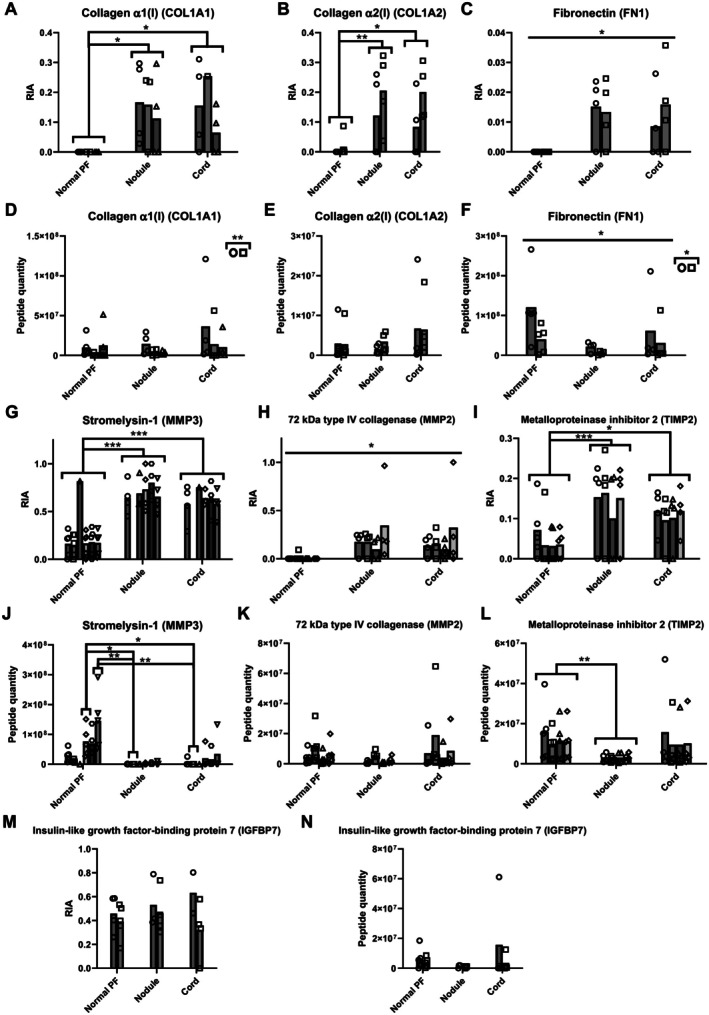 Figure 2
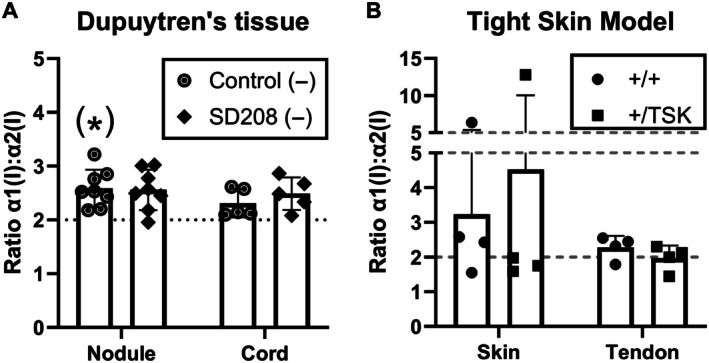 Figure 3
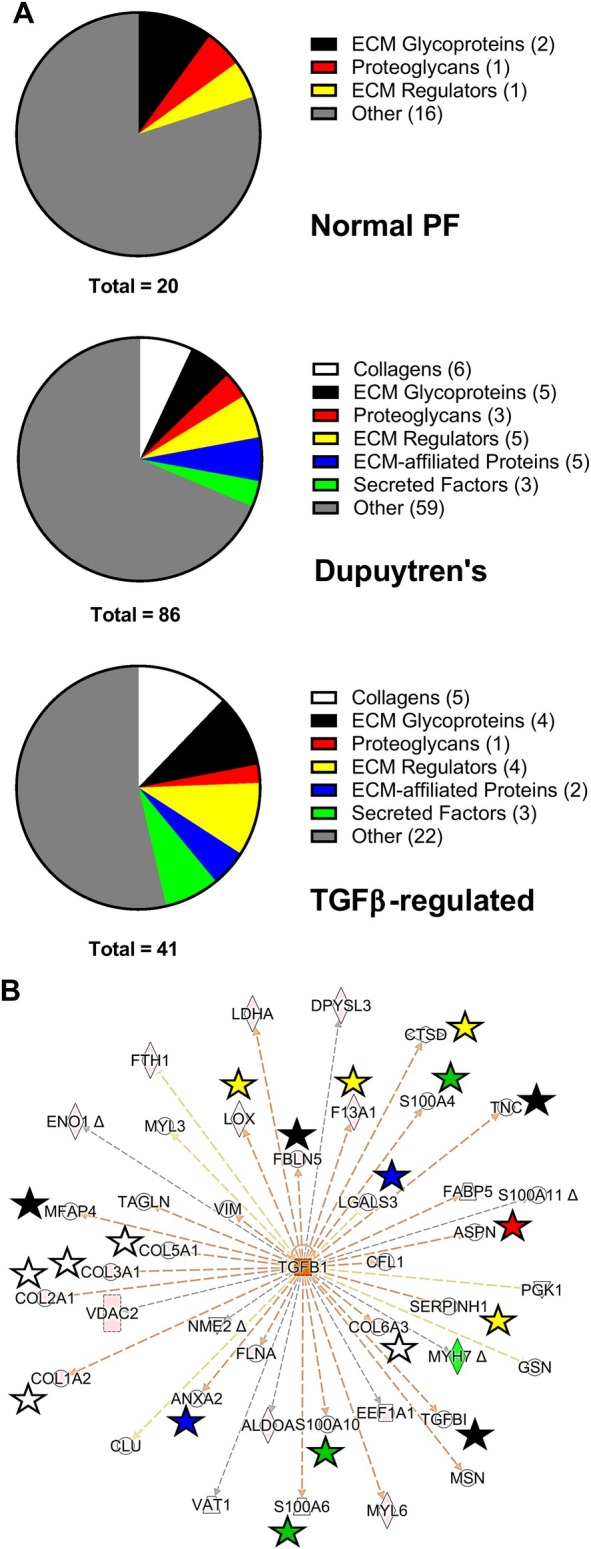 Figure 4
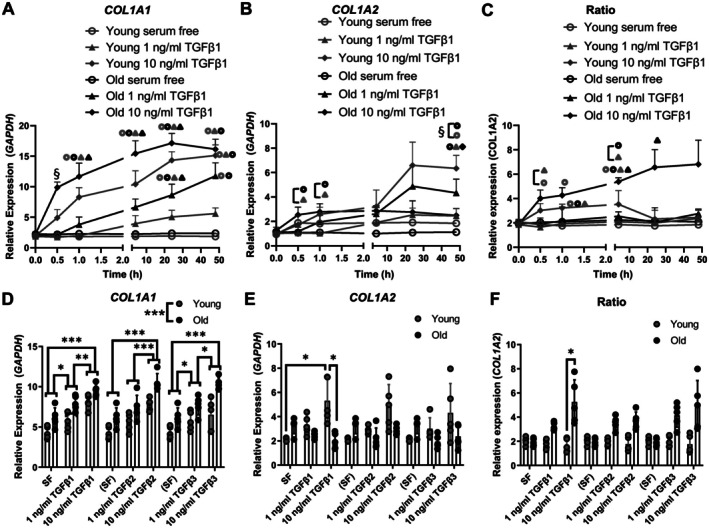 Figure 5
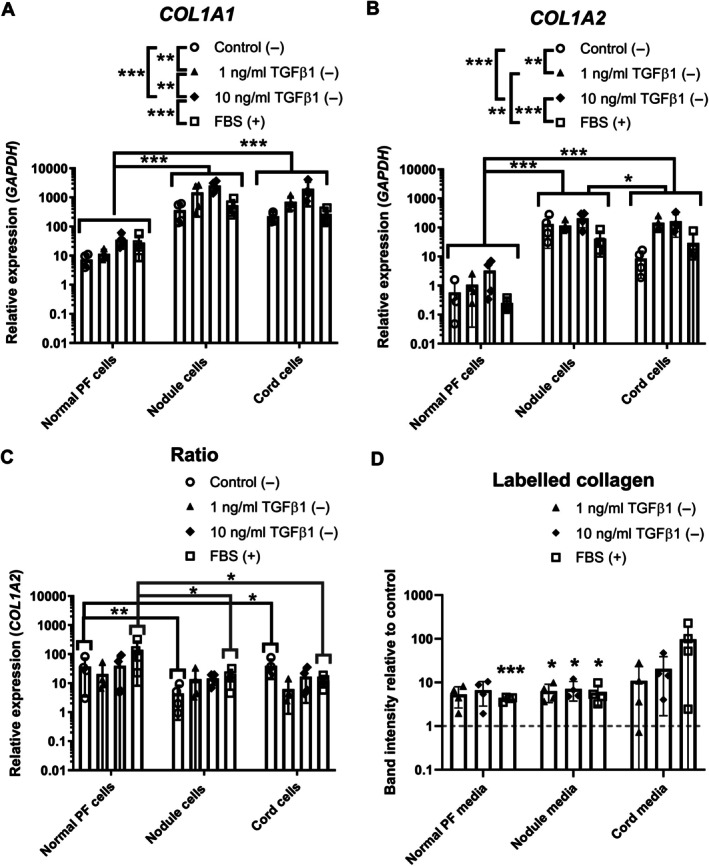 Figure 6
Peer Reviews
No public reviews on file for this paper yet. If you reviewed it on a platform where reviews are public (OpenReview, ICLR, NeurIPS, ICML), you can paste yours below so the community can read it here.
Videos
No videos yet. Explain this paper in a talk, walkthrough, or lecture? Add one.
Taxonomy
TopicsDupuytren's Contracture and Treatments · Tendon Structure and Treatment · Hedgehog Signaling Pathway Studies