The Role of Psychological Inflexibility in Adolescents' Loneliness: School Friendship Closeness as a Mediator
Annina Jormanainen, Kaisa Kalttila, Tetta Hämäläinen, Päivi Lappalainen, Mari Tunkkari, Noona Kiuru

TL;DR
This study explores how psychological inflexibility and school friendships affect loneliness in adolescents transitioning to upper secondary school.
Contribution
The study identifies psychological inflexibility as a new risk factor for loneliness and highlights gender differences in how friendships mediate this relationship.
Findings
High psychological inflexibility in Grade 9 is linked to increased loneliness during the transition to upper secondary school.
Friendship closeness in school partially mediates the relationship between psychological inflexibility and loneliness, particularly for girls.
Psychological inflexibility is proposed as a social risk factor for adolescent loneliness.
Abstract
This study aimed to expand knowledge on the roles of psychological inflexibility and school friendship closeness in adolescents' loneliness during the transition to upper secondary education. The participants were 885 Finnish adolescents (mean age = 15.74, SD = 0.37, 56% girls). Loneliness was measured twice: in Grade 9 and at the beginning of upper secondary school in 10th grade. Psychological inflexibility and the closeness of friendships in school were measured in Grade 9. Results showed that a high level of psychological inflexibility in Grade 9 was associated with higher loneliness at the beginning of upper secondary education and increased loneliness during the educational transition. Furthermore, girls' (but not boys') friendship closeness in school partly mediated the association between psychological inflexibility and loneliness. The results suggested that psychological…
Genes, proteins, chemicals, diseases, species, mutations and cell lines named across the full text — each resolved to its canonical identifier and authoritative record.
Click any figure to enlarge with its caption.
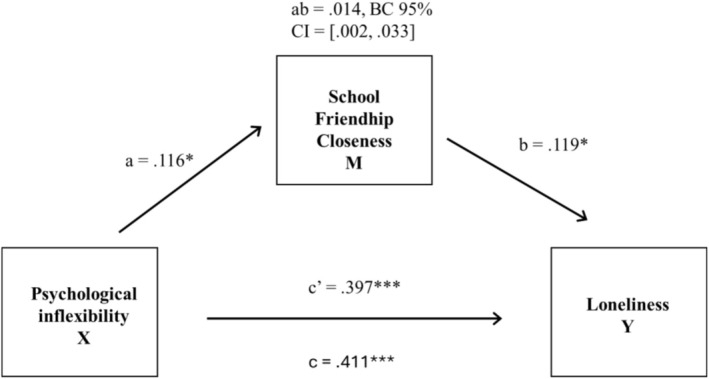 Figure 1
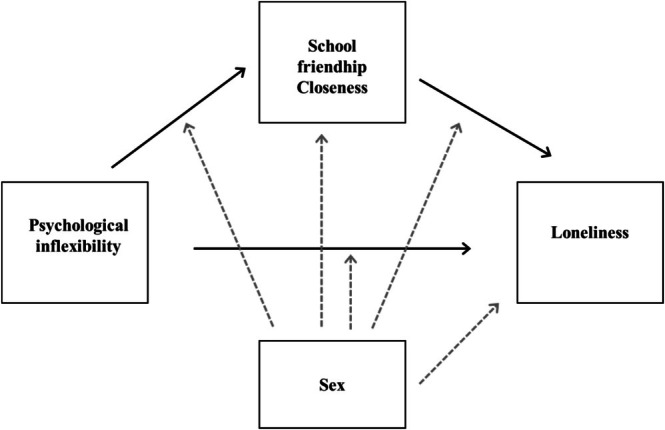 Figure 2
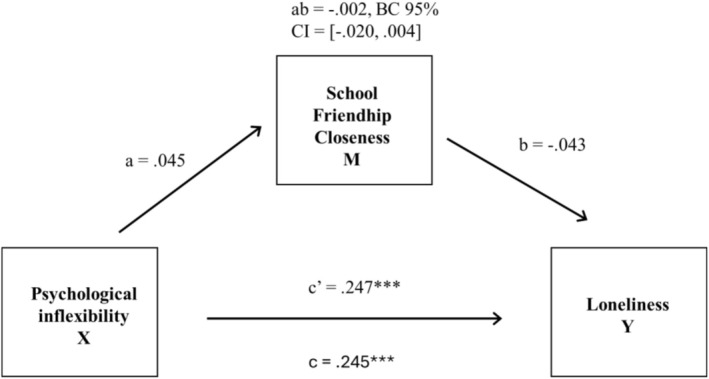 Figure 3
Peer Reviews
No public reviews on file for this paper yet. If you reviewed it on a platform where reviews are public (OpenReview, ICLR, NeurIPS, ICML), you can paste yours below so the community can read it here.
Videos
No videos yet. Explain this paper in a talk, walkthrough, or lecture? Add one.
Taxonomy
TopicsBullying, Victimization, and Aggression · Attachment and Relationship Dynamics · Resilience and Mental Health