Evaluation of the role of the rail sign and intracervical lakes in the management of patients with a high probability of placenta accreta spectrum
Ahmed M. Hussein, Mohamed M. Thabet, Rana M. Elbarmelgy, Rasha A. Elbarmelgy, Eric Jauniaux

TL;DR
This study evaluates two new ultrasound signs, intracervical lakes and the rail sign, to predict placenta accreta spectrum and peripartum hysterectomy in high-risk pregnancies.
Contribution
The study identifies intracervical lakes and the rail sign as novel ultrasound markers for predicting placenta accreta spectrum and surgical outcomes.
Findings
Intracervical lakes were strongly associated with increased odds of peripartum hysterectomy.
The rail sign was associated with increased odds of placenta accreta spectrum at birth.
Placental lacunae were the strongest predictors of both placenta accreta spectrum and peripartum hysterectomy.
Abstract
Classical ultrasound signs of placenta accreta spectrum (PAS) at birth, including anomalies of the lower uterine segment (LUS) and uteroplacental and intraplacental circulations, are now well established. The purpose of this study was to evaluate the use of “intracervical lakes” and “the rail sign,” which are more recently described signs. We conducted a retrospective analysis of ultrasound imaging data and primary surgical outcomes of consecutive singleton pregnancies in patients with a history of at least one prior CD presenting with an anterior low-lying or placenta previa at 32–36 weeks. Ultrasound findings were recorded using a standardized protocol. The diagnosis of PAS was confirmed when one or more placental lobules could not be digitally separated from the uterine wall at delivery or during the gross examination of hysterectomy or partial myometrial resection (PMR) specimens,…
Genes, proteins, chemicals, diseases, species, mutations and cell lines named across the full text — each resolved to its canonical identifier and authoritative record.
Click any figure to enlarge with its caption.
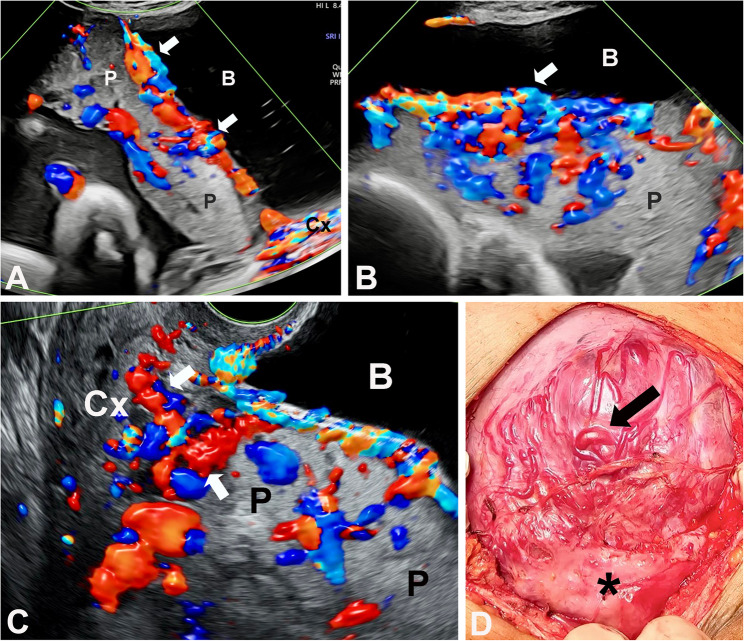 Figure 1
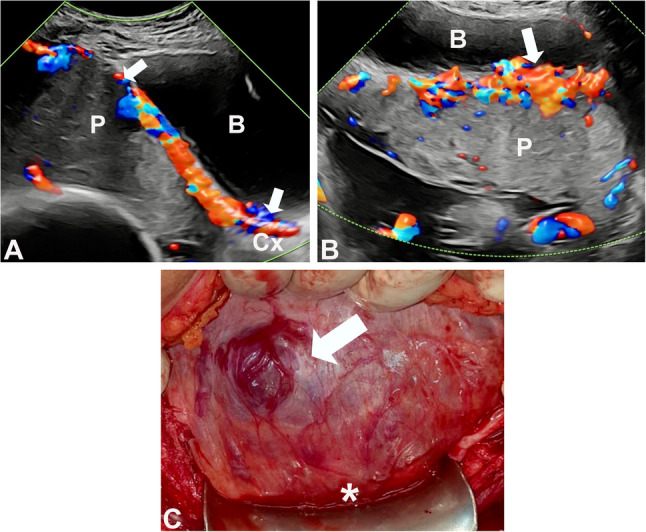 Figure 2
Peer Reviews
No public reviews on file for this paper yet. If you reviewed it on a platform where reviews are public (OpenReview, ICLR, NeurIPS, ICML), you can paste yours below so the community can read it here.
Videos
No videos yet. Explain this paper in a talk, walkthrough, or lecture? Add one.
Taxonomy
TopicsMaternal and fetal healthcare · Pregnancy and preeclampsia studies · Reproductive Health and Contraception