Salvage Stabilization via Transthoracic Approach for Congenital Vertebral Malformations in a Toy Breed Dog: A Case Report
Hyeyeon Cheong, Jaegwan Cha

TL;DR
A Pomeranian with a spinal deformity regained full mobility after a third surgery using a chest approach when standard back surgeries failed.
Contribution
First successful use of a transthoracic approach for spinal stabilization in a toy breed dog with congenital vertebral malformations.
Findings
The transthoracic approach enabled successful stabilization using titanium screws and PMMA in a Pomeranian with failed dorsal surgeries.
The dog regained full ambulatory function within four weeks and maintained it for 19 months post-surgery.
This approach is effective when conventional methods fail due to the fragile vertebrae in toy breeds.
Abstract
Congenital vertebral malformations are spinal deformities that can cause paralysis in dogs. While surgery is often needed, it can be very difficult in tiny “toy” breeds like Pomeranians because their vertebrae are diminutive and fragile. This report describes a case of a 7-month-old Pomeranian that underwent two standard surgeries through the back (dorsal approach) to fix a spinal deformity, but both failed. We then performed a third “salvage” surgery, approaching through the chest (transthoracic approach) to stabilize the spine from the side. This method allowed us to use stronger bone for screw fixation. The dog recovered its walking ability completely. This case shows that the chest approach can be a successful alternative for saving toy breed dogs when standard back surgeries fail. This case report describes the successful management of a 7-month-old Pomeranian with congenital…
Genes, proteins, chemicals, diseases, species, mutations and cell lines named across the full text — each resolved to its canonical identifier and authoritative record.
Click any figure to enlarge with its caption.
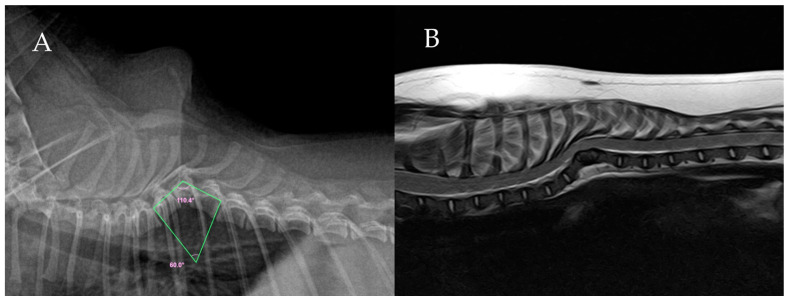 Figure 1
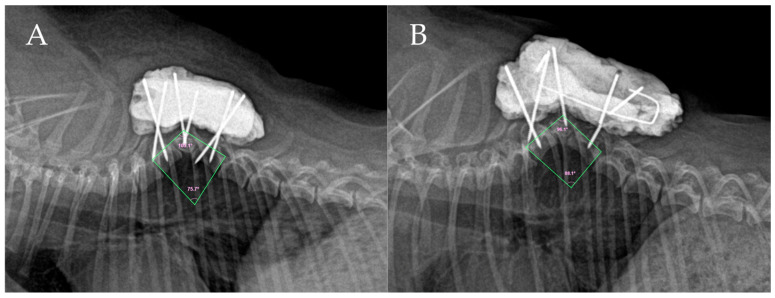 Figure 2
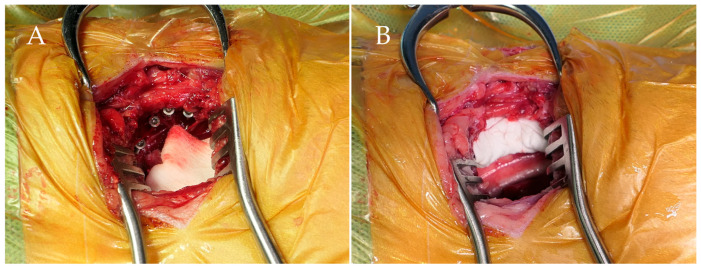 Figure 3
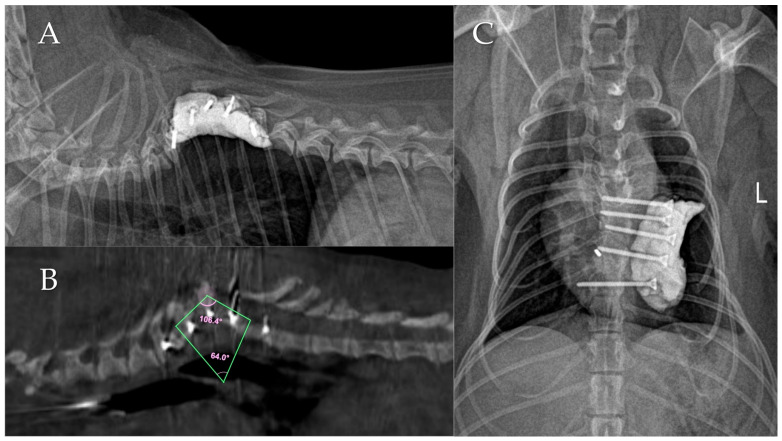 Figure 4
Peer Reviews
No public reviews on file for this paper yet. If you reviewed it on a platform where reviews are public (OpenReview, ICLR, NeurIPS, ICML), you can paste yours below so the community can read it here.
Videos
No videos yet. Explain this paper in a talk, walkthrough, or lecture? Add one.
Taxonomy
TopicsVeterinary Orthopedics and Neurology · Veterinary Oncology Research · Veterinary Medicine and Surgery