Country-specific estimates of misclassification rates of computer-coded verbal autopsy algorithms
Sandipan Pramanik, Emily Wilson, Henry D Kalter, Victor Akelo, Agbessi Amouzou, Robert Black, Dianna Blau, Ivalda Macicame, Jonathan A Muir, Kyu Han Lee, Li Liu, Cynthia G Whitney, Scott Zeger, Abhirup Datta

TL;DR
This paper evaluates how well computer algorithms classify causes of death in different countries and proposes a method to improve their accuracy using country-specific data.
Contribution
The study introduces country-specific misclassification rate estimates for CCVA algorithms, improving CSMF accuracy without requiring CHAMPS data.
Findings
Country-specific models reduce misclassification loss by 34%–38% for neonates and 13%–24% for children compared to homogeneous models.
CCVA algorithms consistently overestimate or underestimate certain causes of death.
Calibrating data increases neonatal CSMF for infections and decreases it for intrapartum events and prematurity.
Abstract
Computer-coded verbal autopsy (CCVA) algorithms are routinely used to determine individual cause of death (COD) and derive population-level estimates of cause-specific mortality fractions (CSMFs). But frequent COD misclassification leads to biased CSMF estimates. The VA-calibration framework reduces the bias by estimating misclassification rates; but it overlooks systematic patterns and cross-country variation, reducing the accuracy of CSMF estimates. Using CHAMPS (Child Health and Mortality Prevention Surveillance) data and the framework in Pramanik et al (2025), we estimate misclassification rates of three widely used CCVA algorithms (Expert Algorithm VA, InSilicoVA and InterVA), two age groups (neonates aged 0–27 days and children aged 1–59 months), and eight countries (Bangladesh, Ethiopia, Kenya, Mali, Mozambique, Sierra Leone, South Africa and ‘other’). We then demonstrate their…
Genes, proteins, chemicals, diseases, species, mutations and cell lines named across the full text — each resolved to its canonical identifier and authoritative record.
Click any figure to enlarge with its caption.
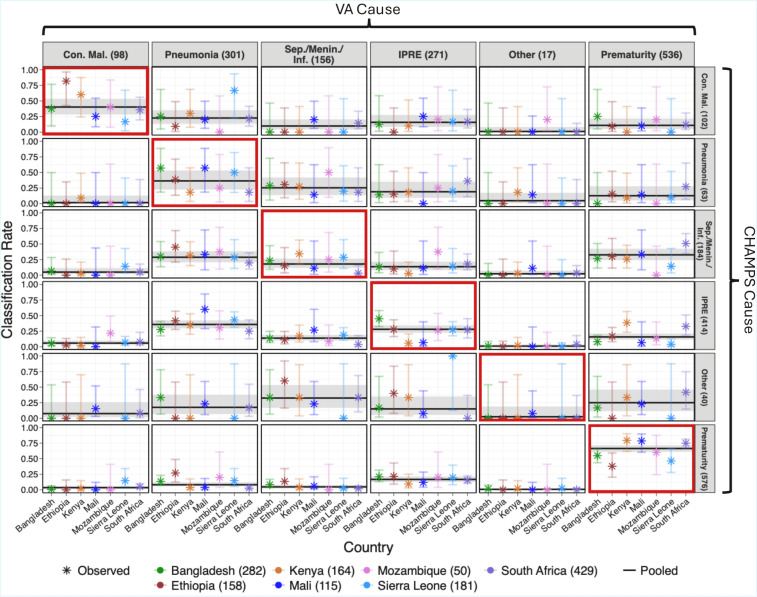 Figure 1
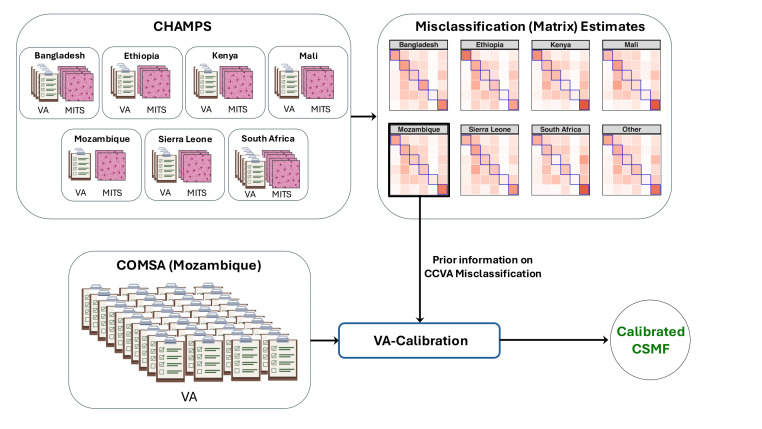 Figure 2
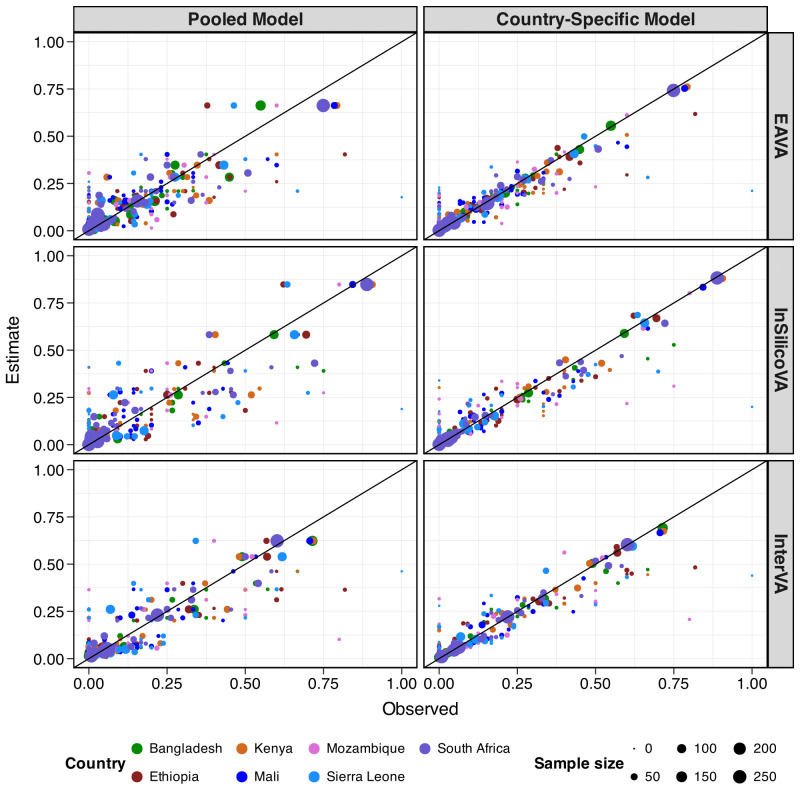 Figure 3
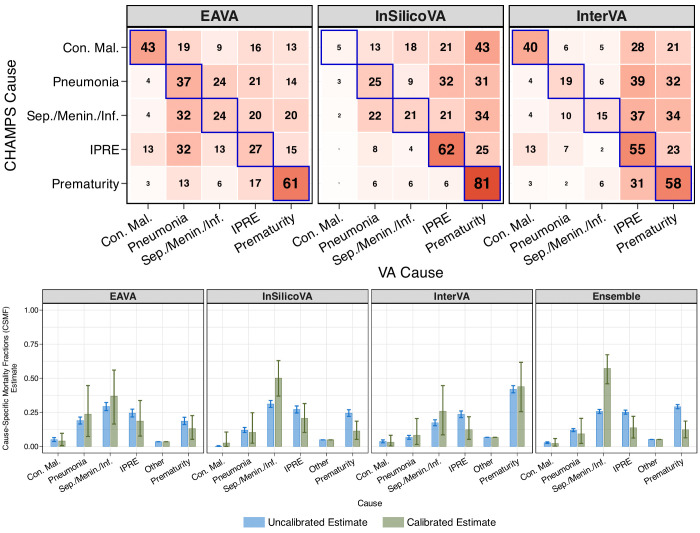 Figure 4
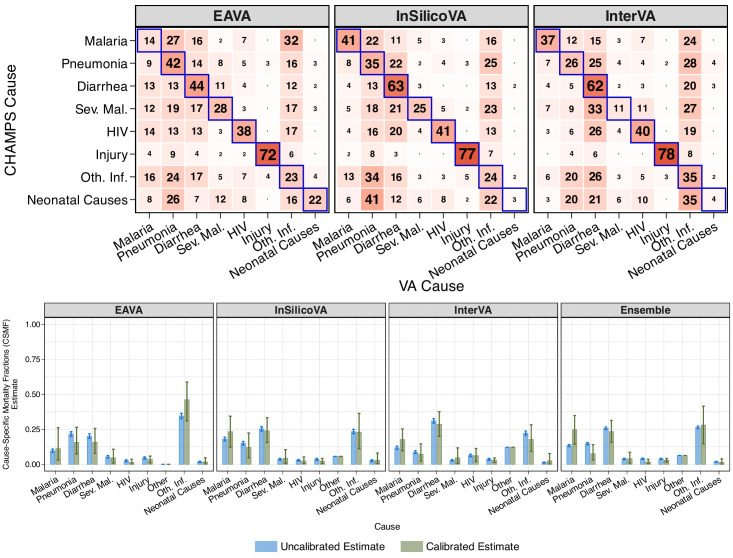 Figure 5
Peer Reviews
No public reviews on file for this paper yet. If you reviewed it on a platform where reviews are public (OpenReview, ICLR, NeurIPS, ICML), you can paste yours below so the community can read it here.
Videos
No videos yet. Explain this paper in a talk, walkthrough, or lecture? Add one.
Taxonomy
TopicsAutopsy Techniques and Outcomes · Global Maternal and Child Health · COVID-19 Digital Contact Tracing