Feasibility of an adjunctive INtervention for Debilitating symptom complexes attributed to ticks (FIND): study protocol for a randomised, waitlist-controlled feasibility trial
Richard A A Kanaan, Richard Macdonell, Michelle Long, Robert J Richardson, Caitlyn Rogers, Mualla Mcmanus, Sabine Braat, Sophie Zaloumis, Cathrine Mihalopoulos, Mary Lou Chatterton, Katherine B Gibney, Georgina Oliver, Sarah J Wilson, Trudie Chalder

TL;DR
This study tests if a psychological therapy called ACT can help people with a tick-related illness in Australia, where no known cause or treatment exists.
Contribution
The study introduces a feasibility trial for ACT-informed therapy as an adjunct treatment for DSCATT, a tick-related syndrome with no known cure.
Findings
The trial will assess the acceptability and practicality of ACT therapy for DSCATT patients.
Quantitative and qualitative data will determine the intervention's impact on health and well-being.
The primary outcome will measure retention rates to evaluate feasibility.
Abstract
Debilitating Symptom Complexes Attributed to Ticks (DSCATT) is a new term for an unexplained Australian syndrome—people who suffer from a chronic, multifaceted and debilitating illness, characteristically attributed to tick bites, but in a country without endemic Lyme disease. Despite the profound morbidity of DSCATT, no single causative agent has been identified and there are no recognised treatments for the illness at present. An increasing body of evidence shows psychological therapies such as Acceptance and Commitment Therapy (ACT) can be effective in reducing symptom-related disability and improving quality of life for other unexplained syndromes. Here we present a study protocol to assess the feasibility of an ACT-informed intervention for patients suffering from DSCATT, to be used adjunctively to their pre-existing healthcare. The study aims to assess the acceptability,…
Genes, proteins, chemicals, diseases, species, mutations and cell lines named across the full text — each resolved to its canonical identifier and authoritative record.
Click any figure to enlarge with its caption.
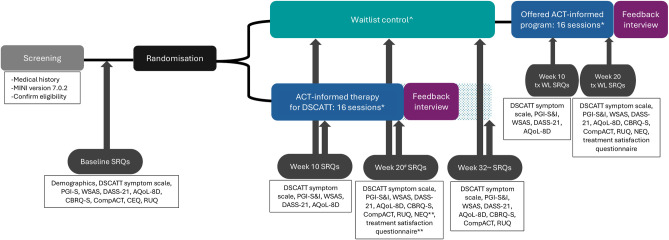 Figure 1
Peer Reviews
No public reviews on file for this paper yet. If you reviewed it on a platform where reviews are public (OpenReview, ICLR, NeurIPS, ICML), you can paste yours below so the community can read it here.
Videos
No videos yet. Explain this paper in a talk, walkthrough, or lecture? Add one.
Taxonomy
TopicsVector-borne infectious diseases · Obsessive-Compulsive Spectrum Disorders · Psychosomatic Disorders and Their Treatments