AIDElong—acute illness and depression in elderly: sustained improvement after group psychotherapy in geriatric patients, a follow-up of longterm effects in a randomized controlled trial
Jana Hummel, Cecilia Weisbrod, Leila Boesch, Katharina Himpler, Ilona Dutzi, Benito Baldauf, Peter Oster, Daniel Kopf

TL;DR
Group cognitive behavioral therapy for elderly patients with depression and acute illness leads to lasting improvements in mental and physical health.
Contribution
Demonstrates sustained long-term benefits of early group CBT in elderly patients with depression and acute medical illness.
Findings
Immediate CBT group showed significant and sustained improvement in depression symptoms over 12 months.
Delayed intervention group improved after starting therapy, with better functional outcomes compared to the waiting period.
Patients receiving early CBT had lower rates of nursing home admission and mortality.
Abstract
Comorbid depression is highly prevalent in very old adults hospitalized for acute medical illness. We have previously shown that immediate intervention with cognitive behavioral therapy (CBT) effectively reduces symptoms of depression and anxiety. The present study examines the long-term course and the effect of delayed intervention. Randomized, controlled cross-over trial of group CBT. We recruited in-patients of a geriatric university department ≥ 65 years with depression (Hospital Anxiety and Depression Scale HADS ≥ 7). Intervention took place after hospital discharge in a day care setting. Patients were randomized to an immediate active intervention group (II) or a waiting list control group with delayed intervention (DI). II patients were invited immediately after discharge to 10 to 15 weekly behavioral group therapy sessions. After 4 months (T1), DI patients switched to active…
Genes, proteins, chemicals, diseases, species, mutations and cell lines named across the full text — each resolved to its canonical identifier and authoritative record.
Click any figure to enlarge with its caption.
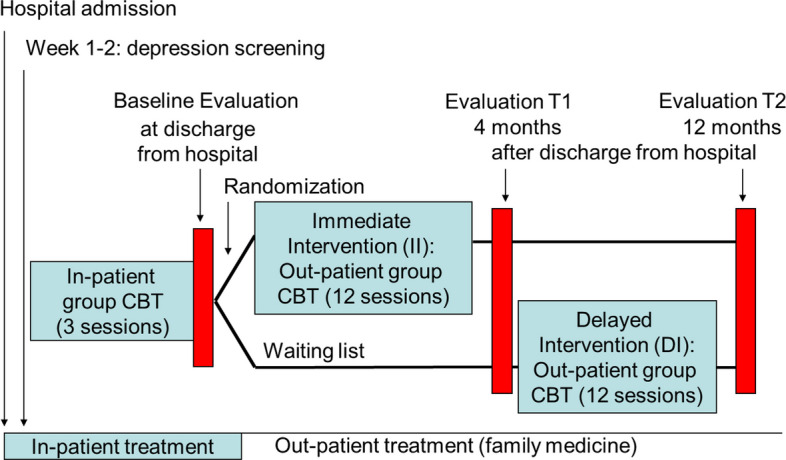 Figure 1
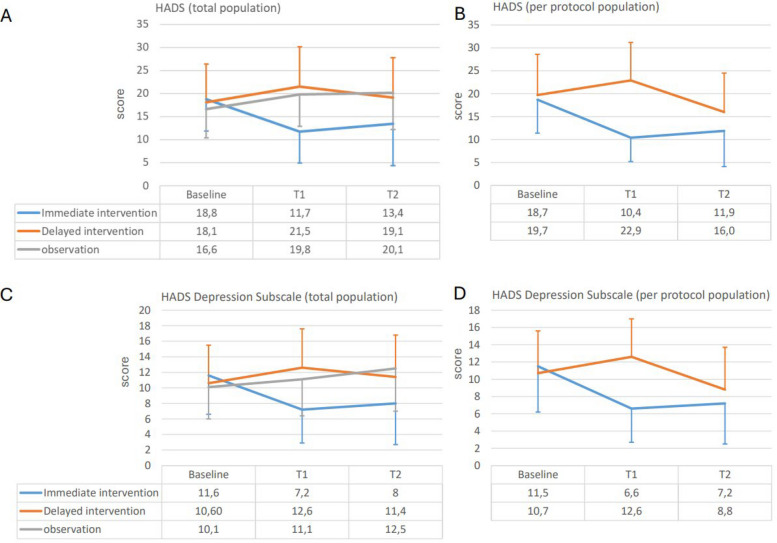 Figure 2
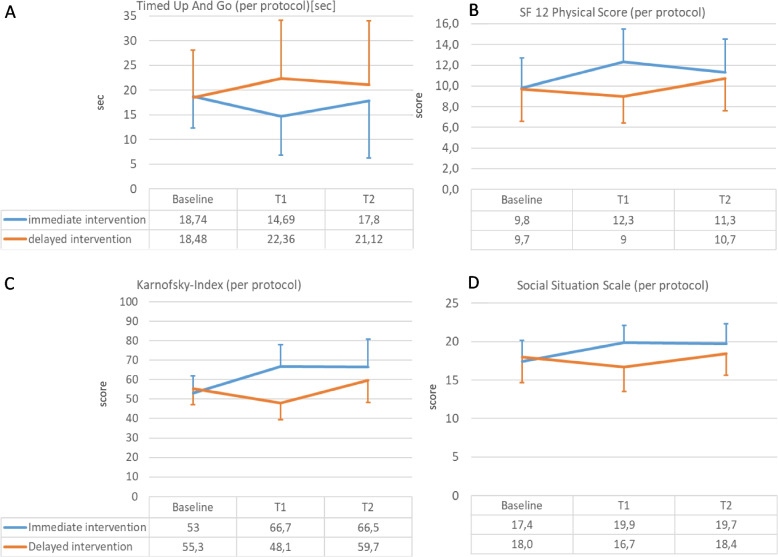 Figure 3
Peer Reviews
No public reviews on file for this paper yet. If you reviewed it on a platform where reviews are public (OpenReview, ICLR, NeurIPS, ICML), you can paste yours below so the community can read it here.
Videos
No videos yet. Explain this paper in a talk, walkthrough, or lecture? Add one.
Taxonomy
TopicsHealth, psychology, and well-being · Dementia and Cognitive Impairment Research · Digital Mental Health Interventions