Relationship of nutritional or systemic inflammatory markers with efficacy of gemcitabine and cisplatin with or without durvalumab therapy for patients with unresectable or metastatic biliary tract cancer: a retrospective study
Yayoi Fukushi, Kazuma Fujita, Yumiko Akamine, Haruka Igarashi, Katsuya Sasaki, Koji Fukuda, Hiroyuki Shibata, Masafumi Kikuchi

TL;DR
This study shows that certain blood markers, like mGPS and PLR, can predict survival outcomes in patients with advanced biliary tract cancer undergoing specific chemotherapy treatments.
Contribution
The study identifies mGPS and PLR as significant predictors of survival in biliary tract cancer patients treated with gemcitabine, cisplatin, and durvalumab.
Findings
Patients with mGPS 2 had significantly shorter median OS (7.9 months) compared to those with mGPS 0–1 (16.9 months).
PLR ≥ 148 was associated with a median survival of 13.7 months, while PLR < 148 had not been estimated, showing a significant difference.
Multivariate analysis confirmed mGPS 2 as an independent risk factor for shorter OS.
Abstract
Nutritional or systemic inflammatory markers like modified Glasgow Prognostic Score (mGPS), prognostic nutritional index (PNI), neutrophil-lymphocyte ratio (NLR) and platelet-lymphocyte ratio (PLR) are useful prognostic indicators, but their role in patients with unresectable or metastatic biliary tract cancer receiving gemcitabine plus cisplatin (GC) or GC plus durvalumab is unclear. This study investigates the relationship of these markers with treatment outcomes and survival. Chemotherapy consisted of protracted infusion of gemcitabine (1000 mg/m2/day) and cisplatin (25 mg/m2/day) on day 1 and 8, or gemcitabine (1000 mg/m2/day), cisplatin (25 mg/m2/day) on day 1 and 8 and durvalumab (1500 mg/day 1) given once every 21 days. After six cycles of GC plus durvalumab therapy, durvalumab monotherapy was administered at 1500 mg every 4 weeks. PNI, NLR, PLR and mGPS were assessed before…
Genes, proteins, chemicals, diseases, species, mutations and cell lines named across the full text — each resolved to its canonical identifier and authoritative record.
Click any figure to enlarge with its caption.
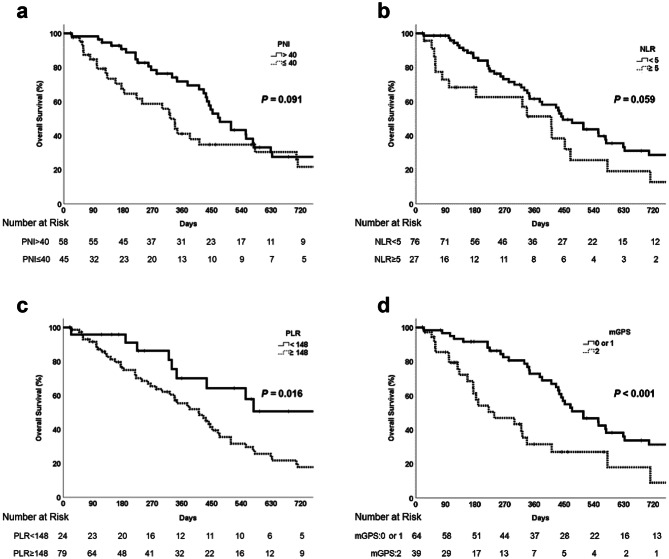 Figure 1
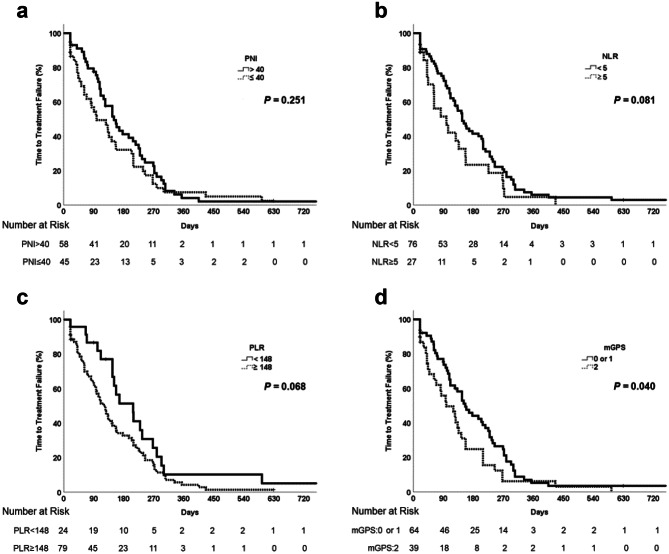 Figure 2
Peer Reviews
No public reviews on file for this paper yet. If you reviewed it on a platform where reviews are public (OpenReview, ICLR, NeurIPS, ICML), you can paste yours below so the community can read it here.
Videos
No videos yet. Explain this paper in a talk, walkthrough, or lecture? Add one.
Taxonomy
TopicsInflammatory Biomarkers in Disease Prognosis · Cholangiocarcinoma and Gallbladder Cancer Studies · Hepatocellular Carcinoma Treatment and Prognosis